




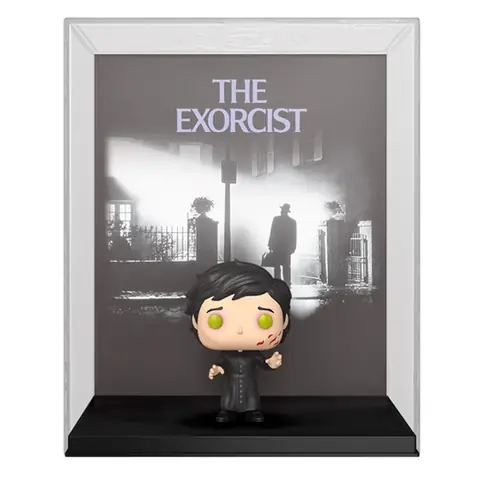






The demon who started out as a bodyguard
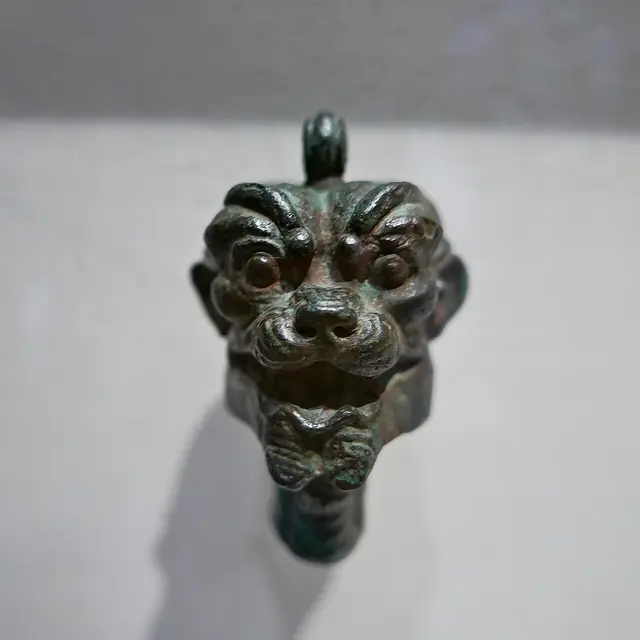
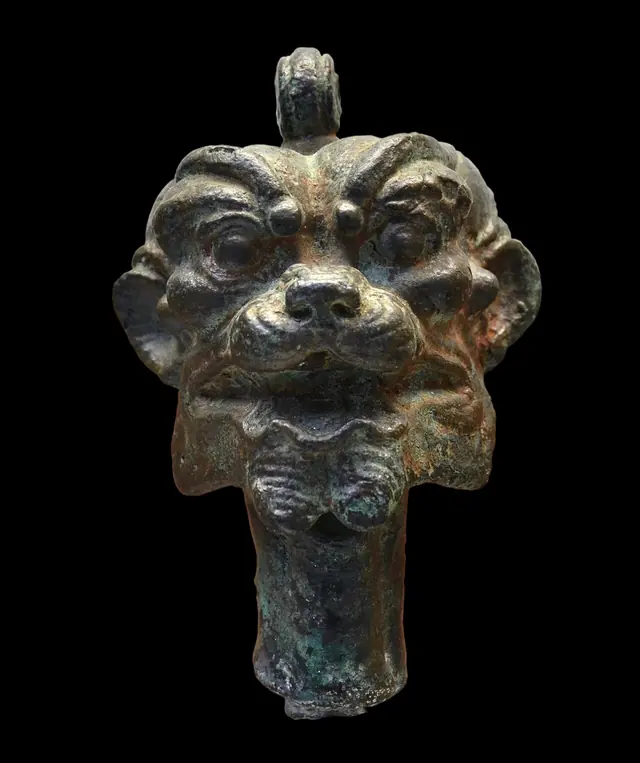
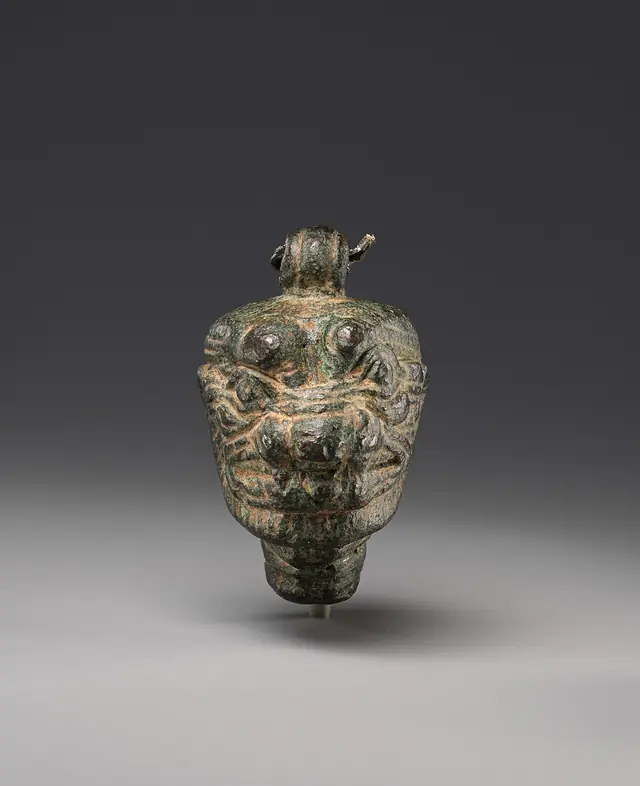
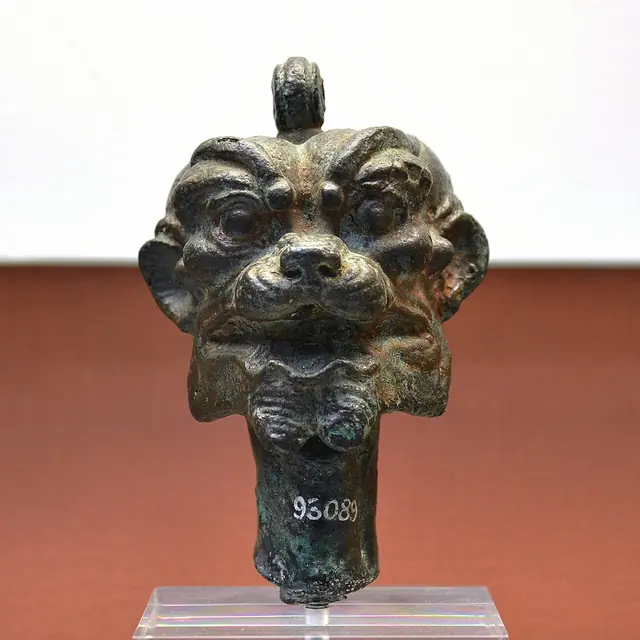
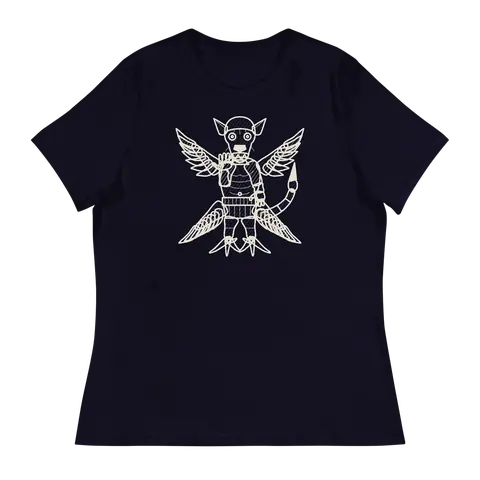
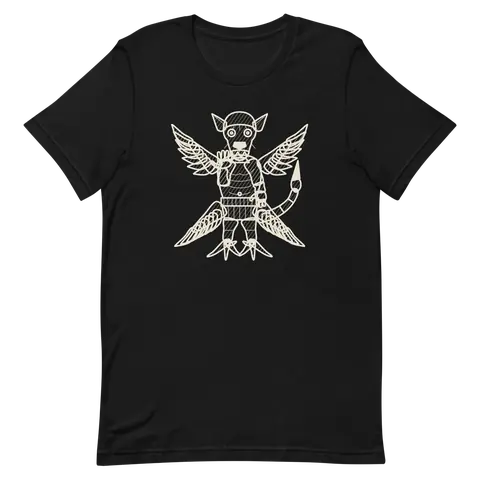
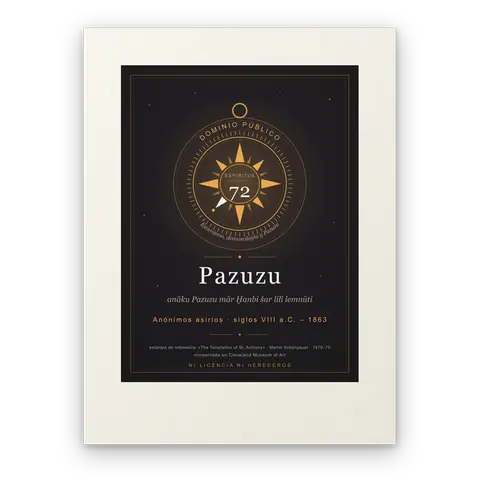
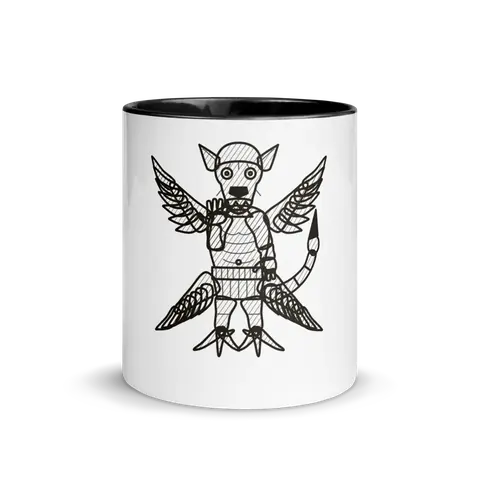
Hollywood did not invent Pazuzu. He is an Assyro-Babylonian demon, and hundreds of figures of him survive from the eighth to the sixth centuries BC; the first came out of tombs at Nimrud. Many carry the same formula incised on the back: «I am the god Pazuzu, son of the god Hanbi, king of the evil wind demons».
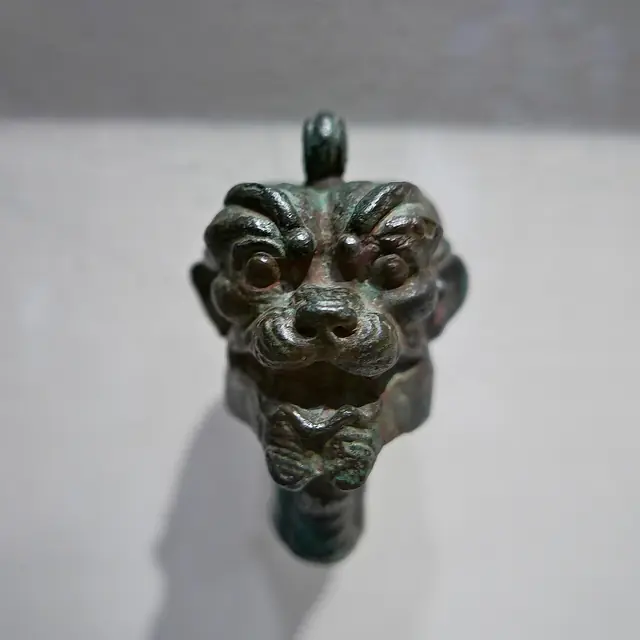
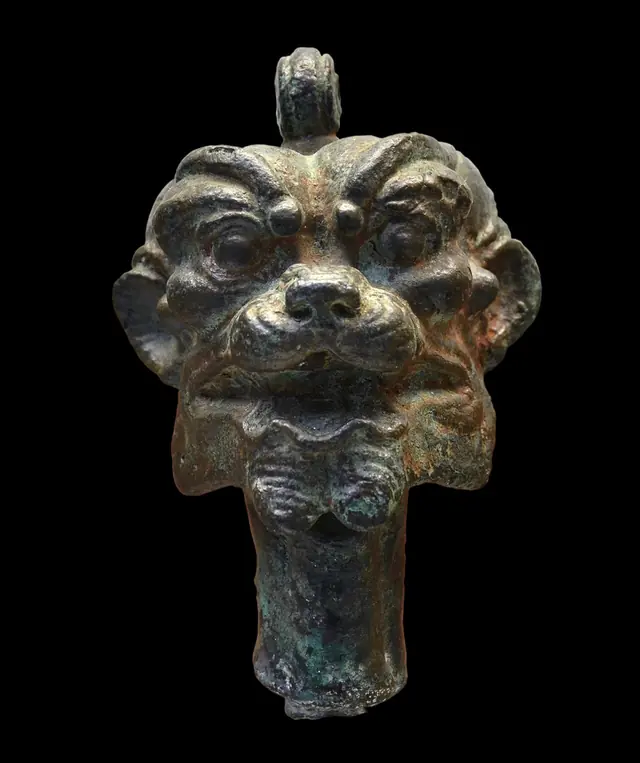
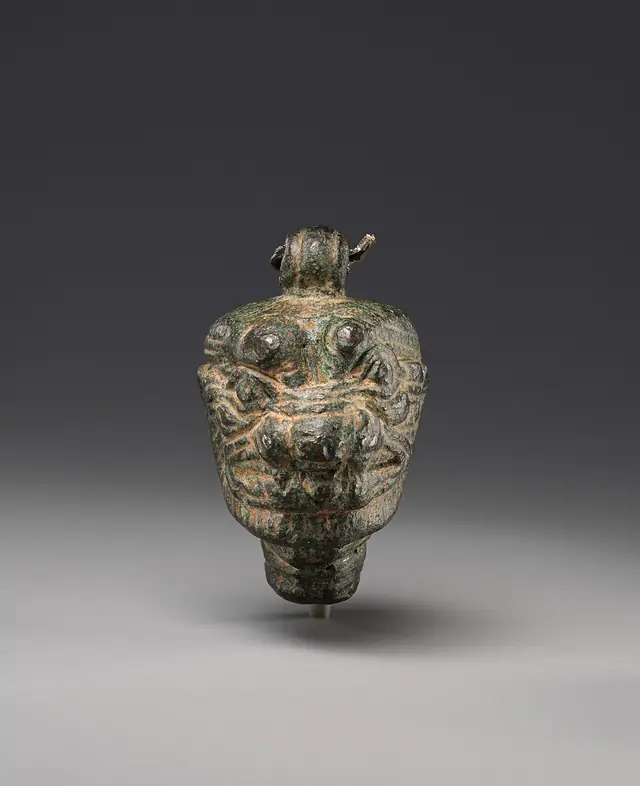
What they were for is the strange part. Pazuzu did not attack: he defended. His enemy was Lamashtu, who carried off newborns; pregnant women wore little bronze heads round the neck, pierced with a loop for the cord, and the large stone ones stood at the door of the house. The monster in The Exorcist began life as a protective charm.
The object that tells the story best is in the Louvre: the Plaque des Enfers, AO 22205, a Neo-Assyrian bronze 13.8 centimetres tall. In the central register a sick man lies on a bed with one hand raised, flanked by two officiants dressed as fish. Below him, Lamashtu kneels on a donkey aboard a boat, a snake in each hand, a piglet and a dog suckling at her breasts. And on the reverse, gripping the upper edge, the head of Pazuzu leans over the whole scene. One of the oldest surviving images of an exorcism is already composed like a film poster.
Seventy-two names and a set of seals that turned up late
The other half of the collection comes from the grimoires, and the starting point is not a magician but a doctor. Johann Weyer (1515-1588), a pupil of Agrippa, published De praestigiis daemonum in 1563 to argue that the women accused of witchcraft were ill, not possessed. To the 1577 edition he added an appendix, the Pseudomonarchia Daemonum: 69 demons with their ranks and their legions.
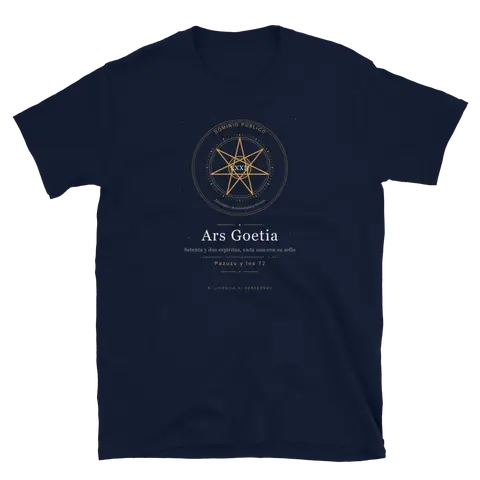
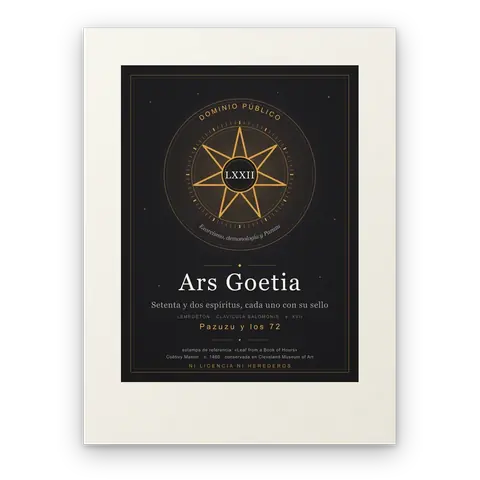
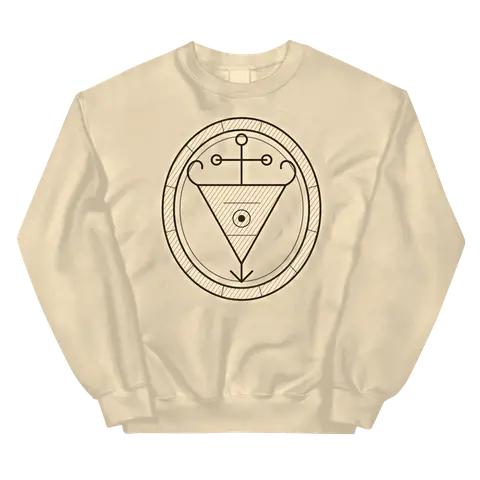
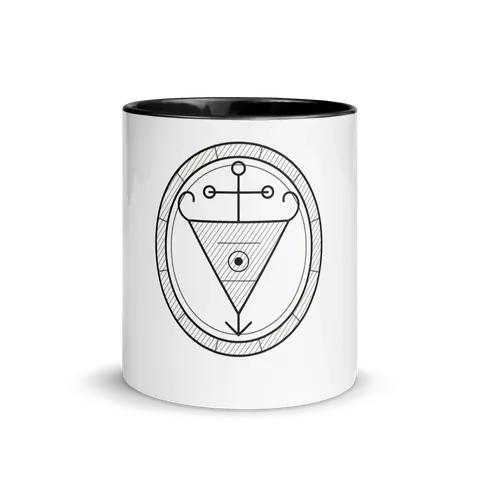
Out of that comes the Ars Goetia, the first of the five books of the Lemegeton Clavicula Salomonis, compiled in the mid-seventeenth century. It raises the count to 72 — the angels of the Shem HaMephorash — adds Vassago, Seere, Dantalion and Andromalius, and drops Pruflas.
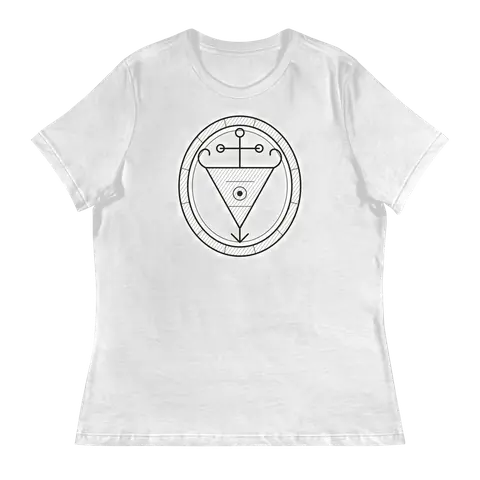
And here is the part almost nobody knows: the seals came last. Those circular scrawls that now turn up on tattoos, record sleeves and posters are not in Weyer at all; his catalogue does not carry a single one. They appear in later manuscript copies, such as Thomas Rudd's, paired with the seals of the 72 angels to protect whoever does the conjuring. What made them famous was an edition of 1904: The Book of the Goetia of Solomon the King, translated by S. L. MacGregor Mathers and edited by Aleister Crowley.
1863: the year the demons got faces
Ask anyone to draw Beelzebub and you will get a giant fly. That does not come from the Bible. It comes from a French engraving of 1863.
Jacques Collin de Plancy (1794-1881) published the Dictionnaire Infernal in 1818, in two volumes and in a Voltairean spirit. He made his peace with Catholicism around 1841 and rewrote the dictionary to satisfy the Archbishop of Paris, whose approval arrived with the third edition, in 1844. The sixth and last edition, that of 1863, is the illustrated one: close to seventy demon plates drawn by Louis Le Breton and cut in wood by M. Jarrault.
The line-up is bizarre and oddly specific. Bael has three heads — man, toad and cat — on spider's legs. Beelzebub is a long-jawed insect with human eyes. Amdusias wears the head of a unicorn and commands twenty-nine legions. Astaroth is gaunt and clawed, hunched over a wolf with bat's wings. Stolas is a crowned owl on preposterously long legs.
Le Breton (1818-1866) was no occultist. He painted seascapes: he replaced the draughtsman on Dumont d'Urville's Antarctic expedition when the man died at Hobart in January 1840, and came home from the Astrolabe and the Zélée with some five hundred sketches. The man who gave the demons their faces had spent his career drawing specimens for a scientific voyage.
A manual from 1614 wrote the screenplay
The Catholic rite we have all watched on screen sits in a book with a date on it: the Rituale Romanum promulgated by Paul V on 17 June 1614, in the chapter De exorcizandis obsessis a daemonio. It stayed in force until 1999, when Rome published De exorcismis et supplicationibus quibusdam.
The preliminary cautions list the signs of possession. The first three:
ignota lingua loqui pluribus verbis, vel loquentem intellegere; distantia et occulta patefacere; vires supra aetatis seu conditionis naturam ostendere.
Speaking an unknown tongue, or understanding someone who does; disclosing what is hidden and far away; displaying strength beyond one's age or condition. Those are precisely the three things every possessed woman in the movies does: reeling off Latin she never studied, telling the priest something only he knows, and tearing the bed off the floor. Half a century of screenplays copying, in that exact order, three lines from a liturgical rubric.
How Pazuzu reached Georgetown
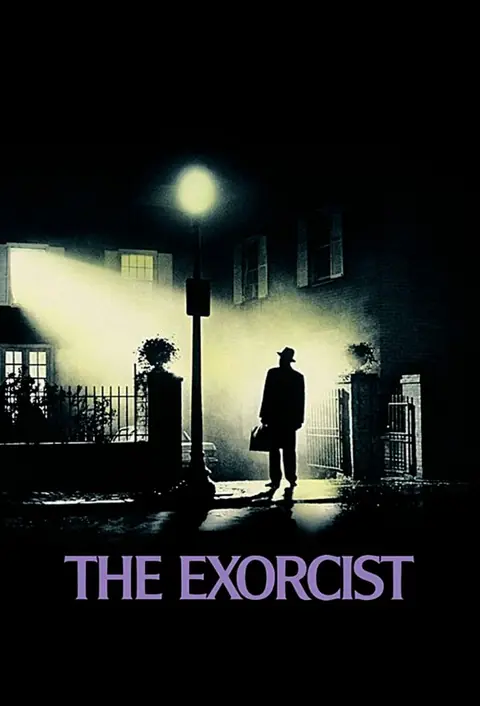
William Peter Blatty, then a student at Georgetown, heard in the spring of 1950 about a case The Washington Post had put on its front page on 20 August 1949: «Priest Frees Mt. Rainier Boy Reported Held in Devil's Grip». A fourteen-year-old boy and more than thirty sessions of the rite, between Maryland and St Louis. Blatty turned him into a twelve-year-old girl, Regan; the novel came out in 1971 and William Friedkin's film in 1973.
The Iraqi prologue was shot at Hatra, south-west of Mosul. Nobody dug up the large Pazuzu statue: Warner had it made and shipped to Baghdad, and Friedkin hung meat on it to draw vultures into the shot, without success. The amulet Father Merrin finds is a Pazuzu head complete with its loop, exactly like the ones worn by pregnant Assyrian women. The name is never spoken in the 1973 film; it is said out loud in Exorcist II: The Heretic (1977), where the demon manifests mainly as a plague of locusts.
Where you can see it on screen
The Omen (1976) draws not on the grimoires but on the 666 of Revelation, though it did give the genre its anthem: Jerry Goldsmith's «Ave Satani» — sanguis bibimus, corpus edimus. The song got no further than a nomination; the Oscar went to the score, the only one Goldsmith won in his entire career.
The Goetia, by contrast, is the quarry the names come from:
- The Nun (2018). Valac is spirit number 62: a boy with angel's wings riding a two-headed dragon, who reveals where treasure and serpents are to be found. Nothing survives from the text but the name: the nun herself was invented by James Wan for The Conjuring 2 (2016), a last-minute replacement that took the place, in reshoots, of an animatronic horned demon already built. The 2018 film was directed by Corin Hardy from a story by Wan.
- Hereditary (2018). Paimon is the ninth: a crowned king on a dromedary, preceded by a host with trumpets and cymbals. Ari Aster keeps the crown and the host, and throws away the camel.
- Helluva Boss. Stolas is the thirty-sixth, a prince who teaches astronomy and the virtues of herbs and precious stones. In the text he is a raven; that he is a crowned owl we owe to Le Breton.
In Spain, Paco Plaza's Verónica (2017) grows out of the Vallecas police report and the death of Estefanía Gutiérrez Lázaro in 1991.