Seven days at the Hot Gates
Herodotus told the story of Thermopylae in Book VII of his Histories, the one tradition named after Polymnia. Summer of 480 BC, central Greece, a defile where the mountain very nearly touches the sea.
The number in the title is the part that fits worst. Herodotus does not count three hundred men: he counts something over five thousand Greeks — the contingents he lists add up to around five thousand two hundred, and he doesn't even give a figure for the Opuntian Locrians — among them two thousand one hundred and twenty Arcadians, seven hundred Thespians and four hundred Thebans (VII, 202-203). The three hundred are Leonidas's royal bodyguard, and they had been picked on one very specific condition: every one of them had living sons (VII, 205). Leonidas was somewhere around sixty, though the age is a modern calculation — Herodotus never gives it.
Xerxes let four days go by hoping they would leave, and attacked on the fifth (VII, 210). The pass then held for three days of fighting, backed by a wall the Phocians had built there long before. What brought it down was a track, the Anopaea path, and a local man, Ephialtes son of Eurydemus, who showed it to the Persians for money (VII, 213). At the end the Spartans were left, along with Demophilus's Thespians and the Thebans. Xerxes had the body of Leonidas beheaded and the head fixed on a stake: the Greeks thought it sacrilege, and that is precisely why Herodotus makes a point of it.
Bronze, wood and long hair
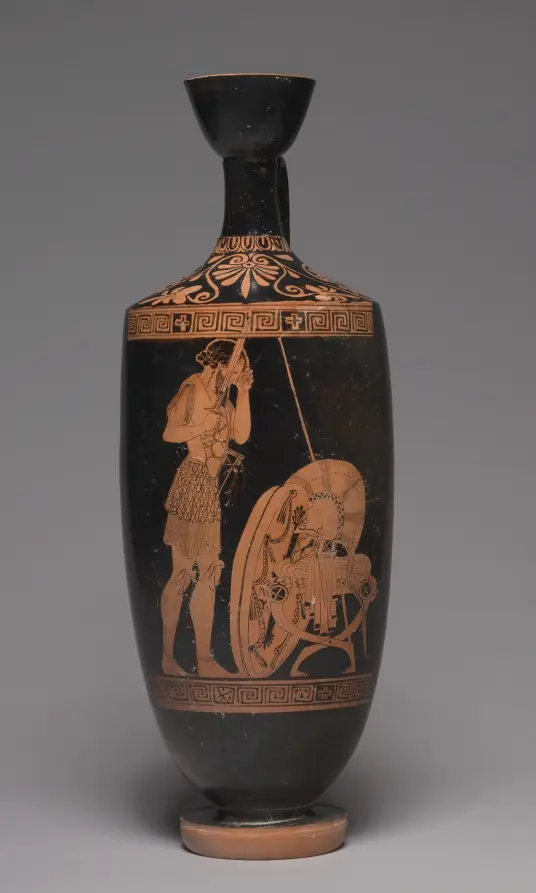
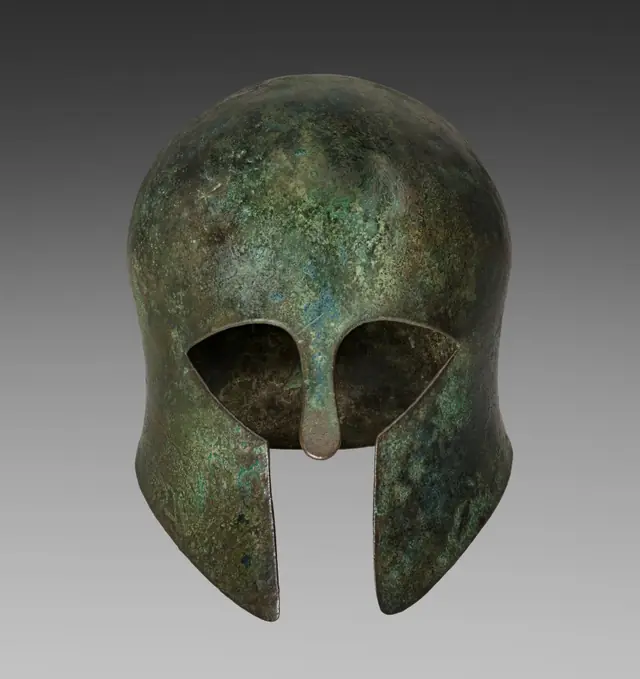
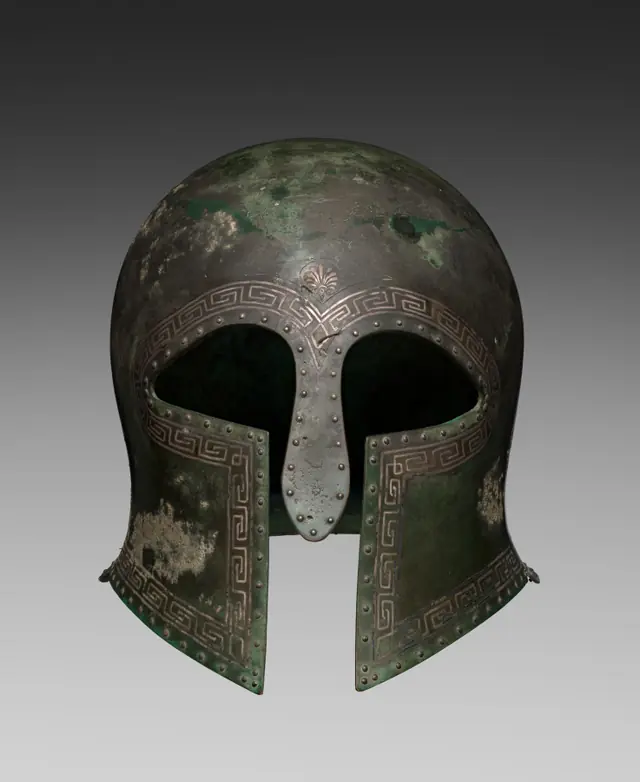
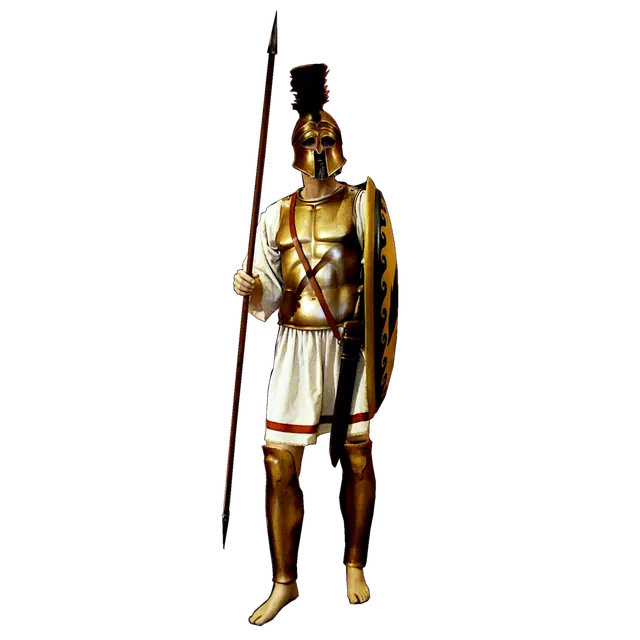
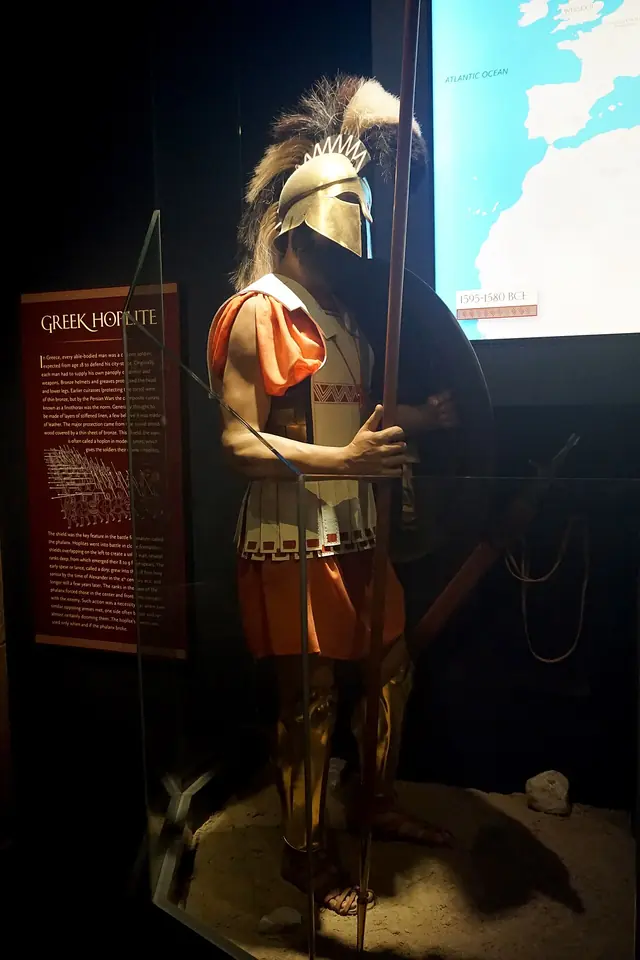
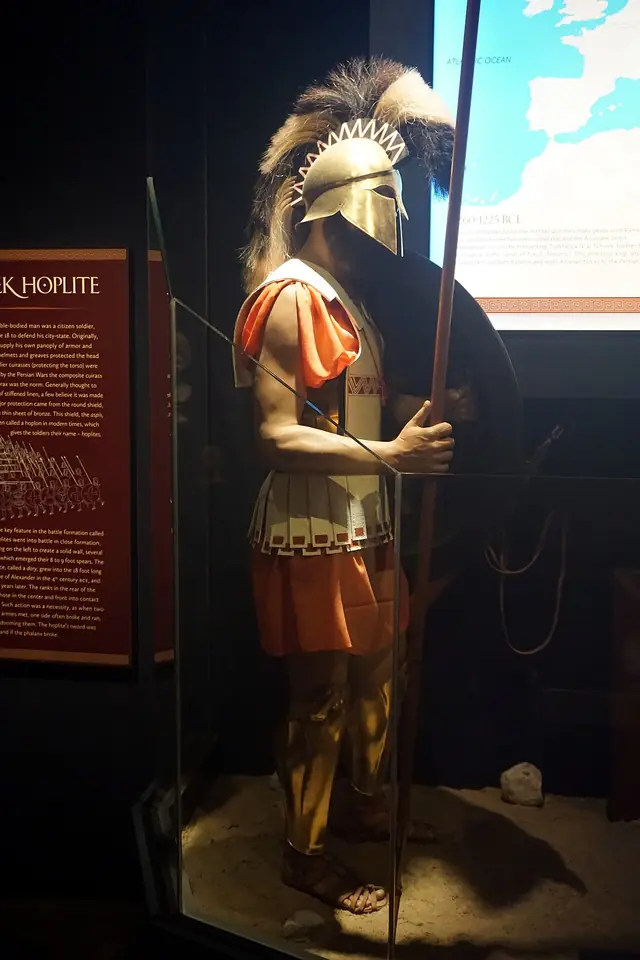
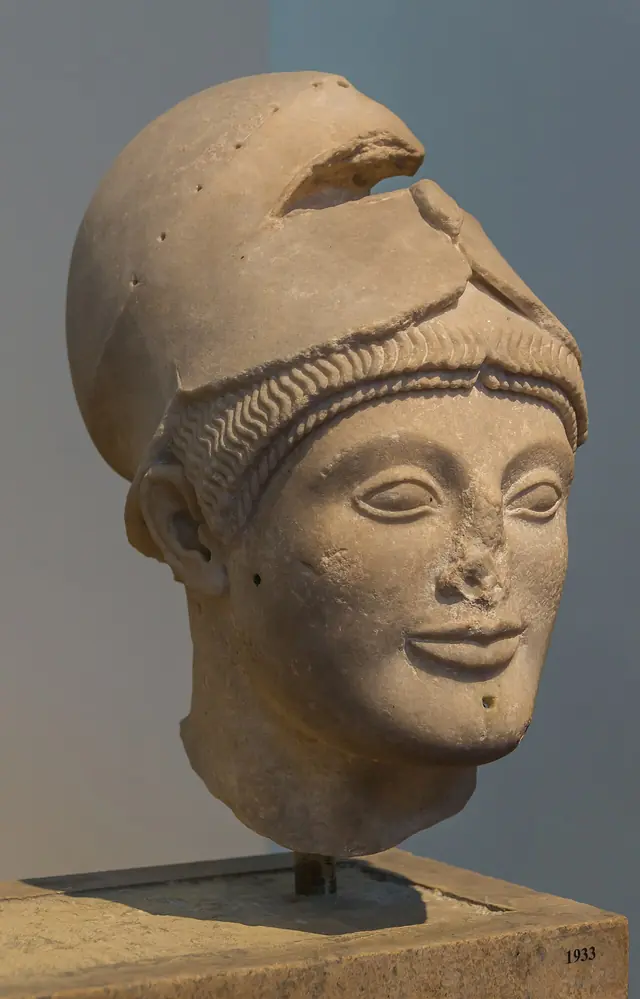
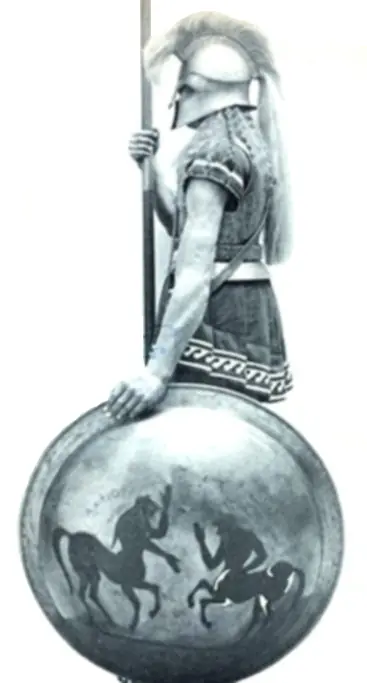
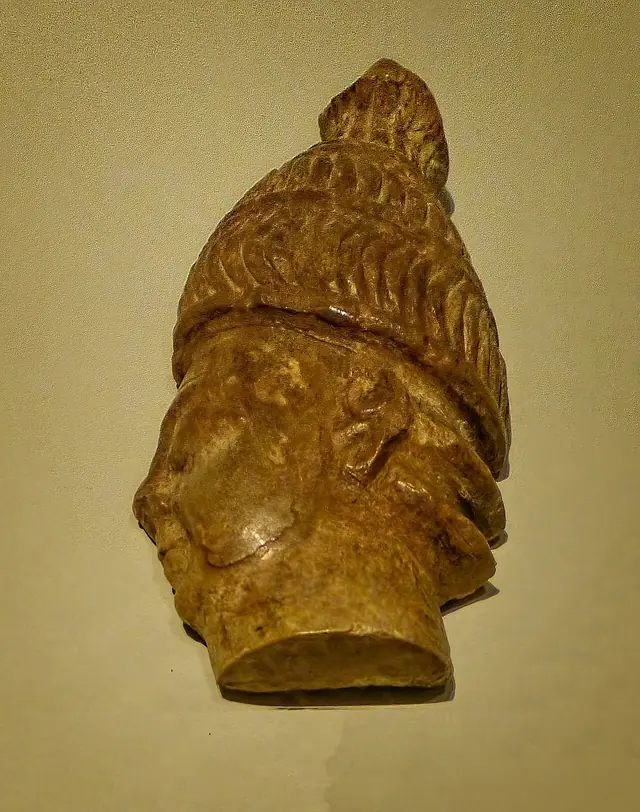
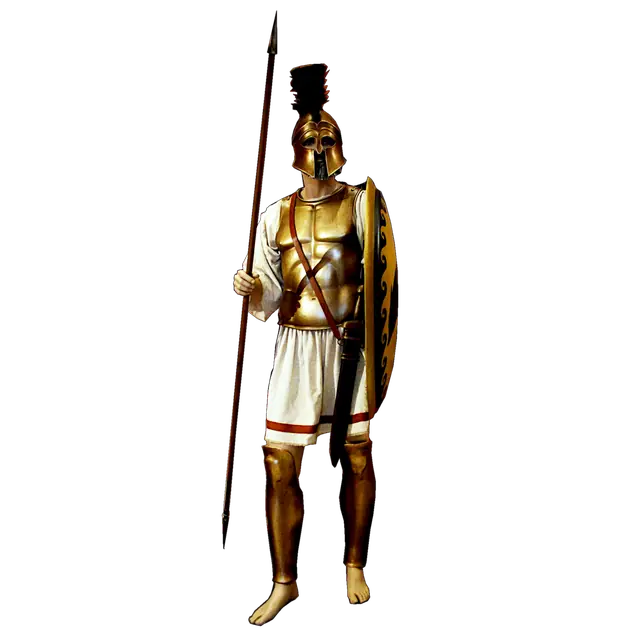
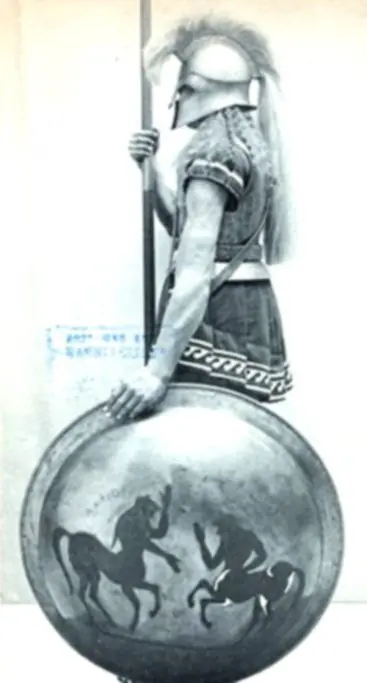
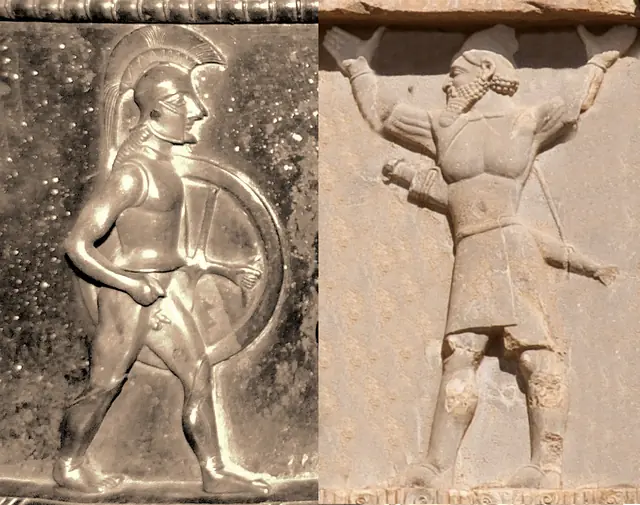
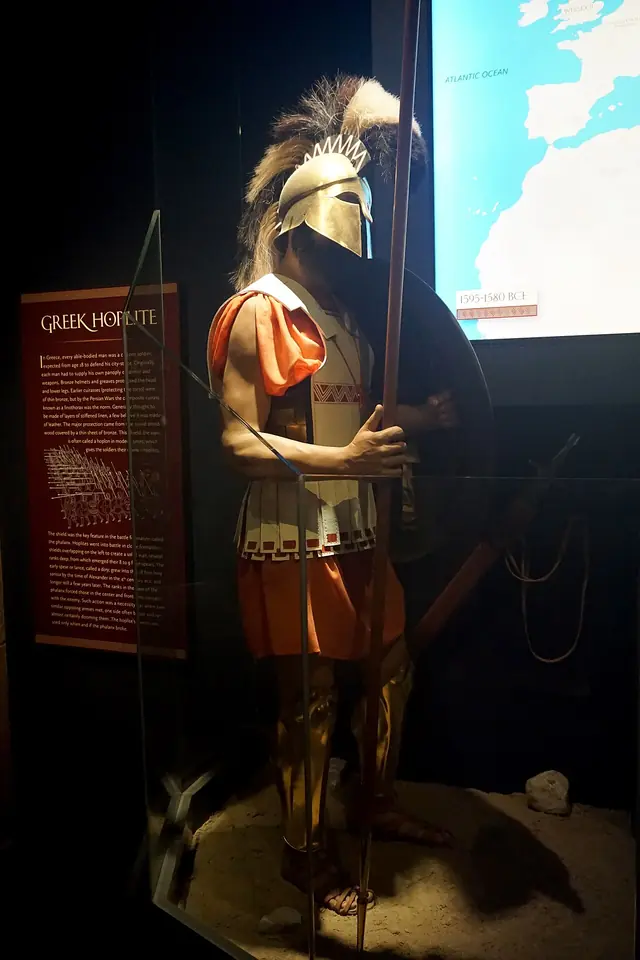
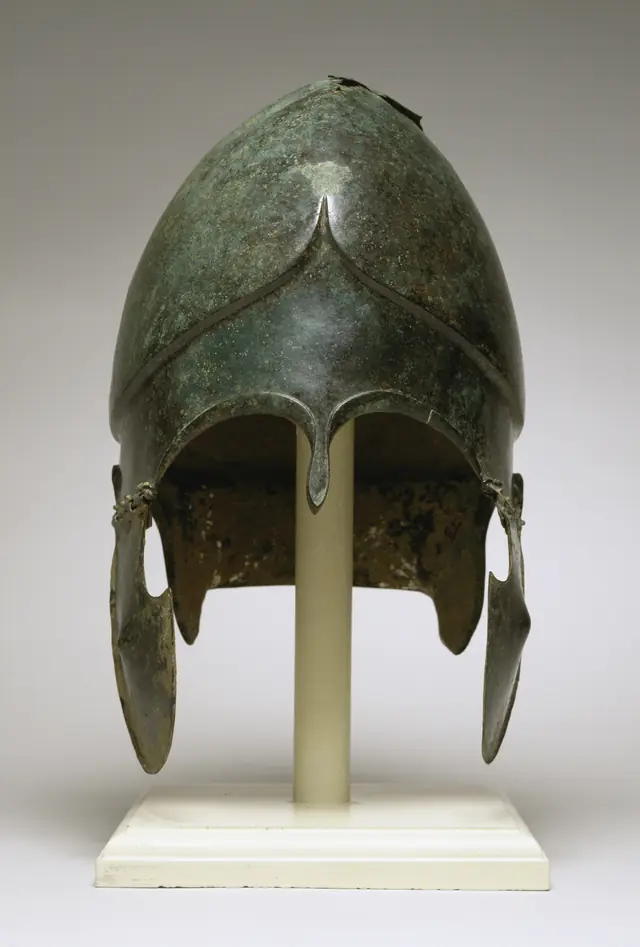
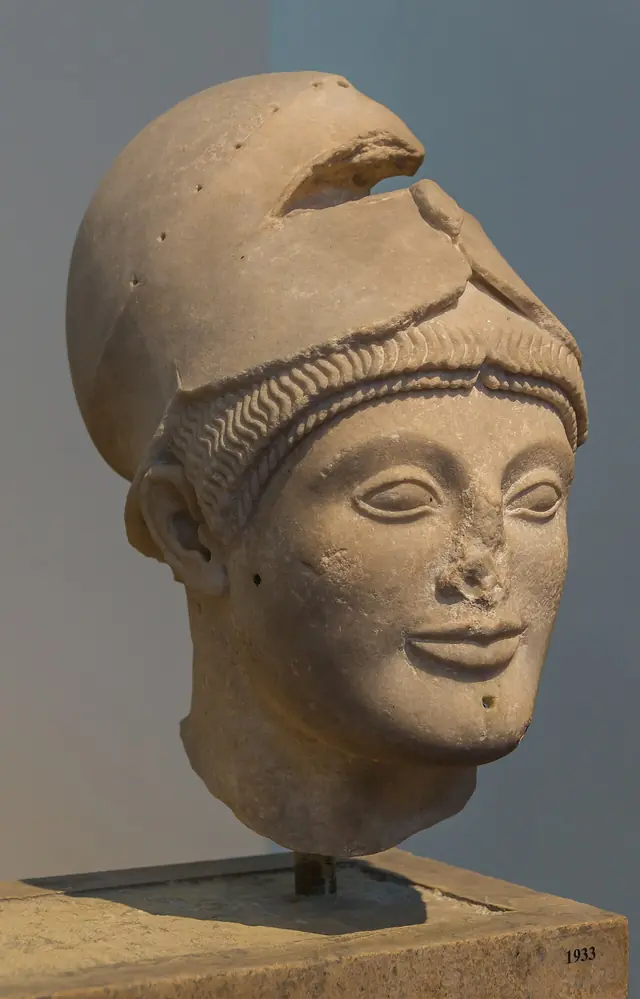
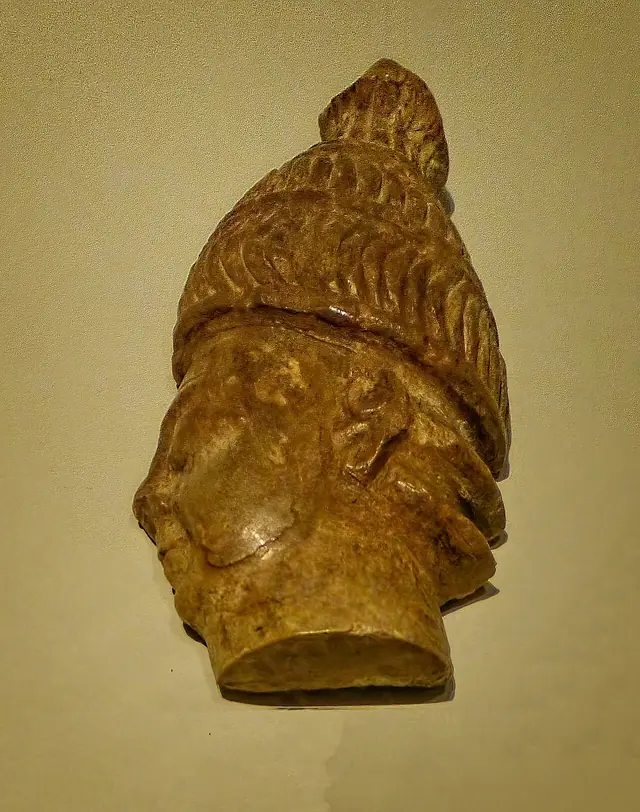
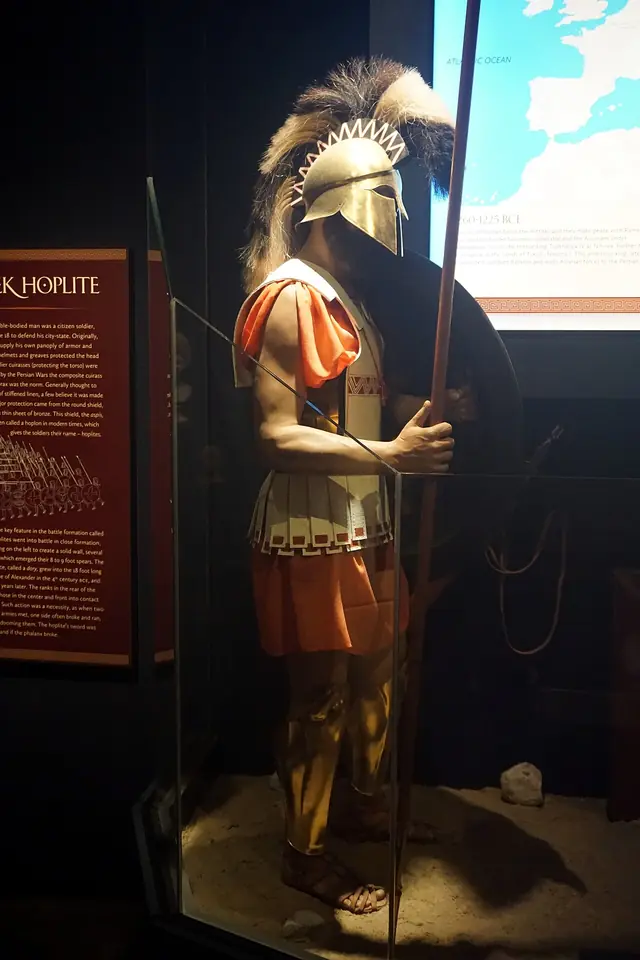
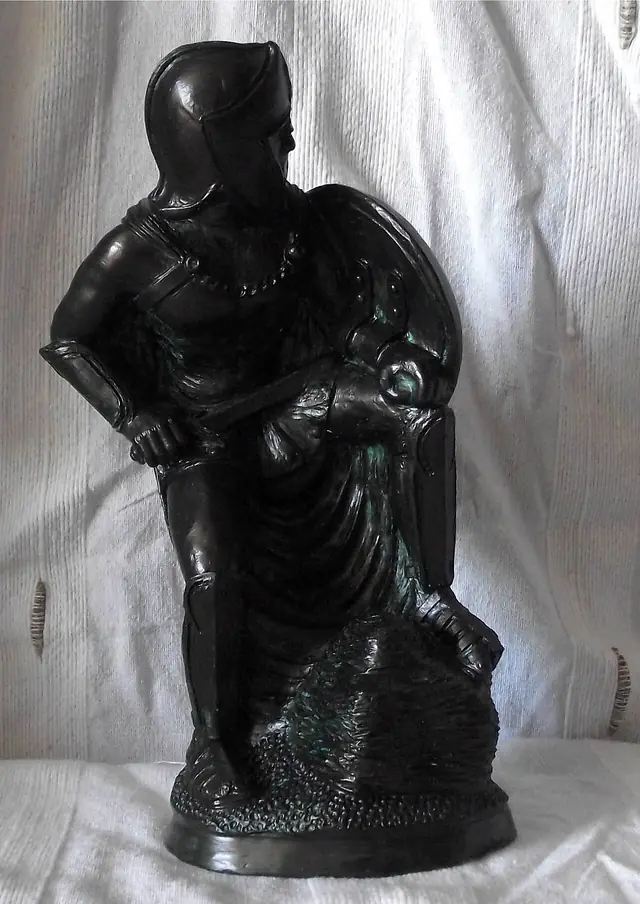
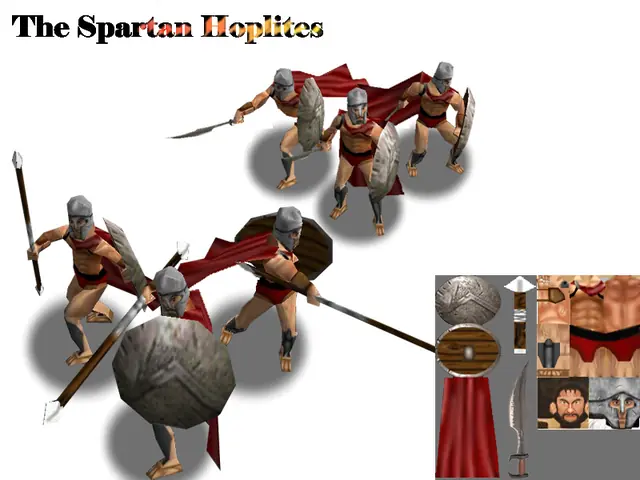
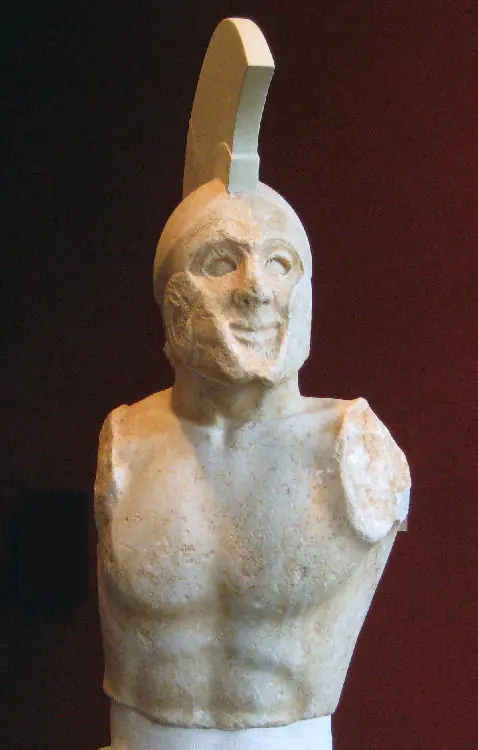
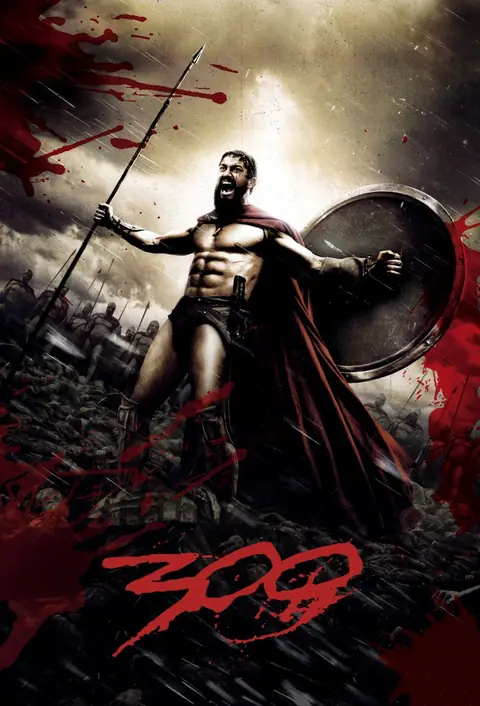
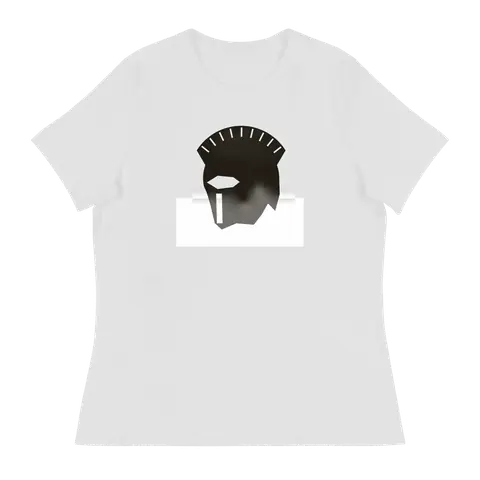
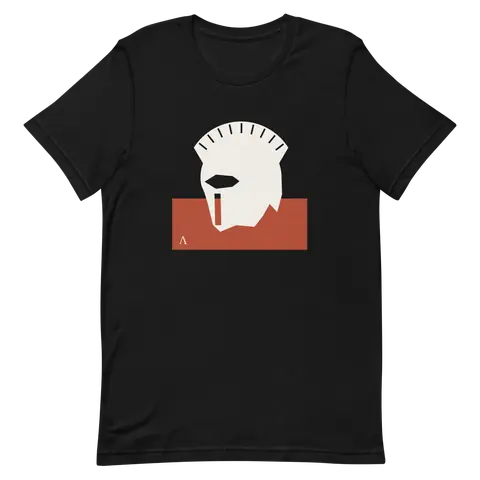
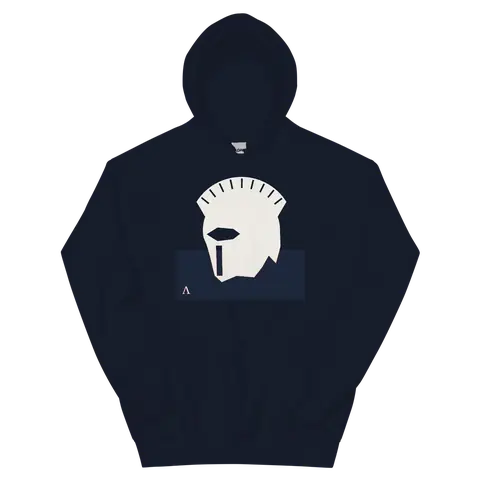
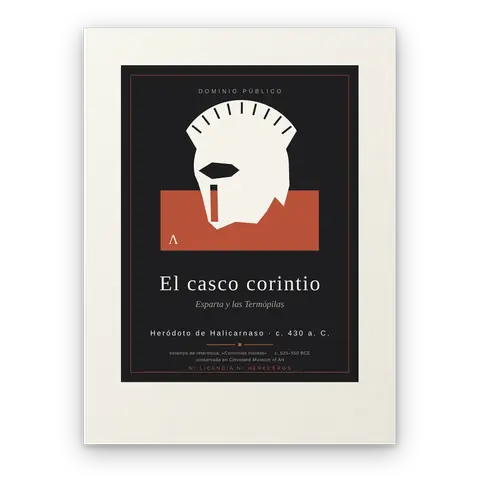
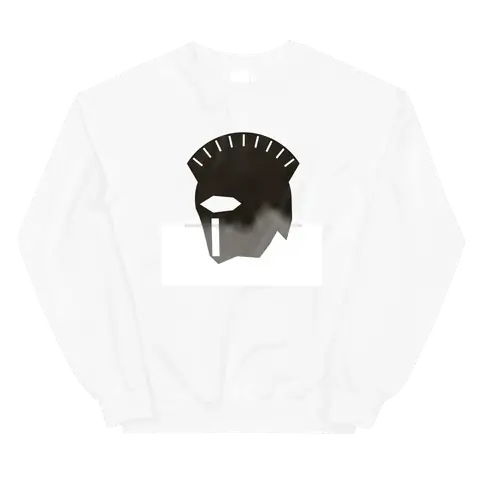
Almost everything anyone draws of a Spartan is equipment rather than man. The Corinthian helmet is a single piece of bronze that encloses the whole skull and leaves two slots for the eyes and one for the mouth; out of combat it was worn pushed back and resting on the crown of the head, which is the pose half of Greek statuary is in. The shield, the aspis, runs to about ninety centimetres and weighs between six and eight kilos: curved wood, a thin bronze facing and two grips, the porpax — a band for the forearm — and the antilabe, a cord near the rim. The only one to survive with its wooden core intact is the Bomarzo shield, found in Latium in 1830 and now in the Gregorian Etruscan Museum in the Vatican. Over the torso went body armour: bronze in the archaic period, a glued linen corslet by the fifth century, with bronze greaves on the shins. The bare chest of the film belongs to no army at all, but to the heroic nudity of sculpture; Herodotus never describes Greek equipment, but when he explains why the Persians lost at Plataea he says exactly the opposite — that they went in «without defensive armour», lightly clad against hoplites (IX, 62-63). The red cloak, on the other hand, is genuinely there: Xenophon reports that the soldier was issued a purple cloak and a bronze shield (Constitution of the Lacedaemonians, XI, 3).
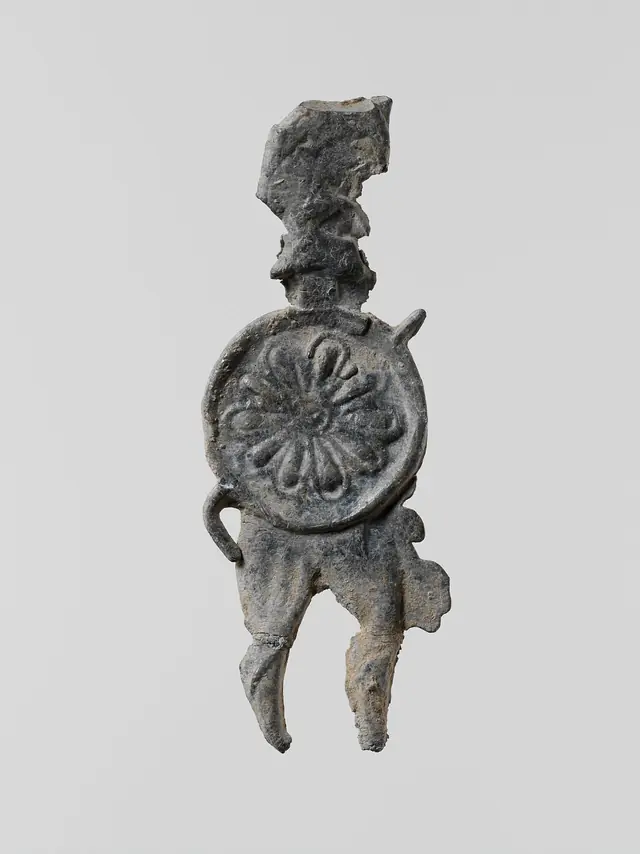
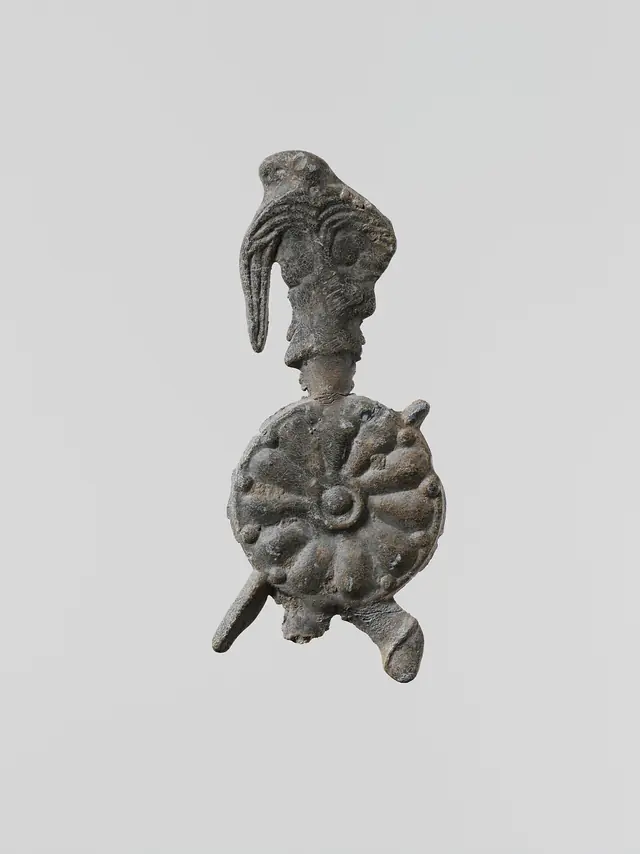
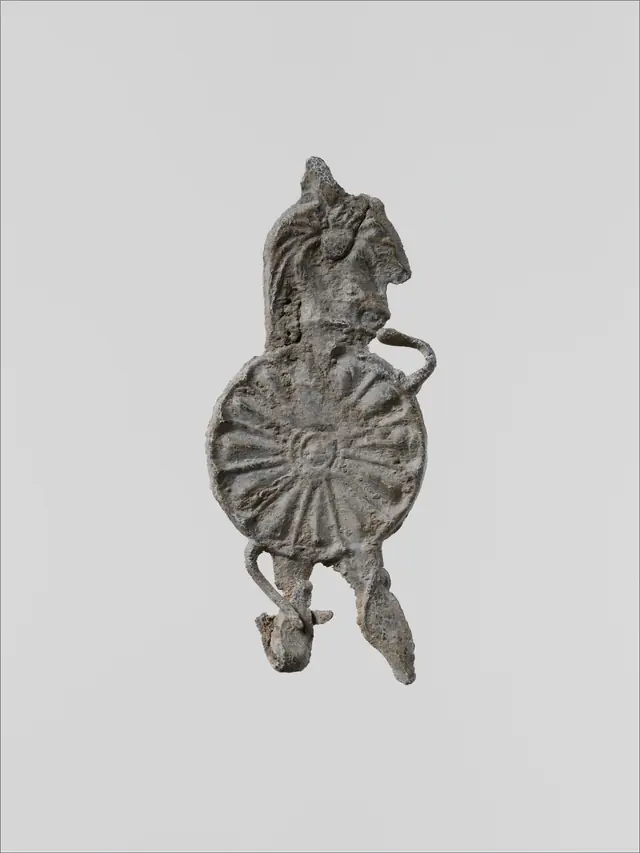
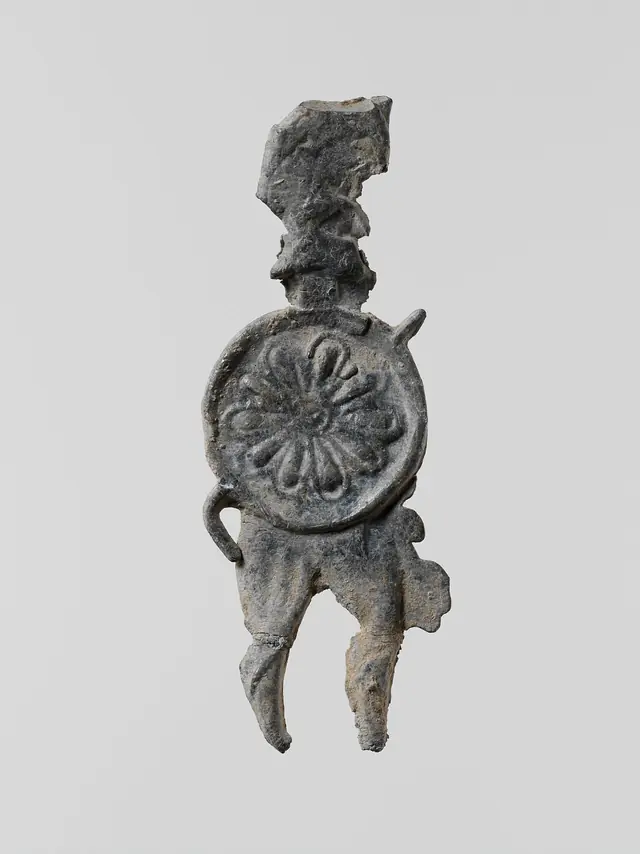
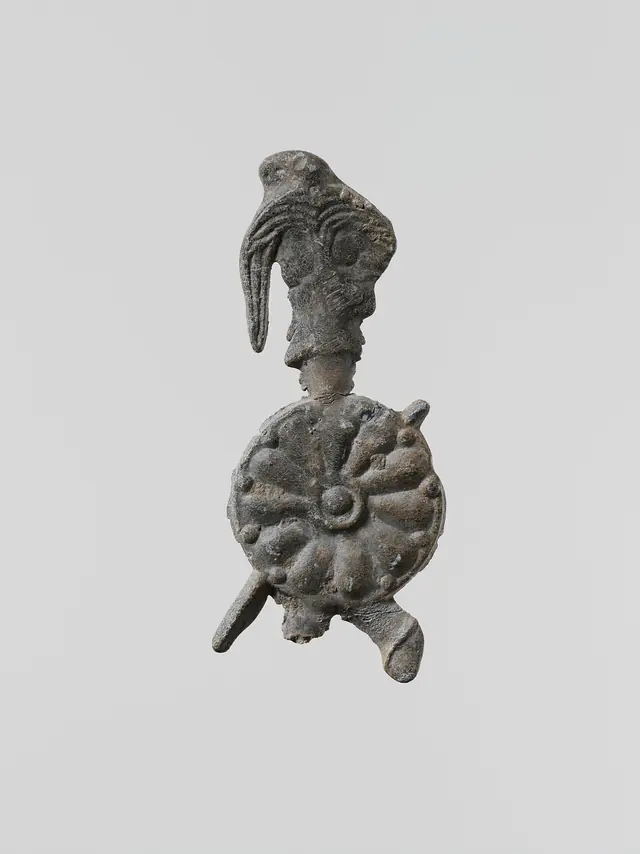
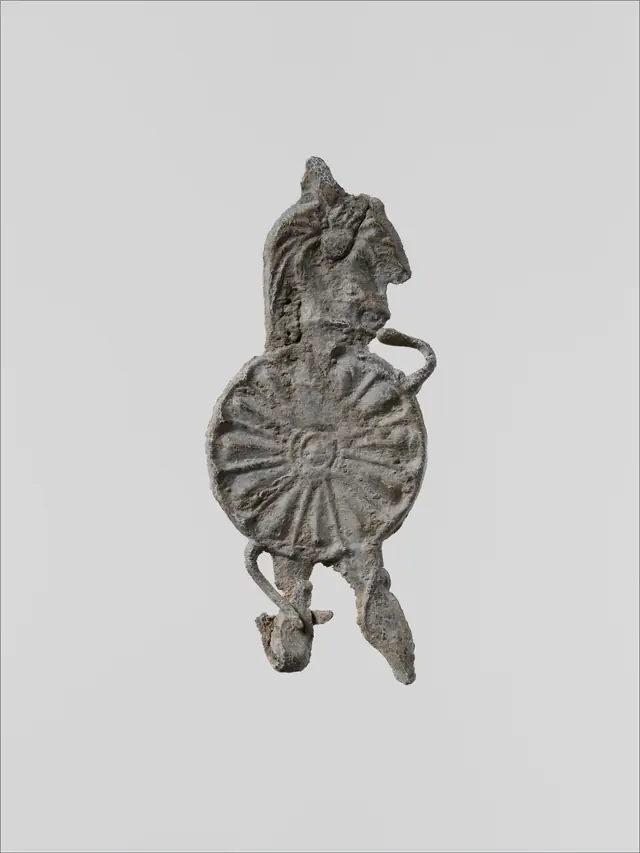
The lambda on the shield, the emblem no film ever leaves out, appears in no source for the battle. The entire ancient trace of it is half a line from a lost comedy by Eupolis (c. 446 – c. 411 BC), «he took fright at the sight of the gleaming lambdas», and we have it only because Photius of Constantinople copied it into the entry for «lambda» in his lexicon in the ninth century: the comedy comes some seventy years after Thermopylae, and reaches us second hand. Among the thousands of lead figurines from the Laconian sanctuaries, with shields decorated in a thousand different ways, there isn't one. What is genuinely of the period is the hair: the horseman Xerxes sent to spy on them found them exercising and combing their hair, and Demaratus had to explain to the king that a Spartan sees to his head when he is about to stake his life (VII, 208). Long hair was the mark of a free man.
Facing them, the Immortals, with wicker shields faced in leather, short spears counterweighted in silver, cane arrows and scale armour under their clothes. No masks of any kind.
The line Leonidas never said
«Molon labe», «come and take them», is not in Herodotus. It turns up in Plutarch, in the Sayings of Spartans in the Moralia (225D), nearly six hundred years later, and in Attic rather than the Doric Leonidas spoke.
What is there is better. Dienekes was told that the Persian arrows would blot out the sun, and answered that this was excellent news, since they would fight in the shade; Herodotus singles him out as the bravest of them all (VII, 226). And then the epitaph on the tomb, which Herodotus copies out unattributed: the three epigrams on the site were set up by the Amphictyons, and of those only the one for the seer Megistias was composed by Simonides of Ceos (c. 556 – c. 468 BC), out of friendship with the dead man (VII, 228).
Stranger, go tell the Lacedaemonians that we lie here, obedient to their laws. (VII, 228)
That the Spartan epitaph is Simonides's too is a much later idea: the earliest surviving attribution is Cicero's, four centuries afterwards (Tusculan Disputations, I, 101), and the Palatine Anthology repeats it (VII, 249). The poet's editors treat it as doubtful.
Nor are there any hunchbacks. Herodotus gives not one word to what Ephialtes looked like; the deformed monster is a far later invention. The real Ephialtes was killed years afterwards by Athenades of Trachis, over a matter unconnected with the betrayal, and the Lacedaemonians honoured him for it all the same (VII, 213).
And there were survivors, two of them. An eye infection kept Aristodemus out of the final fight and he went home; in Sparta nobody would light his fire or speak to him, and they called him «the coward» until he got himself killed at Plataea the following year. Pantites, away on an embassy in Thessaly, hanged himself on his return.
The boy who saw the 1962 film
The first link in the chain is The 300 Spartans (1962), directed by Rudolph Maté for Fox: Richard Egan as Leonidas, David Farrar as Xerxes, Kieron Moore as Ephialtes. It was shot in Greece, at the Vouliagmeni lagoon near Perachora, because the real coastline at Thermopylae has shifted over 2,500 years, and the Ministry of Defence made five thousand soldiers available as extras — though the budget only stretched to two battalions, some eleven hundred men, who played Greeks and Persians by turns.
A boy saw it and later said it «changed the course of my creative life». That was Frank Miller. In 1998 he published 300 at Dark Horse: five issues between May and September, titled Honor, Duty, Glory, Combat and Victory, coloured by Lynn Varley. They took three Eisner Awards in 1999.
Out of that came 300 (2006), directed by Zack Snyder and in cinemas in March 2007: a sixty-day shoot from 17 October 2005, entirely indoors against blue screen at the Icestorm Studios in Montreal, and a bespoke colour process, «the crush», that pushed the contrast towards sepia and charcoal. Gerard Butler, Rodrigo Santoro as a gilded, outsized Xerxes, Lena Headey, David Wenham narrating. $468.8 million, and a formal complaint from Iran's Academy of the Arts to Unesco.
300: Rise of an Empire (2014), directed by Noam Murro, doesn't adapt Thermopylae at all: it heads off to Marathon, Artemisium and Salamis with Eva Green as Artemisia, and draws on Xerxes, a Miller comic still unpublished when the film came out.
Outside the sword-and-sandal line, the strangest echo of all: Go Tell the Spartans (1978), directed by Ted Post with Burt Lancaster, its title taken from the epitaph. A corporal in Vietnam comes across a cemetery holding 302 Frenchmen from the Indochina war, and translates the sign over the gate.
Who still gets paid and who doesn't
Herodotus died around 425 BC: his text belongs to nobody. The translations and the images are another matter, because each one is somebody's work.
The Spanish rule sits in the consolidated text of the Spanish Intellectual Property Act: 70 years from the author's death, and 80 years for anyone who died before 7 December 1987, because the fourth transitional provision preserves the term set by the 1879 Act for them. The clock starts on the 1 January following the death.
- Bartolomé Pou (1727-1802), the Majorcan Jesuit whose Spanish translation of the nine books was published posthumously in Madrid in 1846: free since 1883.
- Jacques-Louis David (1748-1825), who painted Leonidas at Thermopylae, 3.95 by 5.31 metres, finished in 1814 and now in the Louvre, in which a soldier is carving the epitaph into the rock: free since 1906.
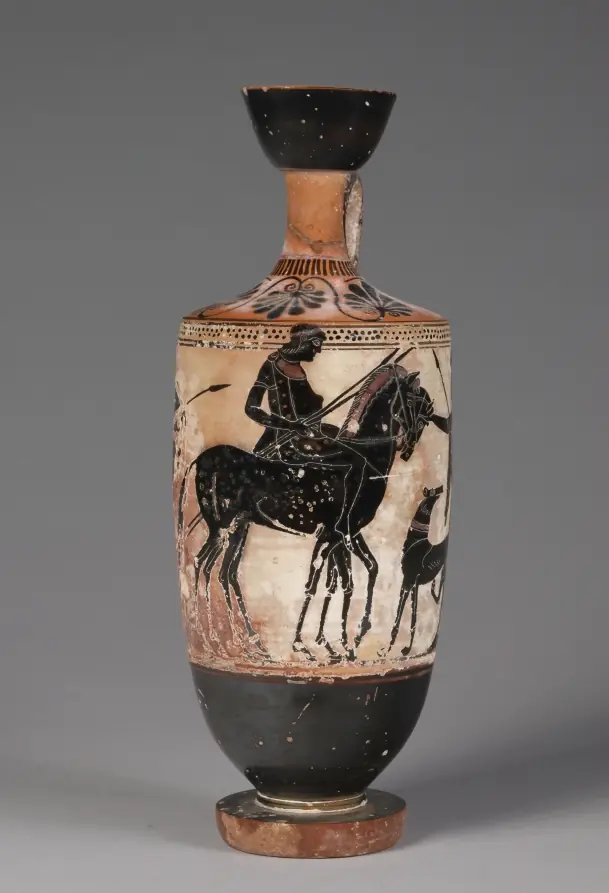
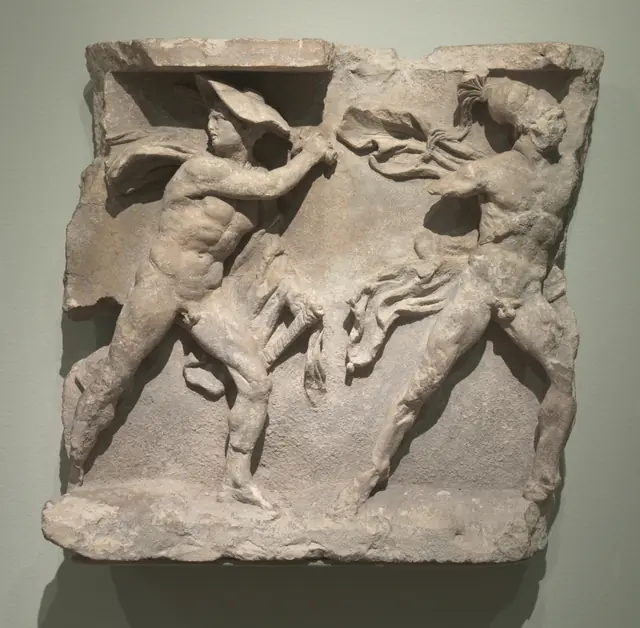
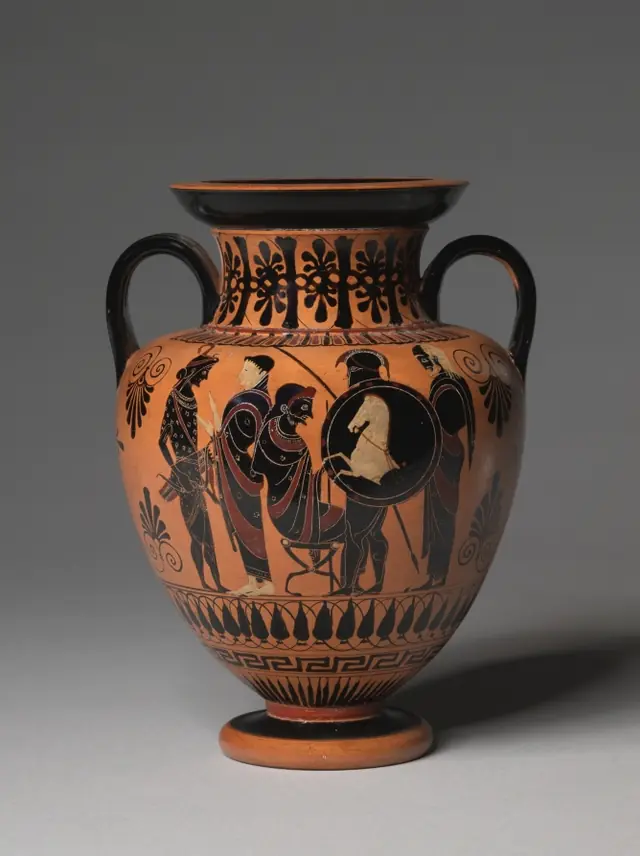
- Greek helmets, shields and vases have neither an author nor a term.
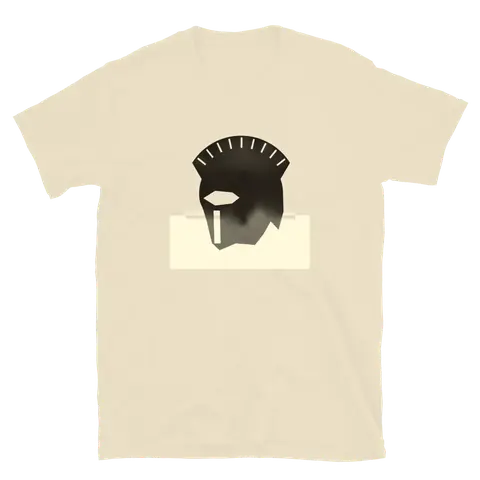
What is not free is Miller's comic and the films, which is why we leave them alone. The designs come from the substrate, never from the adaptation.