The 1872 painting that set Gladiator going
Jean-Léon Gérôme (1824-1904) painted Pollice Verso in 1872: a murmillo standing over a downed retiarius and, up in the box, the Vestals leaning out with their thumbs turned down. It hangs in the Phoenix Art Museum. Before Ridley Scott had so much as read the script of Gladiator, the producers put a reproduction of it in front of him.
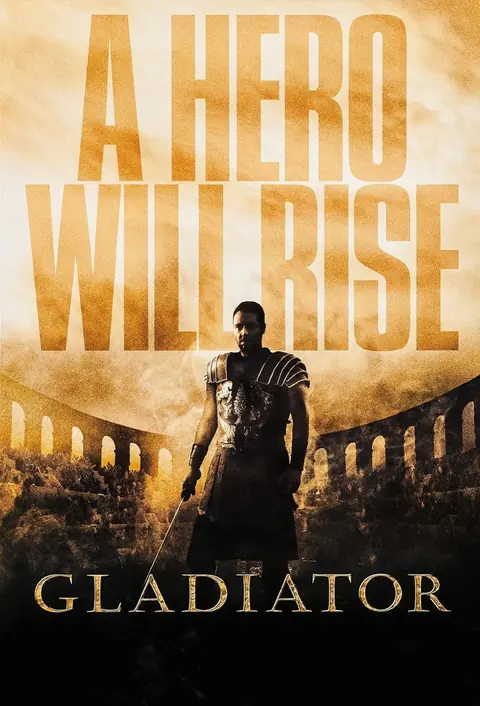
“That image spoke to me of the Roman Empire in all its glory and wickedness. I knew right then and there I was hooked.”
In the film, Commodus spares Maximus with a thumb turned up. The entire choreography of the gesture comes off that canvas, not out of Rome: the Latin sources speak of a thumb turned — pollice verso — without saying which way, and no Roman document survives to confirm that downwards meant death.
The other line the genre lives on is his as well. Gérôme exhibited Ave Caesar! Morituri te salutant at the Salon of 1859; today it is in the Yale University Art Gallery. Suetonius records it exactly once, in his life of Claudius, and in different words — Have imperator, morituri te salutant — shouted by condemned men before a mock naval battle on the Fucine Lake in the year 52. They were not gladiators.
A fight with the score written in beside it
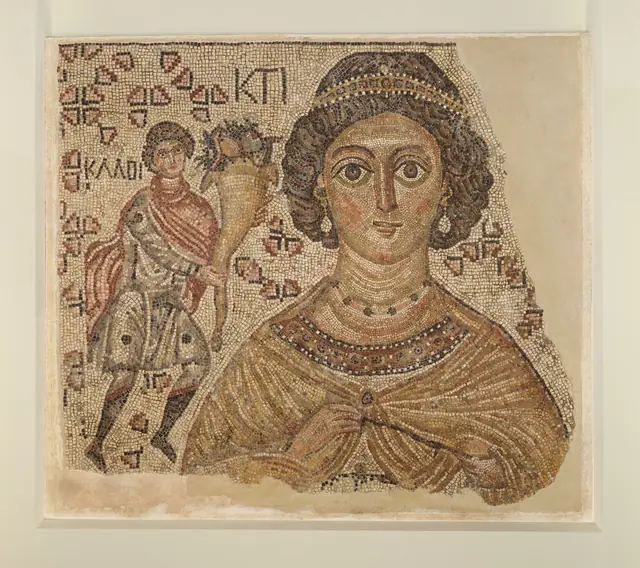
In the Roman Hispania room of the National Archaeological Museum in Madrid there is a third-century mosaic split into two scenes. Below, the retiarius Kalendio has thrown his net over the secutor Astyanax and is going at him with the trident while the lanista cheers the fight on. Above, the same fight already over: Kalendio down on the sand, Astyanax on his feet.
Beside the winner's name it reads VICIT. Beside the other there is an O struck through with a stroke: the theta nigrum, the Greek letter theta that Greek and Latin epigraphy used to mark the dead, almost certainly from thánatos. The museum itself also glosses it as an abbreviation of the Latin obiit, though that second reading is disputed. Whichever it means, the outcome is the same: he died. The mosaicists noted the ending down the way a clerk fills in a return.
The piece turned up in 1670 in the baths of a house on the Caelian Hill in Rome, passed through the collection of Cardinal Camillo Massimo and was bought by Charles III in the eighteenth century; it has been among the holdings of the National Archaeological Museum since 1867. The same convention appears on the Galleria Borghese mosaic — twenty-eight metres long, dug up in 1834 on the Torrenova estate on the Via Casilina — with the names inscribed and, next to some of them, that same mark of death, a theta.
The cupboard that came out of the ash in 1766
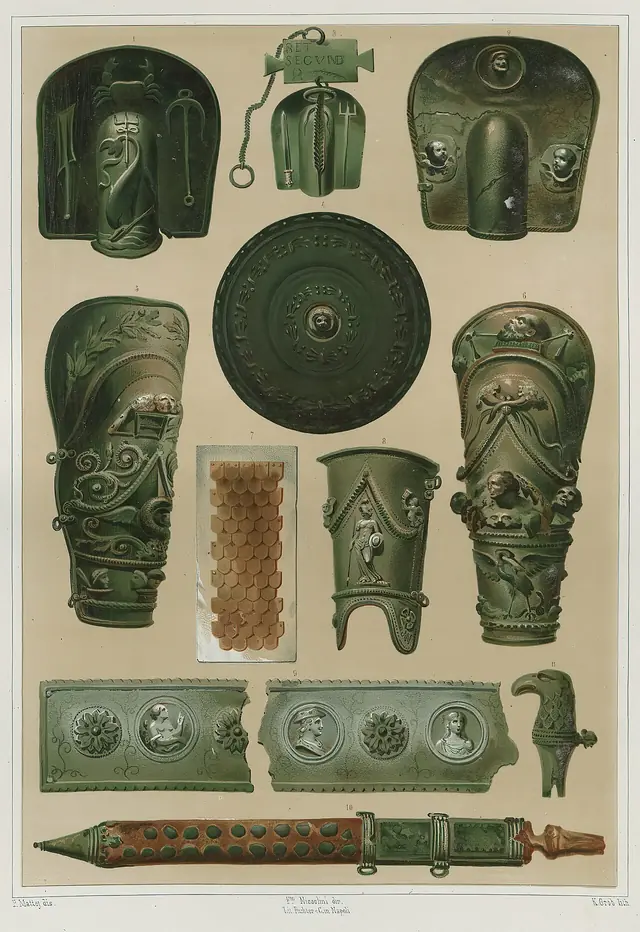
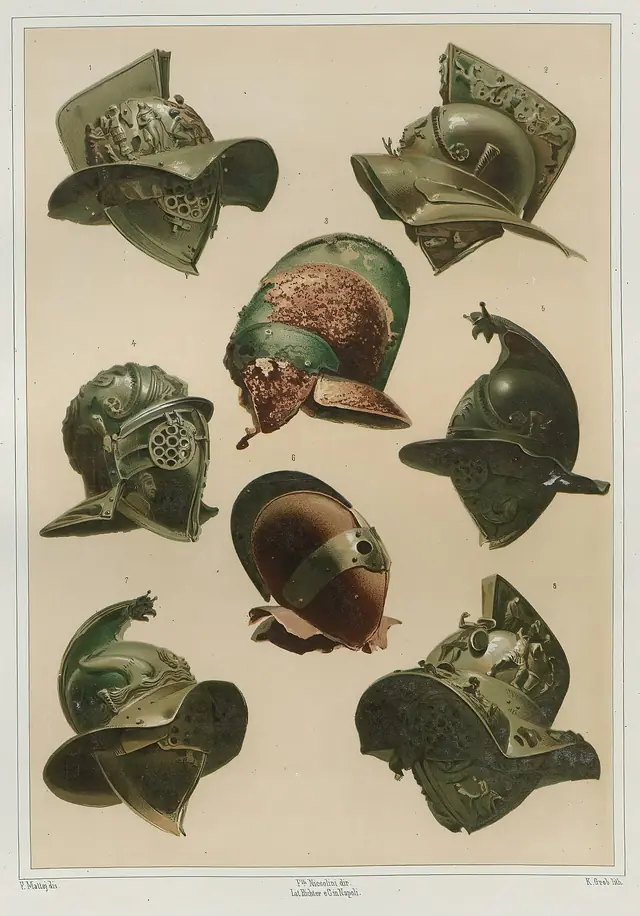
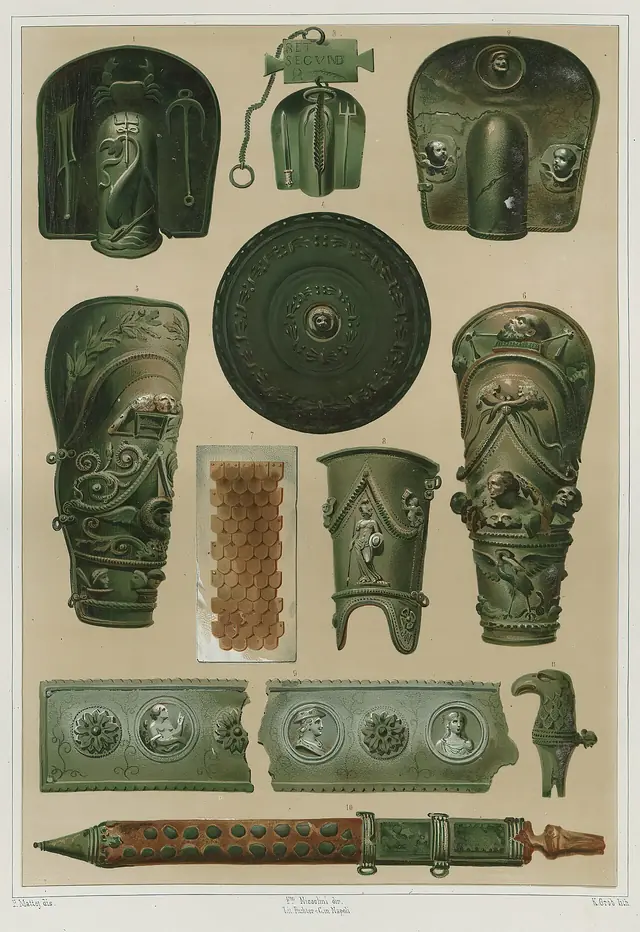
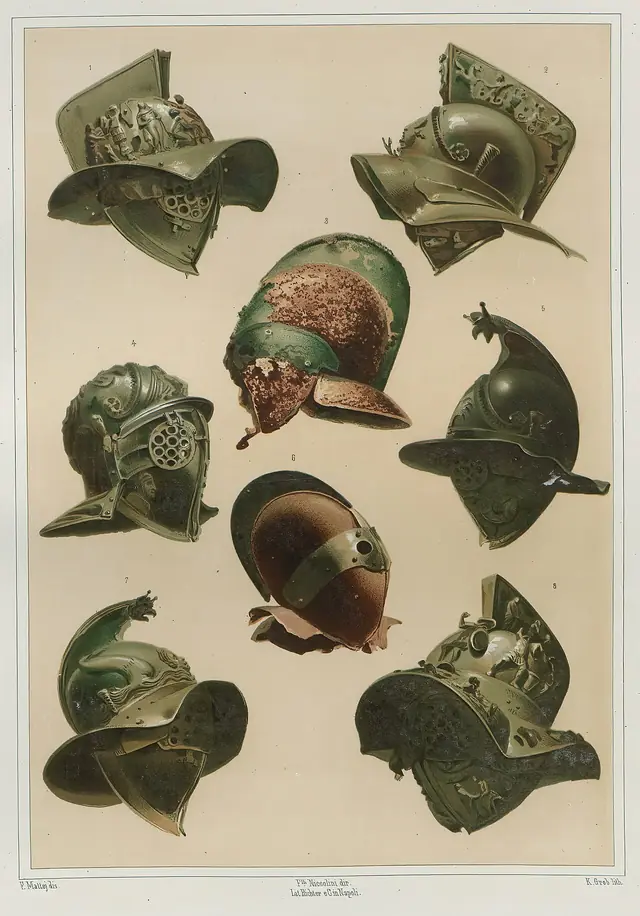
In December 1766 the excavators at Pompeii went into the square portico behind the stage of the large theatre. It had served as a place for the audience to stroll between acts until the earthquake of 62 left it unusable and it was converted into a gladiators' barracks. The campaigns of 1766 to 1768 brought out the whole kit, carefully stored away in two rooms.
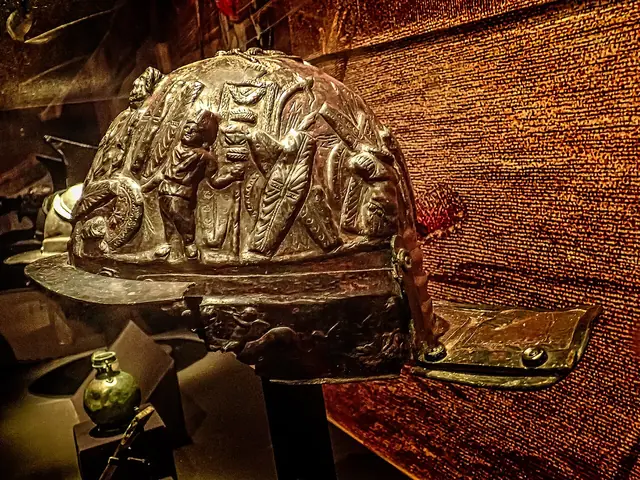
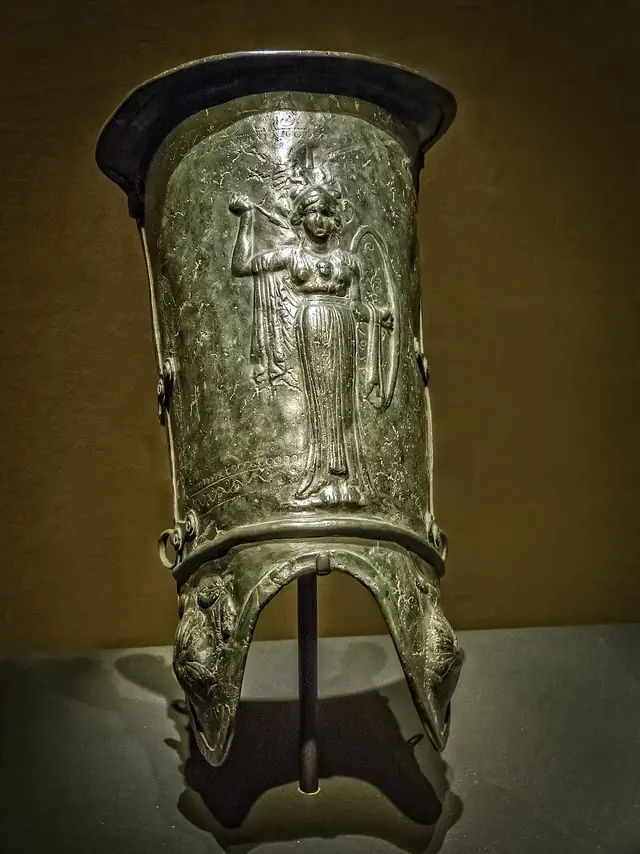
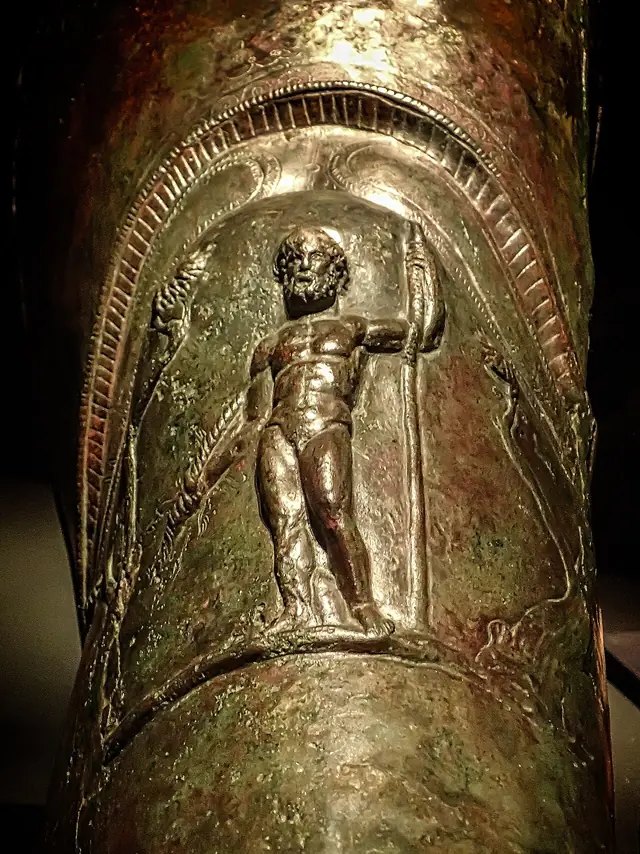
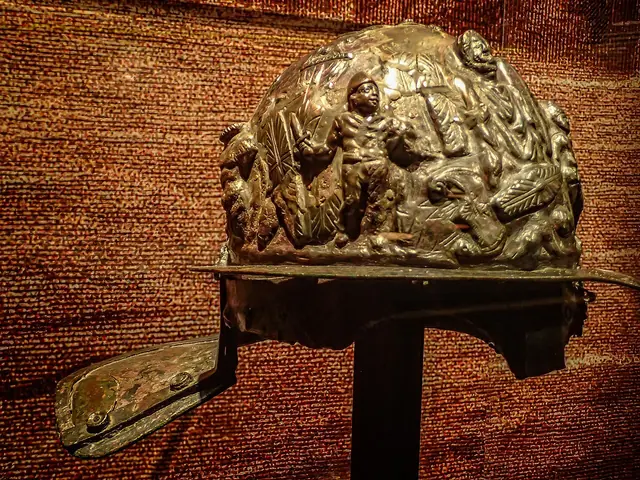
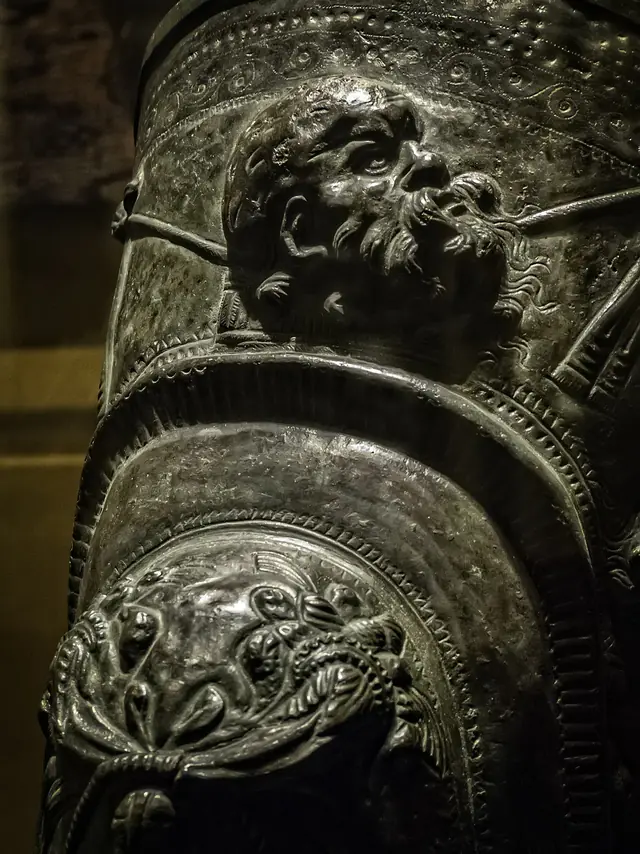
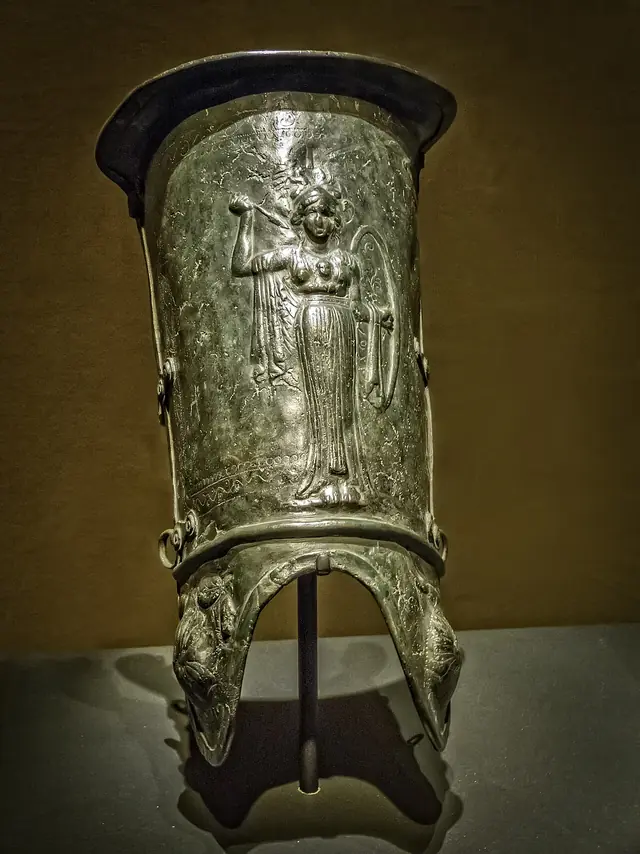
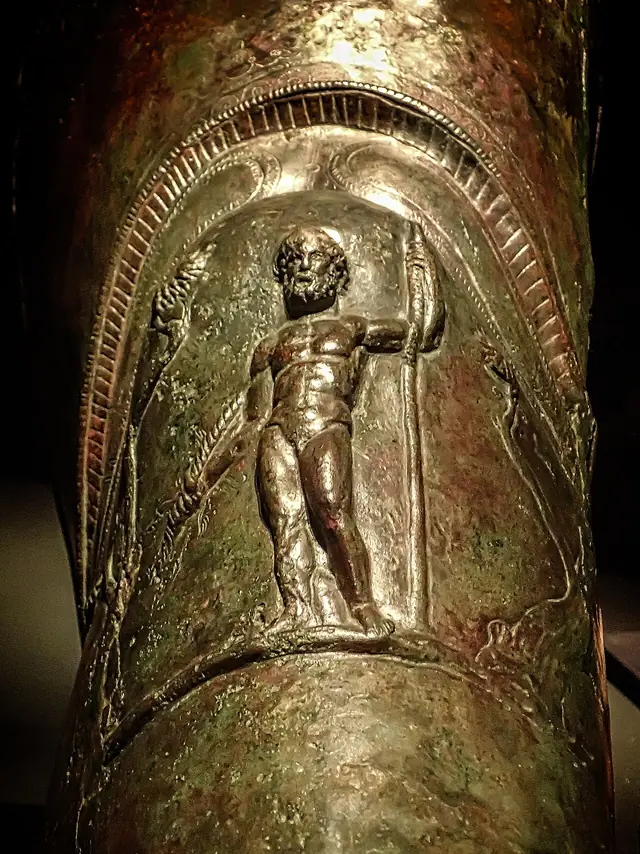
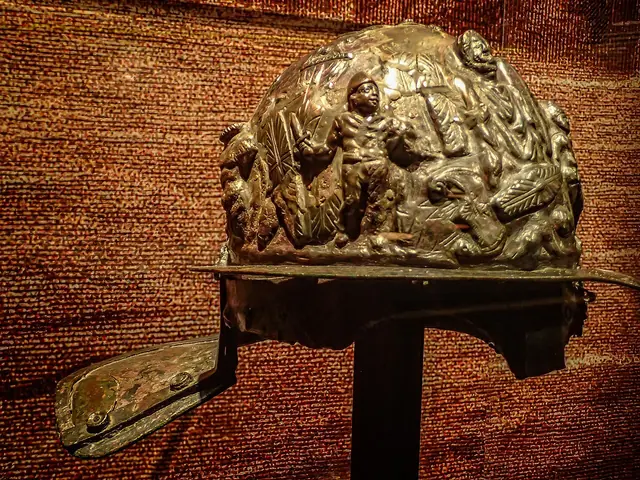
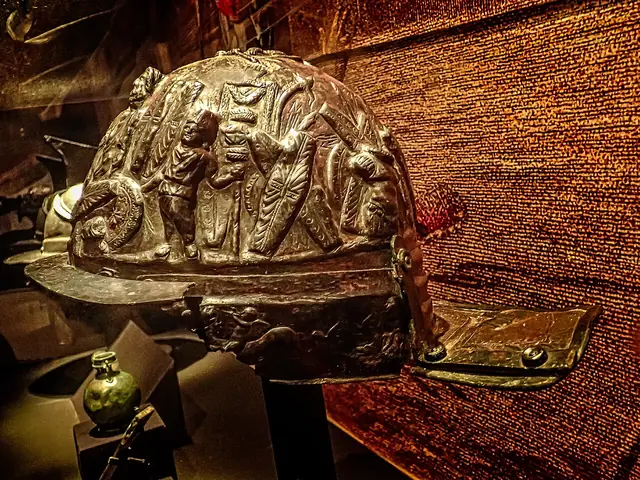
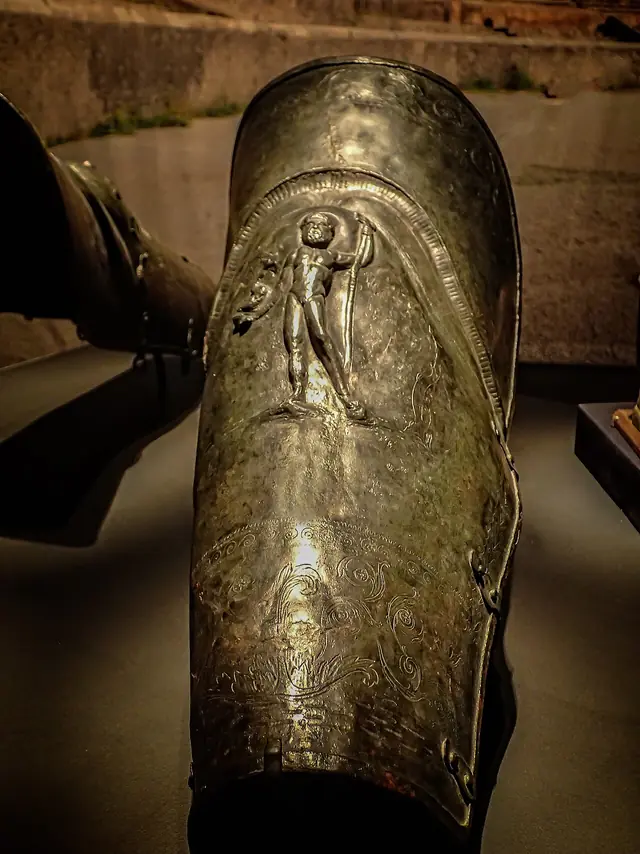
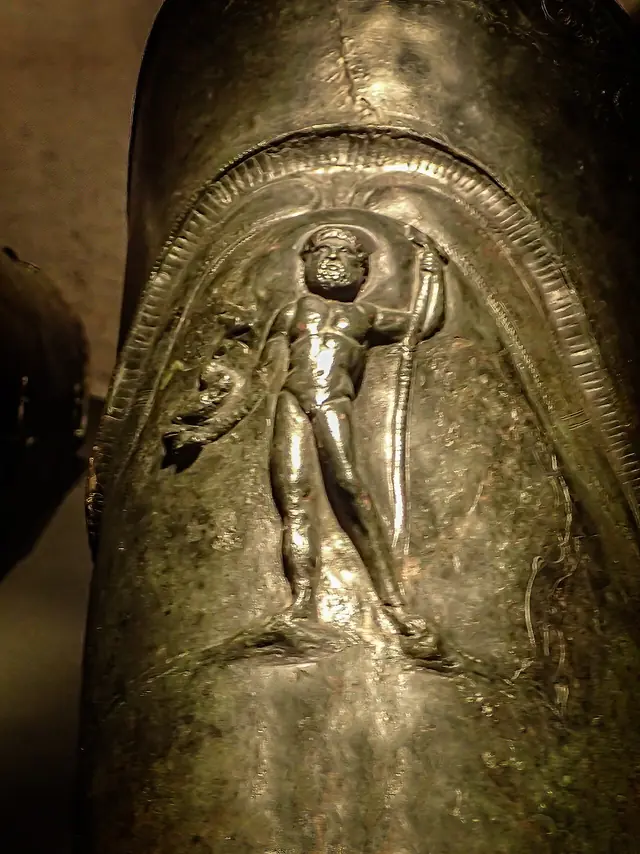
Murmillo helmets with a herm of Hercules and Bacchic scenes in relief. A Thracian helmet with a griffin crest and a Medusa. Greaves with Jupiter, Neptune and Minerva. They are barely dented: this was parade armour, not fighting armour. It is in the National Archaeological Museum in Naples, and it is the catalogue the props departments have been copying from ever since.
The strangest design is the secutor's, and it is the only purely functional one: smooth, rounded, undecorated, with two tiny holes for the eyes. Round so the net could find nothing to catch on; the holes that small so the point of the trident could not get in. The helmet tells you who you were fighting.
The orchestra of the arena and two women with shields
The Zliten mosaic was found by the archaeologist Salvatore Aurigemma in October 1913, in a villa by the sea on the Libyan coast, near Leptis Magna. It is second-century and it orders the show by matched pairs of types: equites, retiarius against secutor, Thracian against murmillo, plus the hunts and the executions.
At one end is the thing almost nobody expects: the band. A woman plays a water organ and beside her the brass horns sound. The fights had live music, and we have its portrait.
In the British Museum there is a marble relief from Halicarnassus, present-day Bodrum. Two women gladiators squared up: long shield, greaves, arm guard, head bare. The Greek inscription gives their fighting names, Amazon and Achillia, and says they were missae: released with honour, whether because they finished level on their feet or because they were discharged from the trade. It is the only bout between women gladiators whose names we know.
From Piranesi's plate to the sound stage
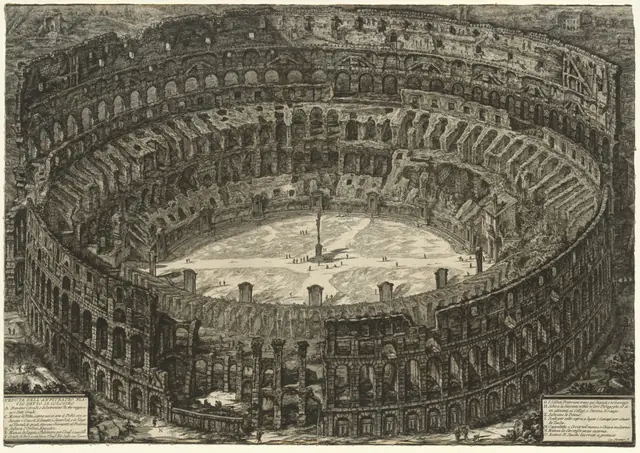
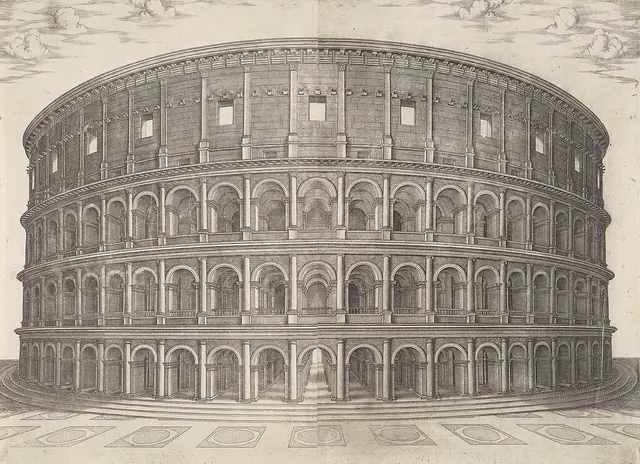
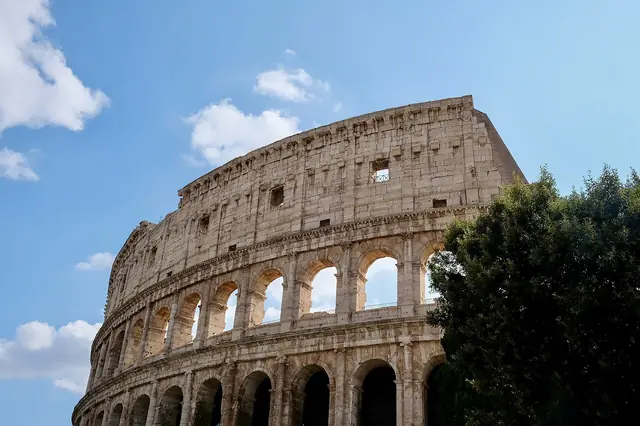
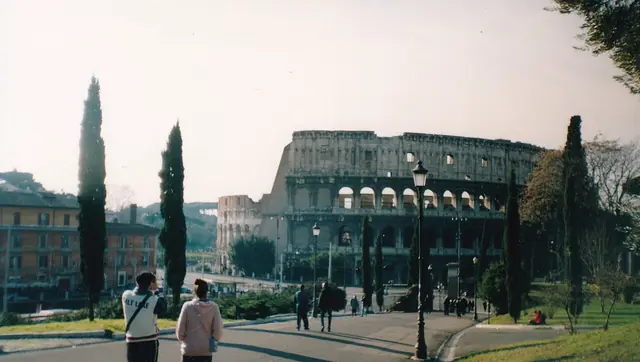
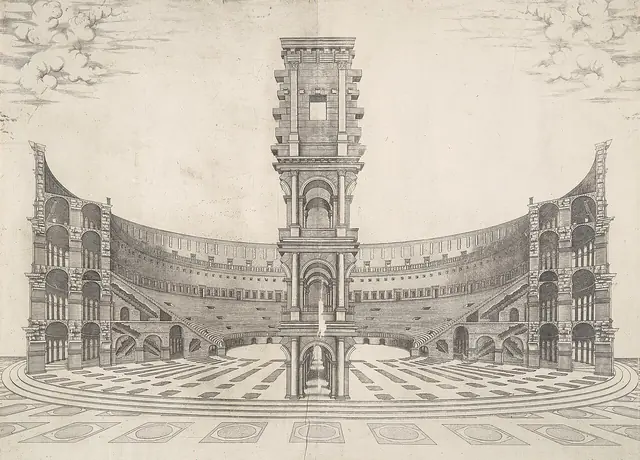
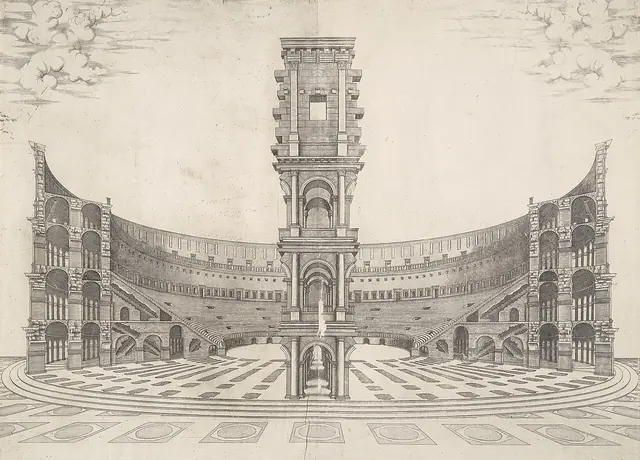
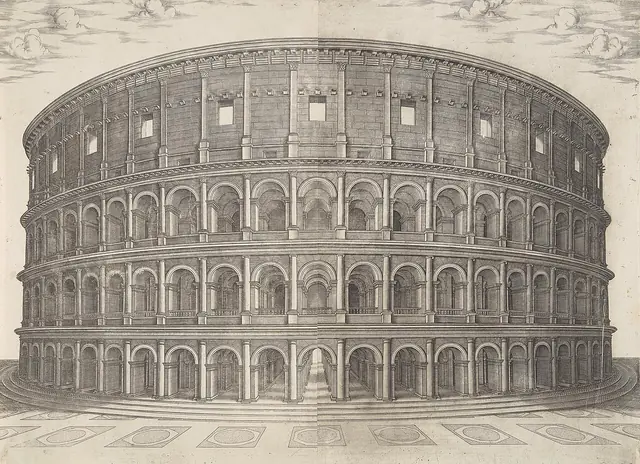
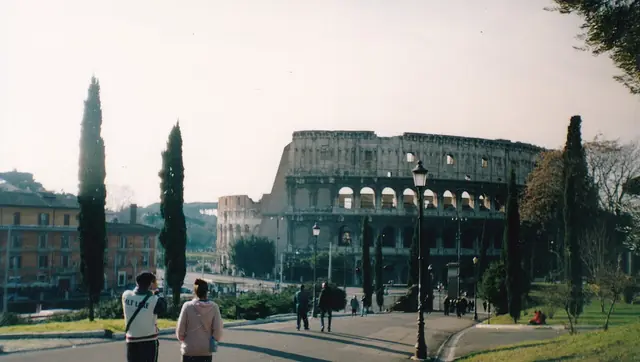
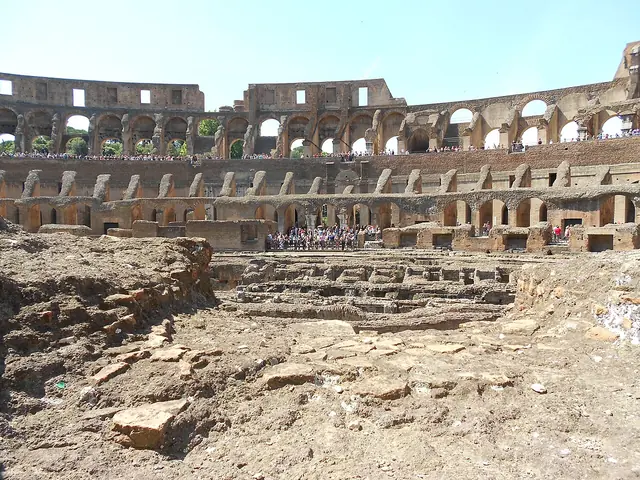
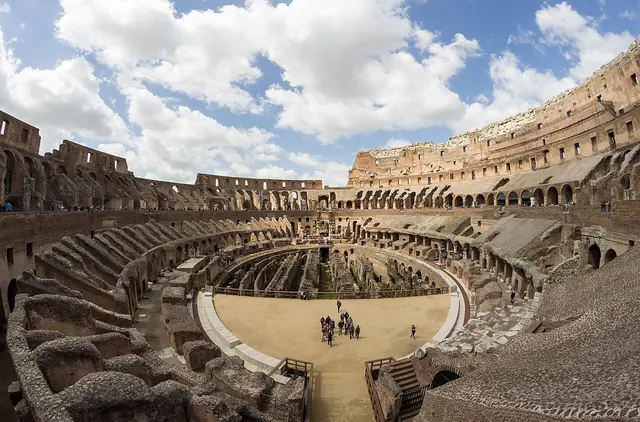
Giovanni Battista Piranesi (1720-1778) engraved the Colosseum four times. The last, Veduta dell'Anfiteatro Flavio detto il Colosseo, dates from 1776 and fills a sheet of 76 × 101 cm: a bird's-eye view that opens the amphitheatre up as though it were a plan, with minute figures in the middle to make the scale land. Piranesi labelled the tiers, marking which social class sat in each.
The other supplier of images is Lawrence Alma-Tadema (1836-1912), who painted Romans on blinding white marble with a fanatical archaeological accuracy. Jesse Lasky Jr., co-writer of The Ten Commandments, recalled that Cecil B. DeMille would lay his plates out in front of the set designers to explain what he was after. That marble antiquity is the one in Intolerance (1916), Ben-Hur (1925) and Cleopatra (1934); Gladiator has been called an Alma-Tadema in half-light.
- Quo Vadis (1913), by Enrico Guazzoni, from Sienkiewicz's novel of 1896: 5,000 extras and two hours of running time. It founded the genre.
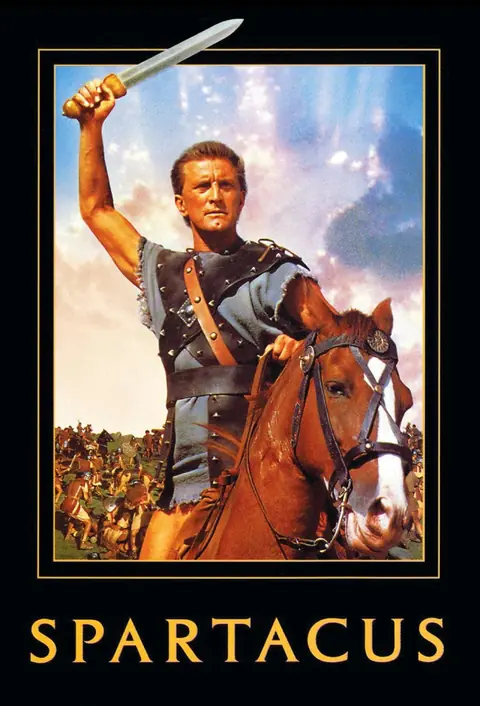
- Spartacus (1960) adapts Howard Fast's 1951 novel, which is still in copyright: nothing is taken from there. The revolt itself is told by Plutarch, in the Life of Crassus, and by Appian: that is where the gladiators of Lentulus Batiatus's school at Capua come from, cutting their way out in 73 BC with knives and roasting spits from the kitchen.
- Centurion (2010) and The Eagle (2011) lean on the vanished Ninth Legion, a mystery popularised by Rosemary Sutcliff's novel in 1954 and steadily dismantled by archaeology: there are tile stamps of the legion at Nijmegen dated to around 120, after the supposed massacre in Caledonia.
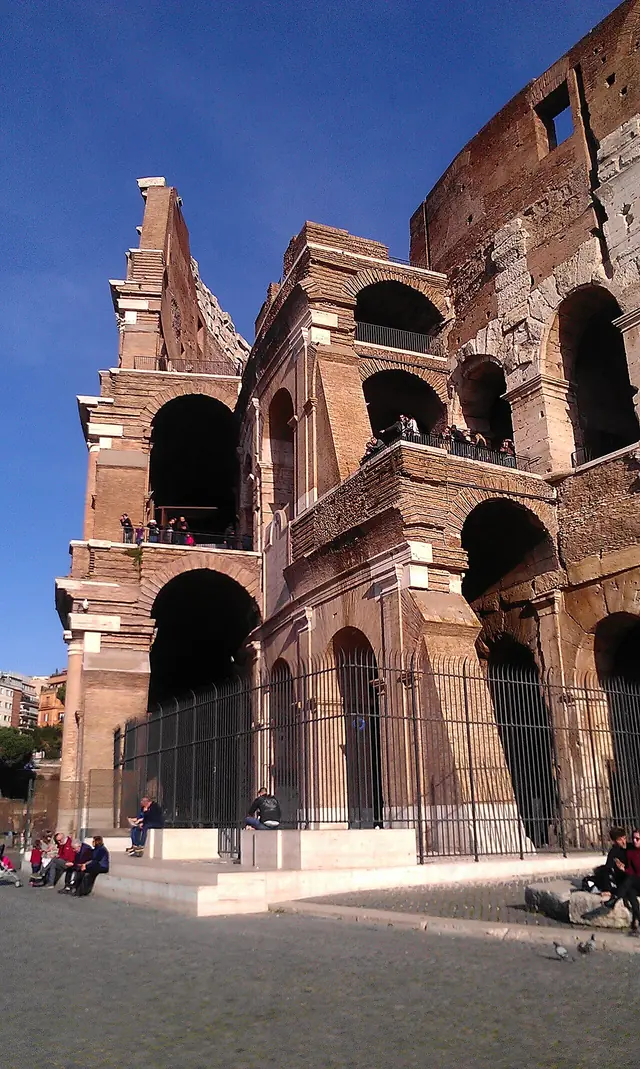
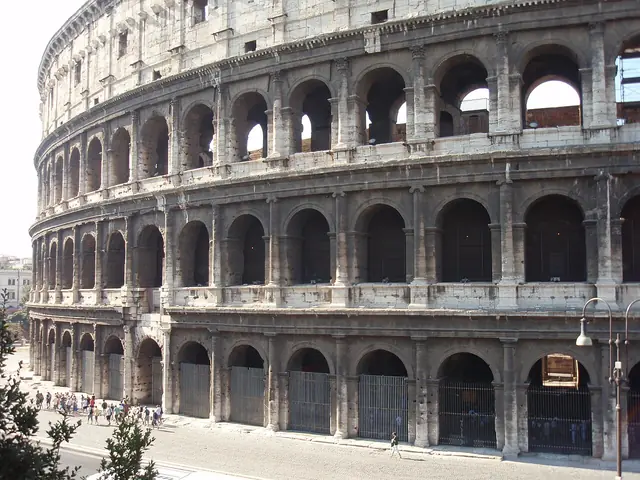
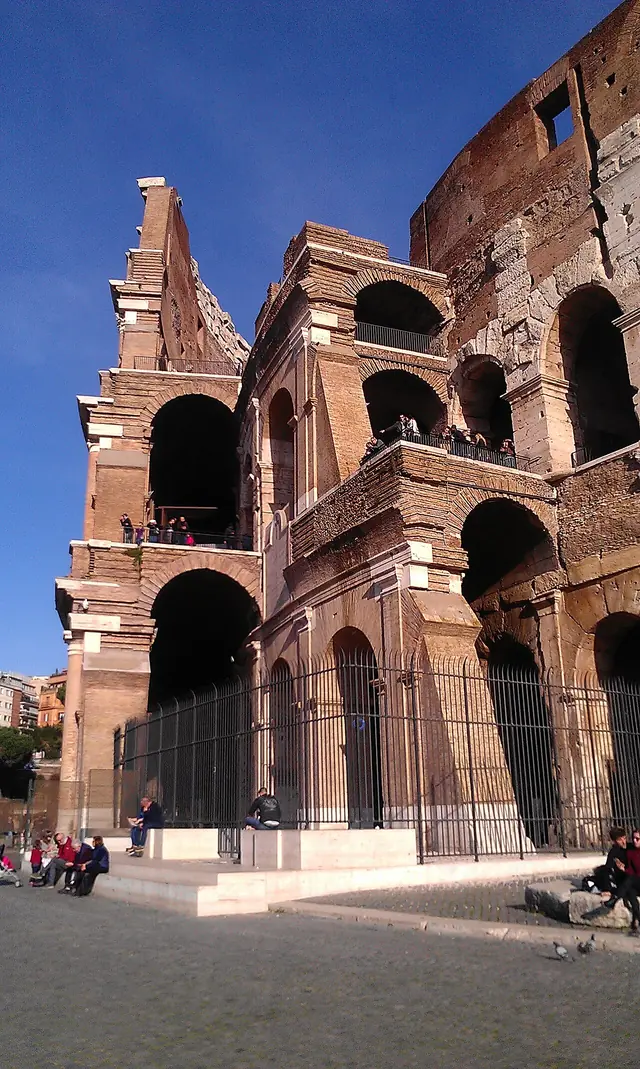
- Gladiator II (2024) floods the Colosseum, and that much has a textual basis: Cassius Dio reports that Titus staged a naval battle there in the year 80. How the arena was filled remains unresolved, and the sharks appear in no source at all.
The first Ben-Hur ran fifteen minutes and ended up in the Supreme Court
In 1907, two years after Lew Wallace died, the Kalem company shot a fifteen-minute Ben-Hur without asking anyone's permission. The chariot race was filmed at the Sheepshead Bay track in Brooklyn, with firemen from the local brigade driving the horses off the fire engines in front of a fairground backdrop.
Harper & Brothers, Wallace's son and heir, and the theatrical producers Klaw & Erlanger sued. On 13 November 1911 the Supreme Court of the United States ruled in Kalem Co. v. Harper Bros. (222 U.S. 55), in an opinion by Oliver Wendell Holmes: a film that reproduces the story of a novel is a dramatisation, and therefore infringes, and the production company is liable even though it is not the party exhibiting it.
That ruling invented film adaptation rights as they work today, and in passing it drew the exact line this collection exists on. On the other side of that line sit Wallace's novel, Sienkiewicz's, Piranesi's engravings and Gérôme's paintings: material that belongs to everyone now, and that anyone can work with without asking permission.