Maps that only work when wet
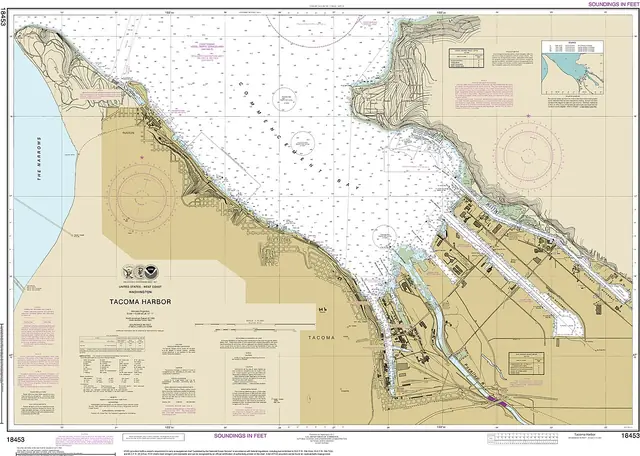
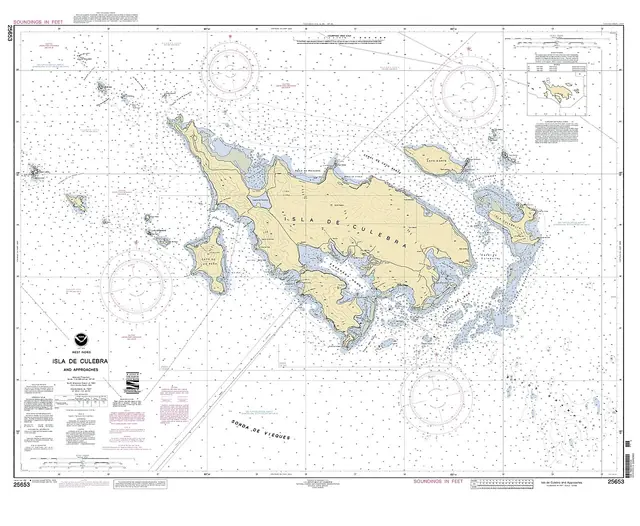
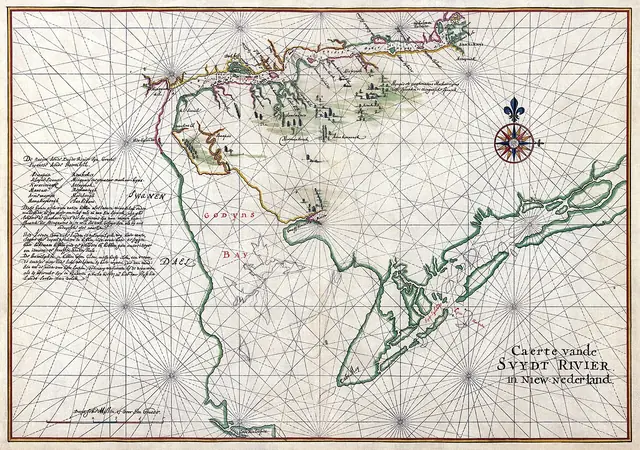
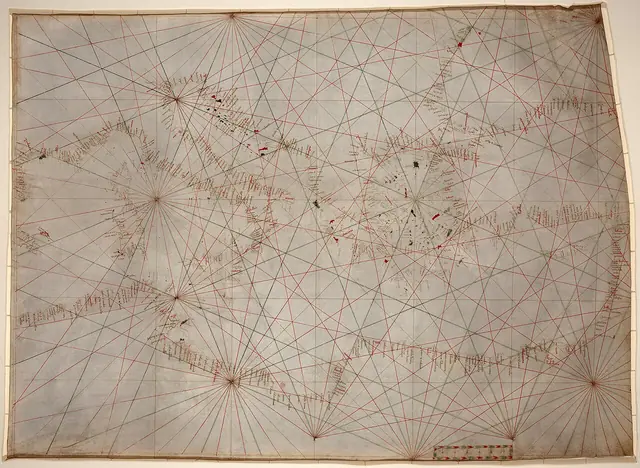
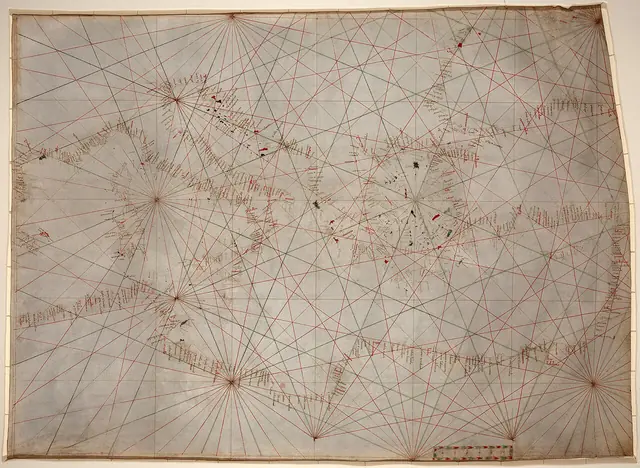
The oldest surviving nautical chart is the Carta Pisana, drawn around 1280 and now in the Bibliothèque nationale de France. It has no meridians and no parallels: instead a web of rhumb lines fans out from several centres in 32 directions, one every 11° 15′. It is built for running from one port to the next with the compass in front of you; inland it is worthless, which is why the interiors of the continents are simply left blank.
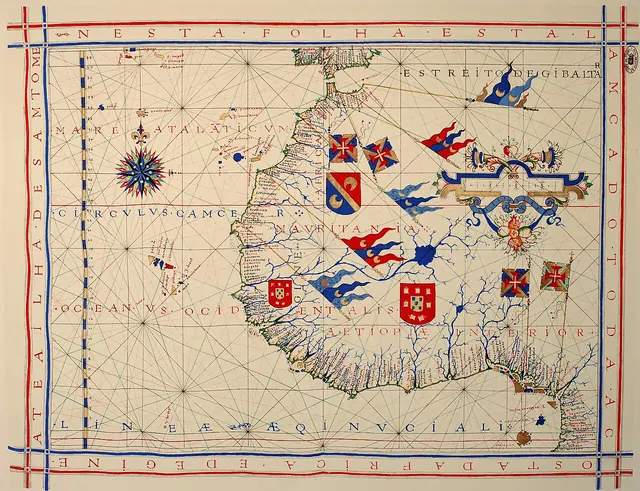
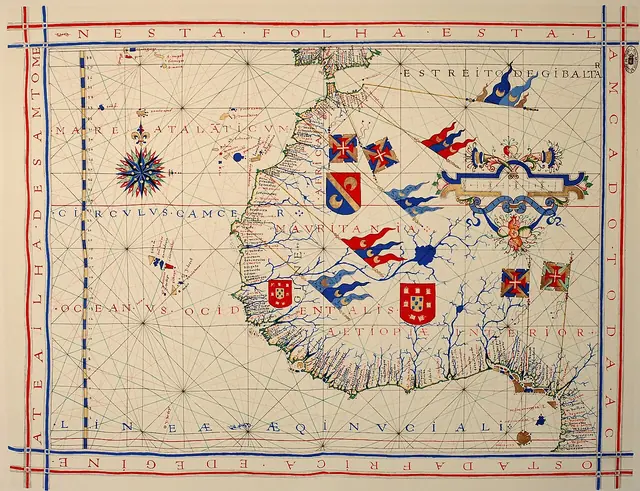
Its code for hazards is still with us: the cross for a submerged rock, the same mark a skipper reads today. On the Pisana every hazard is black; the two-colour system — a black dot for rock, a red one for sand or a shoal — waits until Pietro Vesconte’s atlas of 1313. The first properly drawn compass rose appears in the Catalan Atlas of 1375, by Cresques Abraham. The fleur-de-lis pinned to the north is the Portuguese Pedro Reinel’s idea, around 1504, and the cross marking the east pointed to Jerusalem from the Mediterranean.
In 1584 Lucas Janszoon Waghenaer, a pilot from Enkhuizen, published the Spieghel der Zeevaerdt in Leiden, the first volume to bring charts, sailing directions and instructions together in one place. English seamen, who had been reading it in translation since 1588, mangled his surname: for two centuries any book of charts was a waggoner.
Two mirrors and an angle
On 13 May 1731 John Hadley read a paper to the Royal Society with a title straight out of an ironmonger’s catalogue: ‘Description of a new Instrument for taking Angles’. At the very same moment, and with no idea of it, Thomas Godfrey, a Philadelphia glazier, had arrived at exactly the same thing.
The octant’s trick is a piece of pure geometric cheek: the arc measures 45°, an eighth of a circle, but the double reflection doubles the angle read off it and the instrument reaches 90°. The navigator sees star and horizon laid one over the other, and the deck can pitch all it likes. In 1757 John Campbell needed to measure lunar distances greater than 90°, asked for the arc to be stretched to a sixth of a circle, and John Bird built it for him in 1759. That is the sextant.
Longitude was cracked by a clock: the Longitude Act of 1714 offered up to £20,000, and John Harrison’s H4 sailed from Portsmouth on 18 November 1761 and reached Jamaica five seconds slow, an error of little more than a mile. Robert Redford performs the whole ritual in All Is Lost (2013): salvaged sextant, manual propped open, not one line of dialogue.
Before dawn on 28 April 1789
The Bounty was carrying breadfruit trees from Tahiti to the Caribbean. Off Tofua, Fletcher Christian hauled Lieutenant William Bligh out of his cabin and put him in the launch with eighteen men who stayed loyal. Bligh sailed her more than 3,500 nautical miles to Kupang, in Timor, between 2 May and 14 June: forty-three days in an open boat. Christian reached Pitcairn on 15 January 1790 and burned the ship on the 23rd.
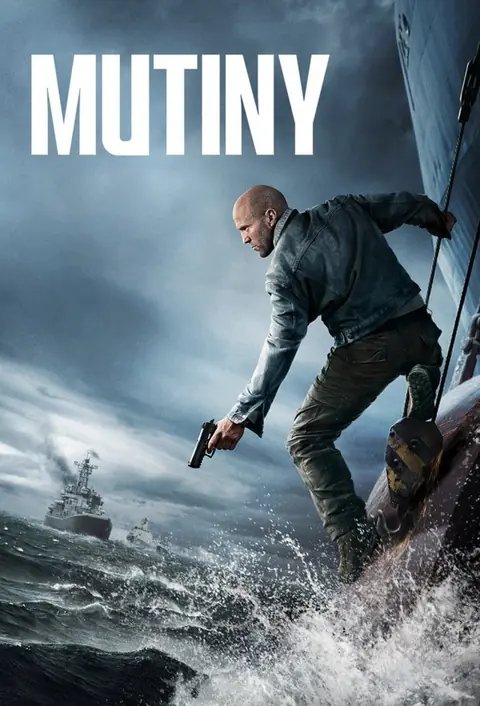
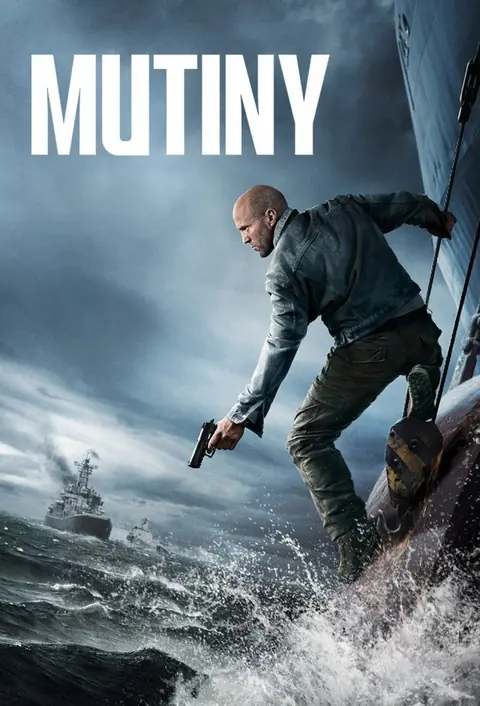
In the Wake of the Bounty (1933), by Charles Chauvel, gave Errol Flynn his debut as Christian. Frank Lloyd’s 1935 version, with Charles Laughton and Clark Gable, won Best Picture and remains the last film to win it without taking a single other award: its three Best Actor nominations got in one another’s way, and the Academy invented the supporting prize for the following ceremony. Then came Brando in 1962, and Mel Gibson and Anthony Hopkins in The Bounty (1984). In August 2026 the word is back on the poster with Jean-François Richet’s Mutiny: a cargo ship and Jason Statham.
Cloth that speaks
Frederick Marryat (1792-1848) published a code of signals for the merchant service in 1817 and, along the way, invented the modern sea novel with Mr Midshipman Easy (1836). Without him there is no C. S. Forester and no Patrick O’Brian; without O’Brian there is no Master and Commander (2003).
The commercial code of 1857 wrung more than 70,000 messages out of eighteen flags; in 1901 the international code came into force, with twenty-six and a pennant. A single flag says a whole sentence: Oscar is ‘man overboard’; Bravo, ‘I am carrying dangerous goods’; Quebec, ‘my vessel is healthy, I request free pratique’. P, blue with a white square, is the Blue Peter: we are sailing, all aboard. The Royal Navy was hoisting it as early as 1777, eighty years before it meant ‘P’.
On 21 October 1805, at around a quarter to twelve, Lieutenant John Pasco ran up the twelve hoists of Nelson’s message aboard the Victory. Nelson had dictated ‘England confides’; Pasco suggested ‘expects’ because that word was actually in Popham’s vocabulary. Even so, one word had to be spelled out letter by letter: duty.
Ink you have to earn
The word came into English through a ship’s log. In July 1769, in Tahiti, James Cook noted that both sexes paint their bodies, ‘tattow, as it is called in their language’. The Tahitian is tatau. Seven years later, the sailing master on Cook’s third voyage was one William Bligh.
What followed is not decoration, it is a CV. A swallow for every 5,000 miles sailed. An anchor for crossing the Atlantic. A ship under full sail for rounding Cape Horn. A pig on one foot and a cockerel on the other, because they travelled in wooden crates that floated and came through the wreck. And HOLD FAST spread across eight knuckles, a letter to each finger: it is the order you shout in heavy weather.
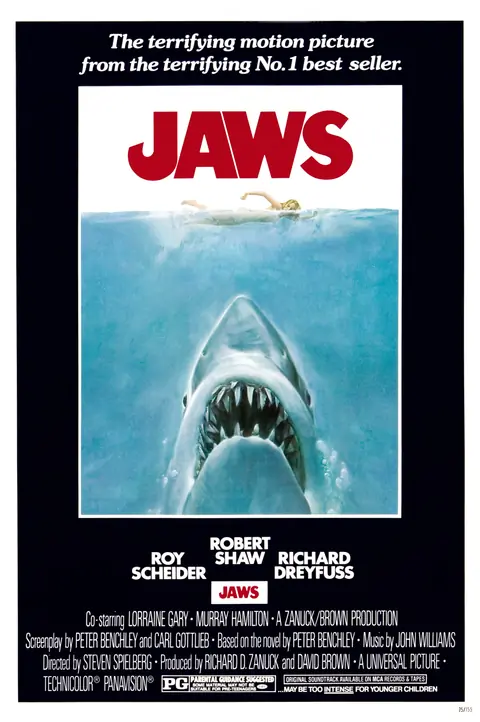
In Jaws (1975) the tattoo is the one that is missing. Hooper points at a mark on Quint’s arm and Quint says he had it taken off: USS Indianapolis. That is where the monologue starts, and the date he gives, ‘29 June 1945’, is wrong: the cruiser went down on 30 July. The mistake was already there in the script.
The ship that sank twice
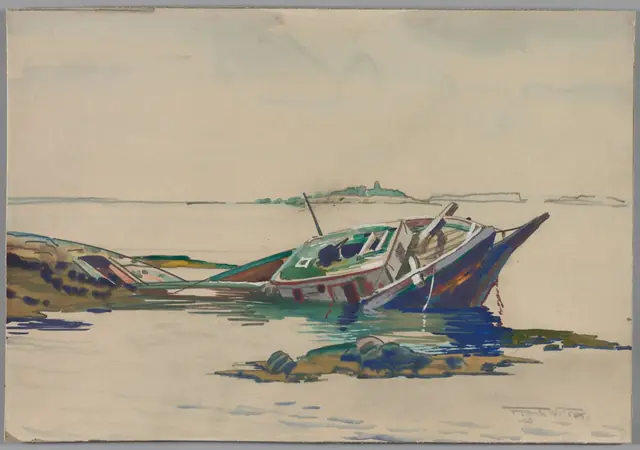
For the 1962 version MGM did not charter a tall ship: it built one. Two hundred workers raised a replica of the Bounty at Lunenburg, Nova Scotia, from plans extrapolated from the original. It then spent half a century as an extra, from Yellowbeard (1983) to Pirates of the Caribbean: Dead Man’s Chest (2006).
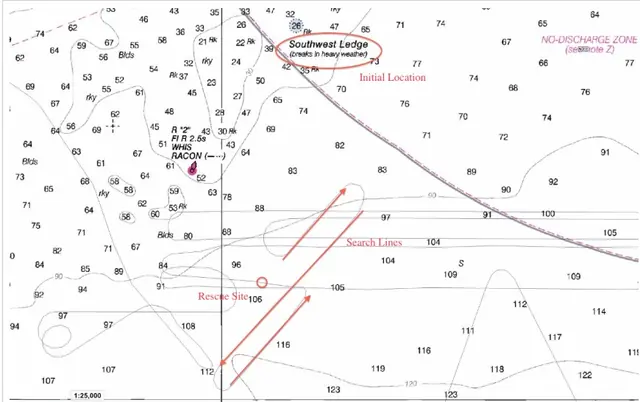
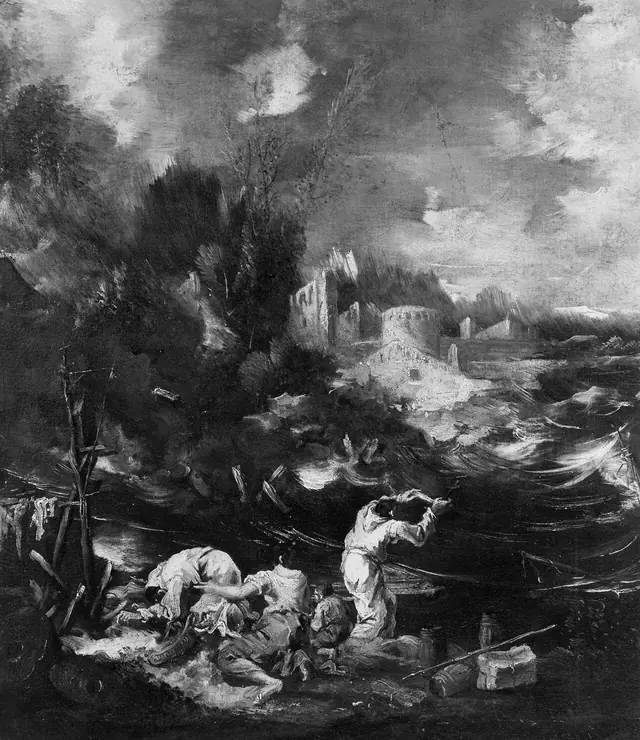
On 29 October 2012, some ninety miles south-east of Cape Hatteras, she went down inside Hurricane Sandy. Fourteen people were rescued. Two died: Captain Robin Walbridge, whose body was never found, and a crew member named Claudene Christian, who said she was descended from Fletcher Christian.
One coincidence is left over. The point in the ocean furthest from any land was calculated by the Croatian Hrvoje Lukatela in 1992 and named Point Nemo; its three nearest landfalls lie 2,688 kilometres away, and one of them is Pandora islet, on Ducie Atoll: the Pitcairn Islands, the mutineers’ hiding place.