Goya gave him a face in 1799
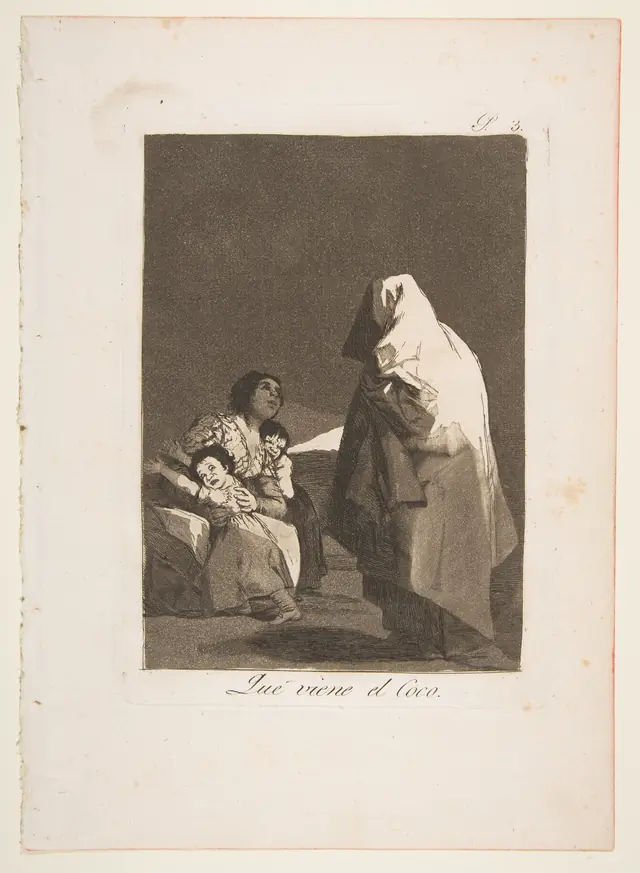
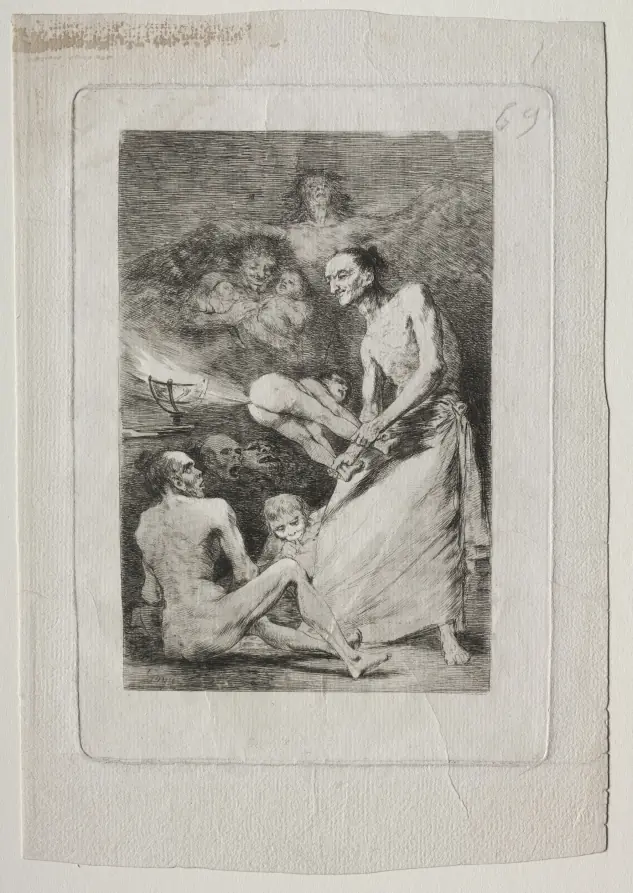
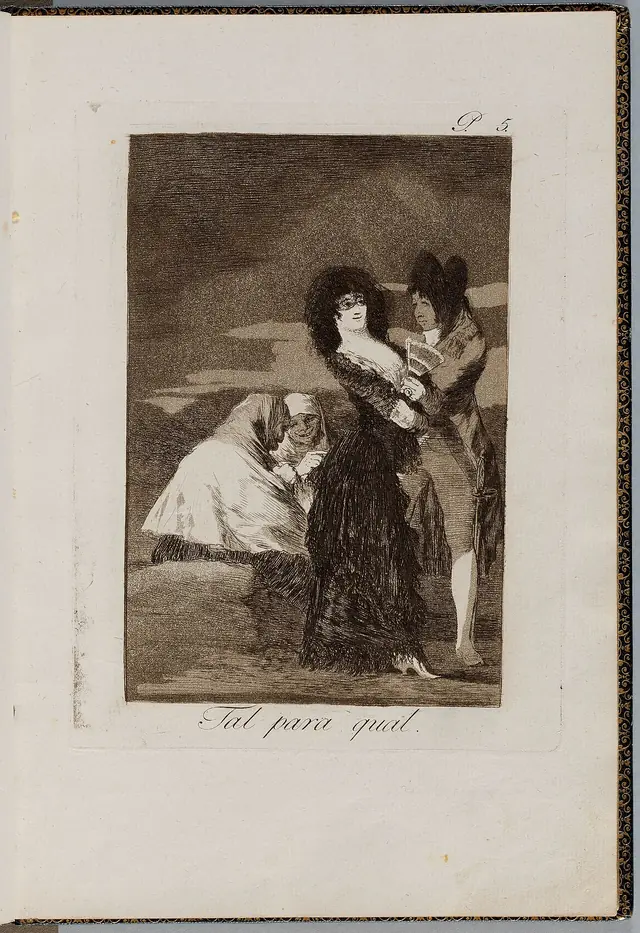
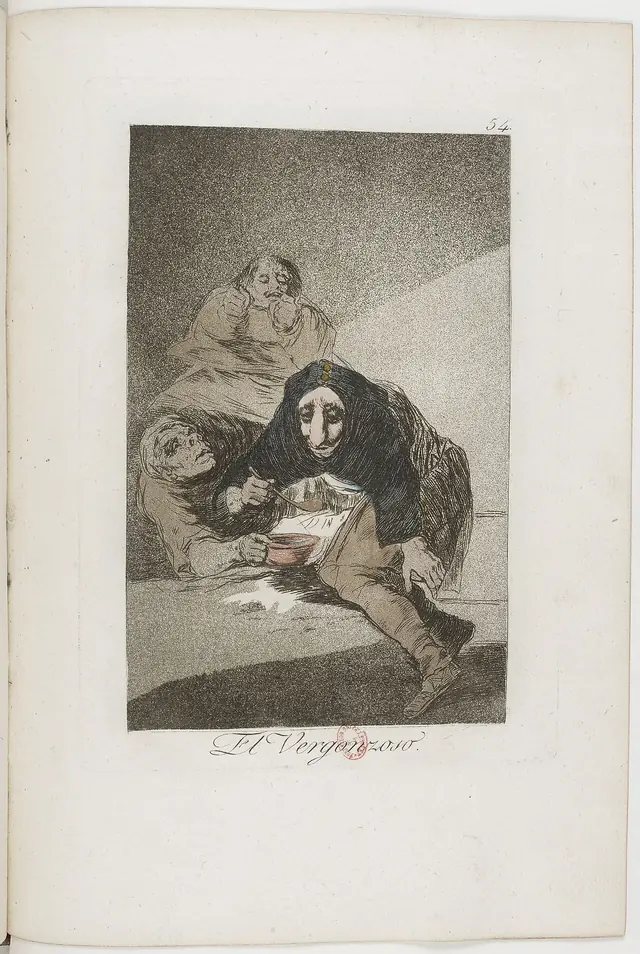
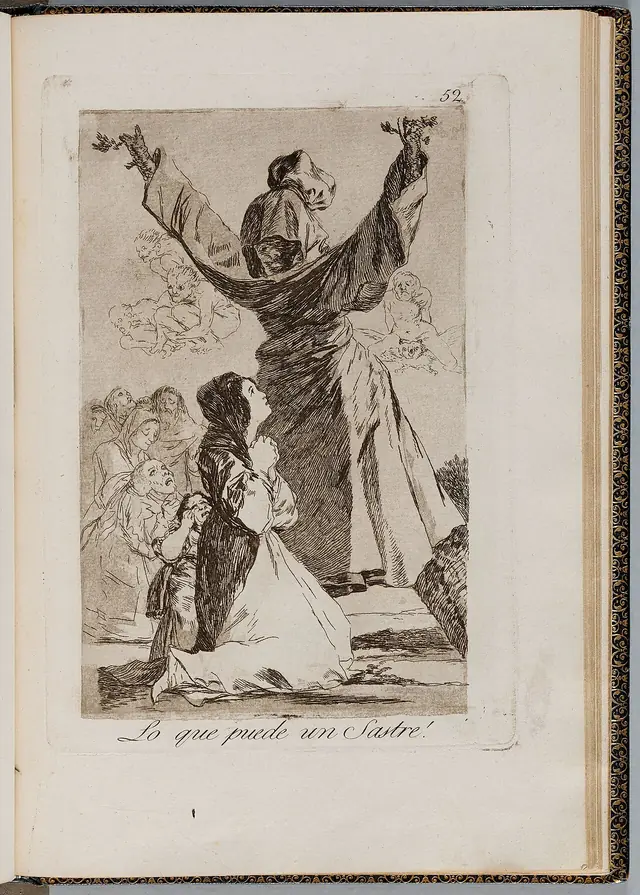
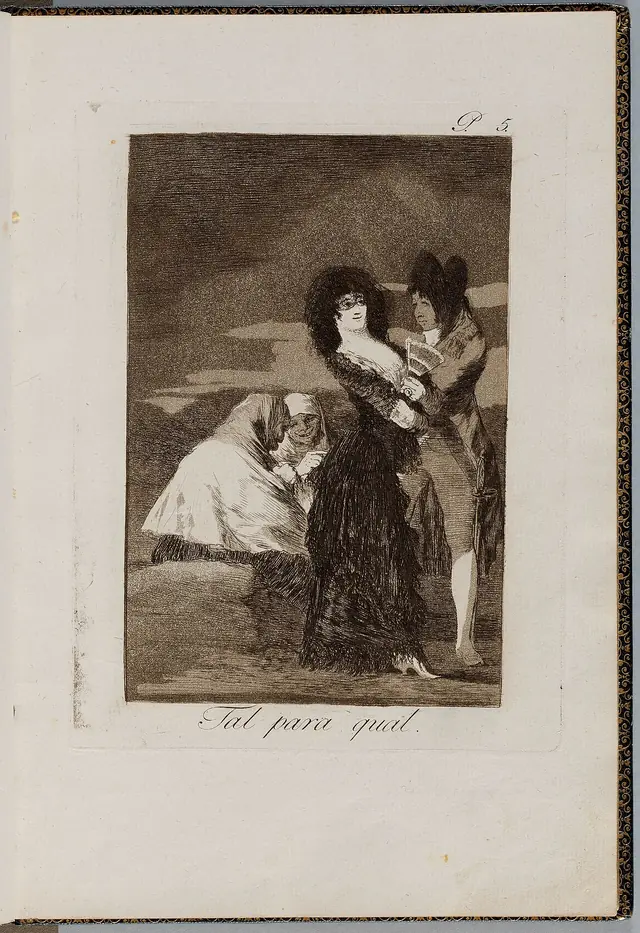
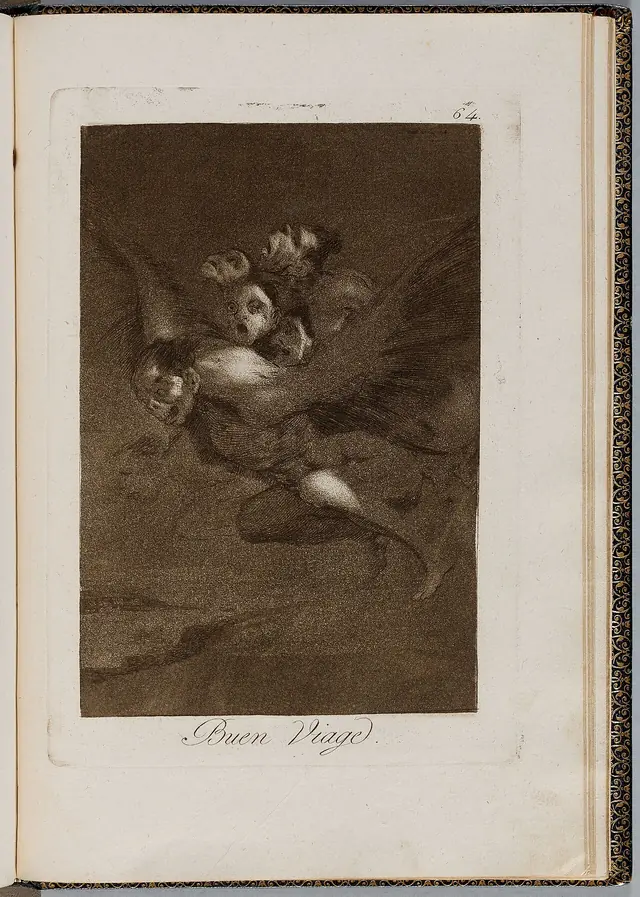
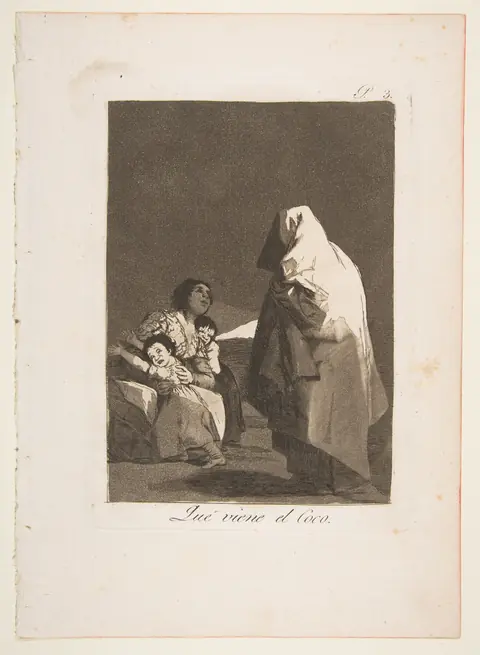
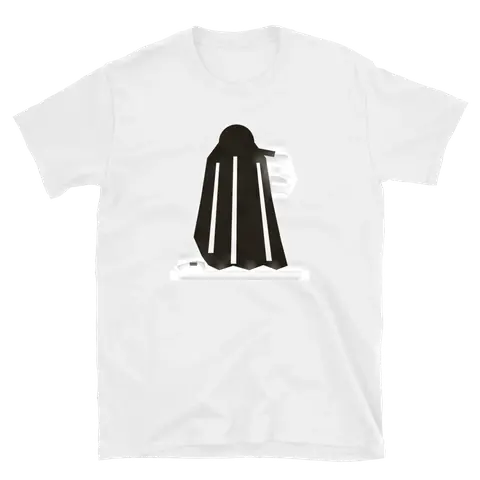
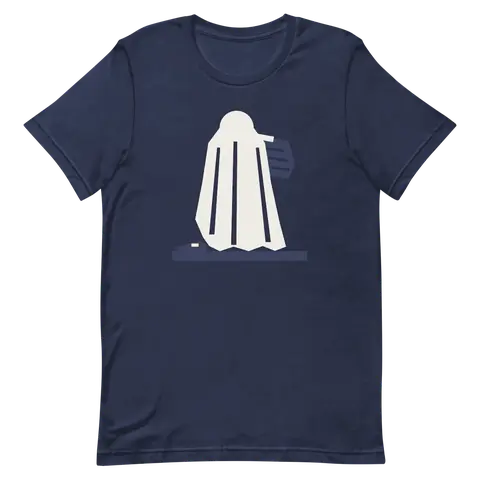
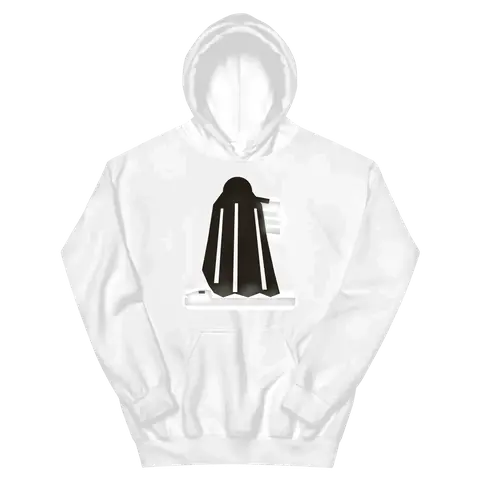
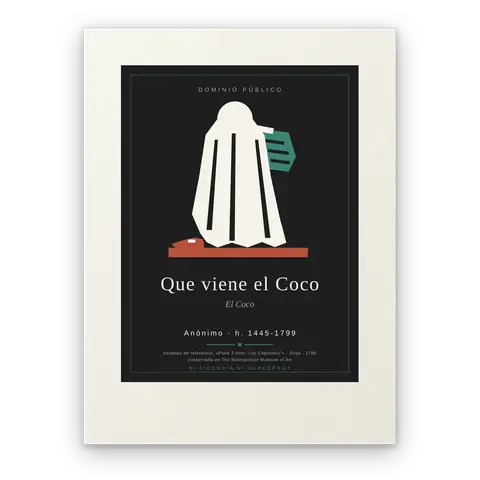
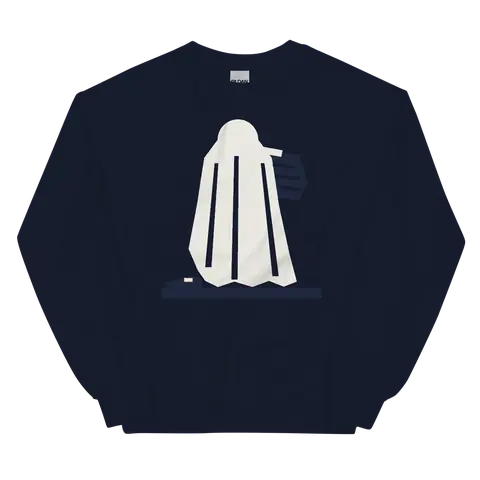
On 6 February 1799, eighty prints went on sale in a perfume and liqueur shop on Calle del Desengaño in Madrid. Number 3 is called Que viene el Coco, Here Comes the Bogeyman: etching and burnished aquatint, roughly 219 by 154 millimetres. A seated mother with two children, one throwing his arms up to flee, the other clinging to her. Facing them, standing, a figure wrapped from head to foot in cloth. It has no face. The only human thing about it is a pointed shoe showing beneath the hem: Goya did not draw a monster, he drew somebody dressed as one.
The manuscript commentary held by the Museo del Prado puts it in writing:
“A disastrous abuse of early education. To make a child fear the bogeyman more than his own father, and to force him to dread a thing that does not exist.”
The series was a commercial failure. In 1803 Goya handed the Crown the eighty copper plates and 240 unsold sets in exchange for a pension for his son Javier: in four years, twenty-seven had sold.
Why a coconut is named after a bogeyman
The character is far older than the print. Antón de Montoro uses him around 1445, in a verse where he likens himself to the babies in the cradle who are told “Mind the Coco!”. In Lazarillo de Tormes (1554), Lázaro's half-brother watches Zaide, his own black father, come through the door and points at him shouting “Mother, the bogeyman!”. Covarrubias, in his Tesoro de la lengua castellana (1611), lists it as “a figure that causes fright” in the speech of children and derives it, none too convincingly, from the Hebrew word cus; the fruit's name he explains separately and by another route. The Diccionario de Autoridades dismisses it in 1729 as “a hideous, frightful figure, a grimace like a monkey's, pulled to scare children into behaving”.
The three holes are the key, and here is the part almost nobody knows: the coconut is named after the bogeyman, not the other way round. When the Portuguese reached India at the end of the fifteenth century they found a fruit with no European name and gave it the name of the hobgoblin from their own kitchens. João de Barros tells it in the Décadas da Ásia (Decade III, 1563): the shell has “a sharp shape that means to resemble a nose, set between two round eyes”, and because of that face “our men called it coco, a name women give to anything they want to frighten children with”. It is not the only old account: Fernández de Oviedo wrote in 1535 that the three pits made “the grimace of a little monkey pulling a face”, with no phantom in it at all. The two versions ran side by side for centuries, and modern philology has settled on Barros: M. Sandmann argued the case in the Revista de Filología Española in 1955, after taking the monkey apart, and Corominas and Pascual reconstruct the whole journey — round object, then child-scarer, then the fruit of the coco palm. The hollowed Halloween pumpkin and the coconut on the supermarket shelf are the same face: two eyes and a mouth opened in a dry husk.
The lullaby did the rest. Francisco Rodríguez Marín collected the version around 1880 that almost anyone in Spain can still sing from memory: go to sleep, little one, the Coco is coming and he carries off the children who sleep too little.
The sack, the tallow and the Gádor crime
In Spain the Coco has a dirtier and far more concrete brother: the man with the sack. He is no phantom, he is an adult with a horrible trade. The figure feeds off the sacamantecas, the fat-taker, who opens his victim up for the tallow. The nickname was hung on Juan Díaz de Garayo (1821-1881), a day labourer from the outskirts of Vitoria who raped and killed six women and girls between 1870 and 1879 and died by garrote. It was never proved that he extracted fat from anyone; nobody ever took the name off him either.
What did happen, exactly as told, was the Gádor crime. On 28 June 1910, Bernardo González Parra, seven years old, from Rioja (Almería), was put into a sack and carried to an isolated farmhouse in the district of Gádor. Francisco Ortega, known as el Moruno, had tuberculosis, and the barber and folk healer Francisco Leona had sold him the cure for 3,000 reales: drink a child's blood and rub his warm fat on the chest. They did it. El Moruno went to the garrote, and so did the healer Agustina Rodríguez; Leona died in prison before them. The case filled newspapers across Spain and left a threat lodged in the language for the century that followed.
Carpenter spelled it out
John Carpenter made no secret of the family tree. In Halloween (1978) the killer appears in the credits as The Shape, and the film ends with Laurie saying it was the boogeyman and Loomis answering that, as a matter of fact, it was. The mask cost $1.98: Tommy Lee Wallace picked up a Captain Kirk face in a costume shop on Hollywood Boulevard, widened the eye holes and painted it white. A human face erased to blankness is precisely what Goya got out of a bedsheet.
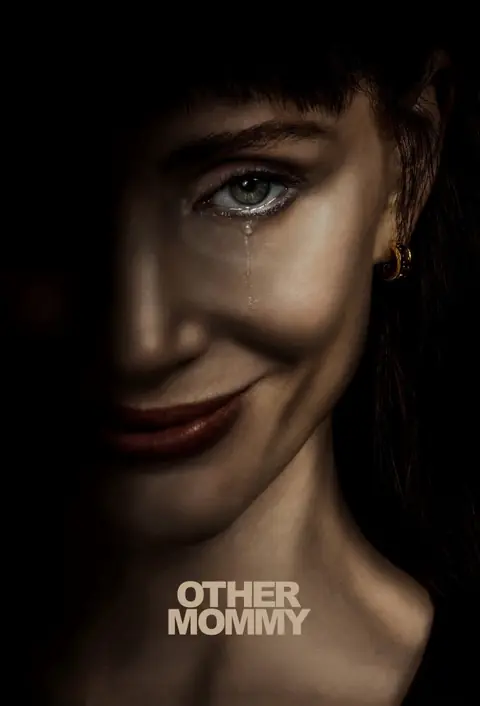
Stephen King had signed his own five years earlier: The Boogeyman ran in Cavalier in March 1973 and was collected in Night Shift (1978). It is a father telling a psychiatrist that the thing in the wardrobe killed all three of his children; Rob Savage filmed it in 2023 starting from exactly that point, with Lester Billings walking into a different psychiatrist's office and leaving the thing behind in the house. In Sinister (2012), by Scott Derrickson and C. Robert Cargill, the children call the demon Bughuul “Mr. Boogie” and draw him in crayon: they give the bogeyman a friend's name. And The Babadook (2014), by Jennifer Kent, grows out of her short film Monster (2005) and out of the Serbo-Croat babaroga, which means just that. Kent looked to silent cinema for the top hat and the long fingers, shot the effects in camera and shut the monster inside a pop-up book illustrated by Alexander Juhasz: the bogeyman arrives in a story a boy's own mother reads to him.
What is under the sacking
The Spanish version has its masterpiece in The Orphanage (2007), by J. A. Bayona. Tomás wears a cloth sack over his head with two holes at eye level, and the twist is that he is not the monster: he is the deformed boy they kept hidden, Benigna's son. Bayona puts the sackman's sack on the victim.
Outside Spain, hessian is what Jason Voorhees wore before the hockey mask. In Friday the 13th Part 2 (1981) he has a sack with a single eye hole; the model was the faceless killer of The Town That Dreaded Sundown (1976), whose sack had two. And Sam, the small trick-or-treater in Michael Dougherty's Trick 'r Treat (2007), folds both branches of this page into one design: orange pyjamas, a sack with buttons for eyes and, underneath it, what designer Breehn Burns drew from Dougherty's sketches, a cross between a skull and a pumpkin.