









A bear, a pitcher and twelve years' work
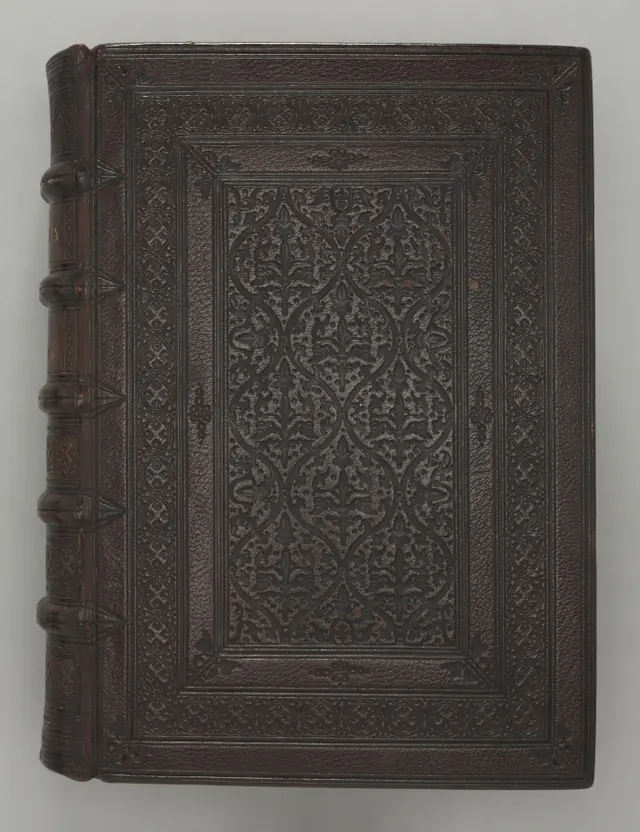
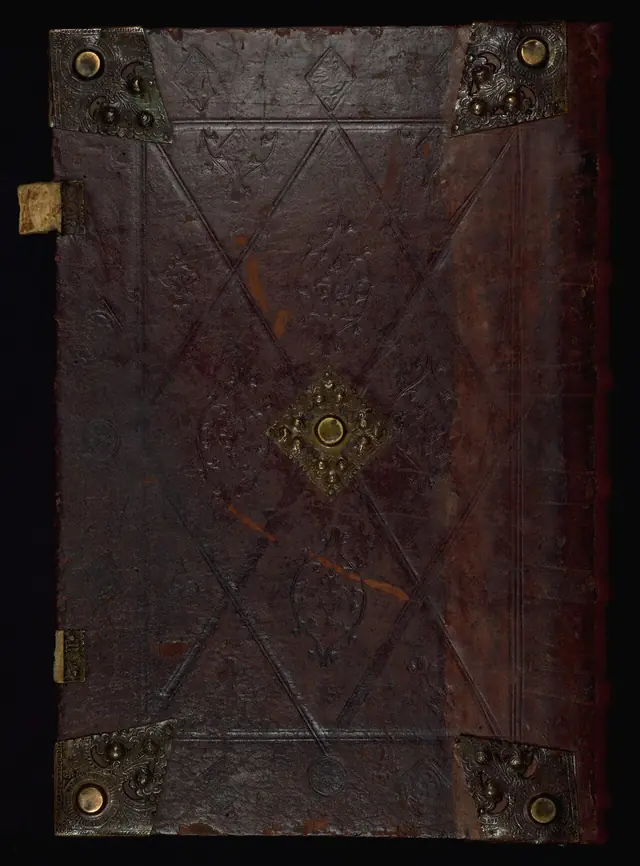
The Bible quoted in Spanish comes down to us from a fugitive. Casiodoro de Reina, a monk who fled the monastery of San Isidoro del Campo in Seville, spent twelve years translating the complete text from Hebrew and Greek. It was printed in Basel on 28 September 1569. There is no cross on the title page and no saint: there is a bear up on its hind legs against a tree trunk, stealing a honeycomb. It is the printer's device, and it is there so the book would not look like a religious book, because translating the Bible into the vernacular was banned and this was contraband. That bear gave it the name everyone knows it by: the Biblia del Oso, the Bear Bible.
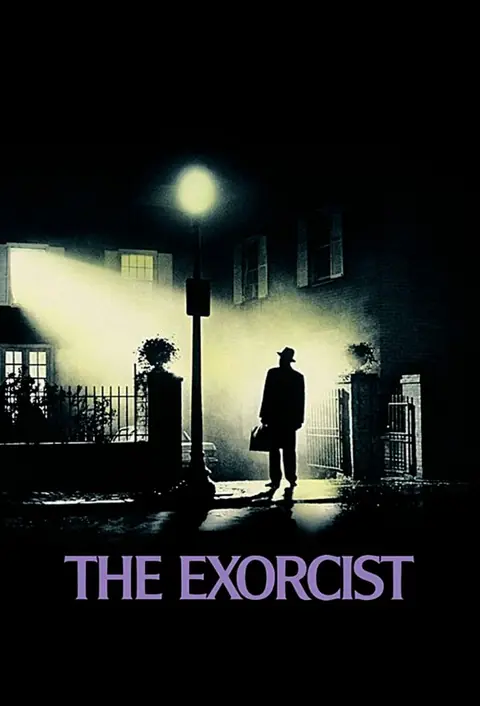
Reina died in 1594. Cipriano de Valera, who had escaped with him, spent more than twenty years revising it and published it in Amsterdam in 1602; once again the title-page engraving did the naming, and that one is the Biblia del Cántaro, the Pitcher Bible. The two surnames run together, Reina-Valera, are the Spanish anyone hears in a dubbed exorcism film.
The workshop that drew the end of the world
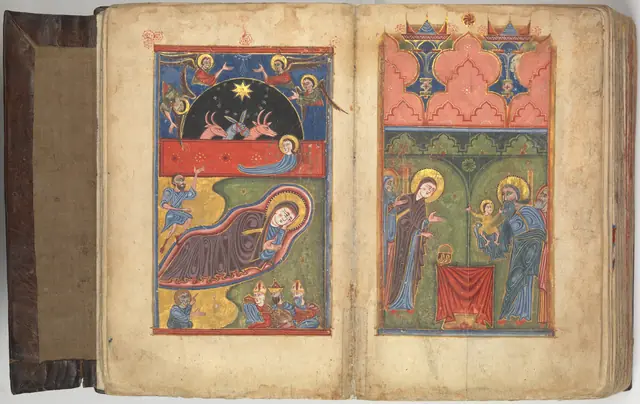
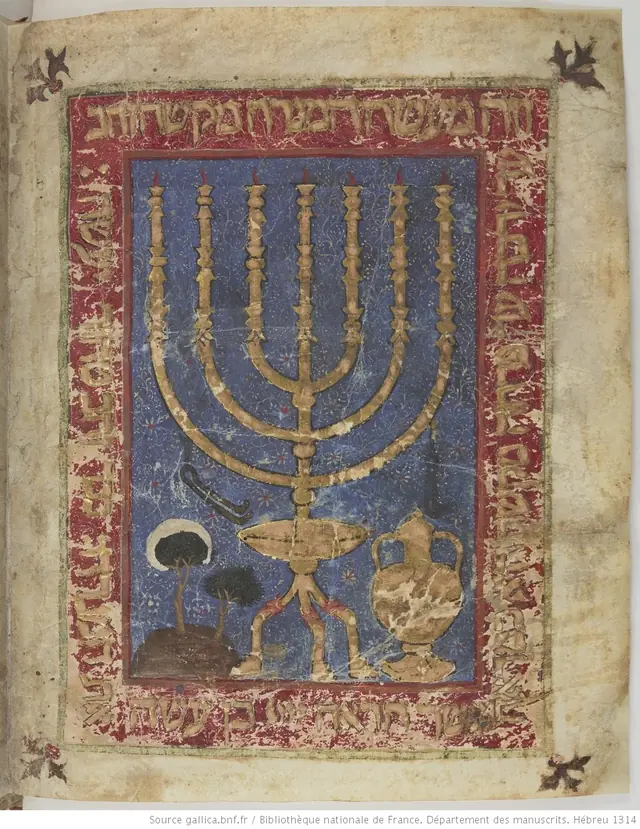
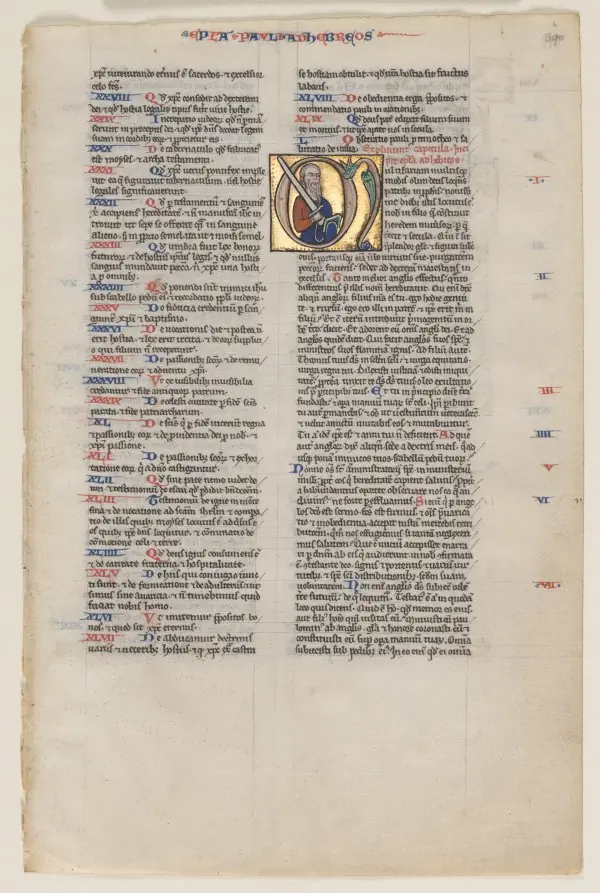
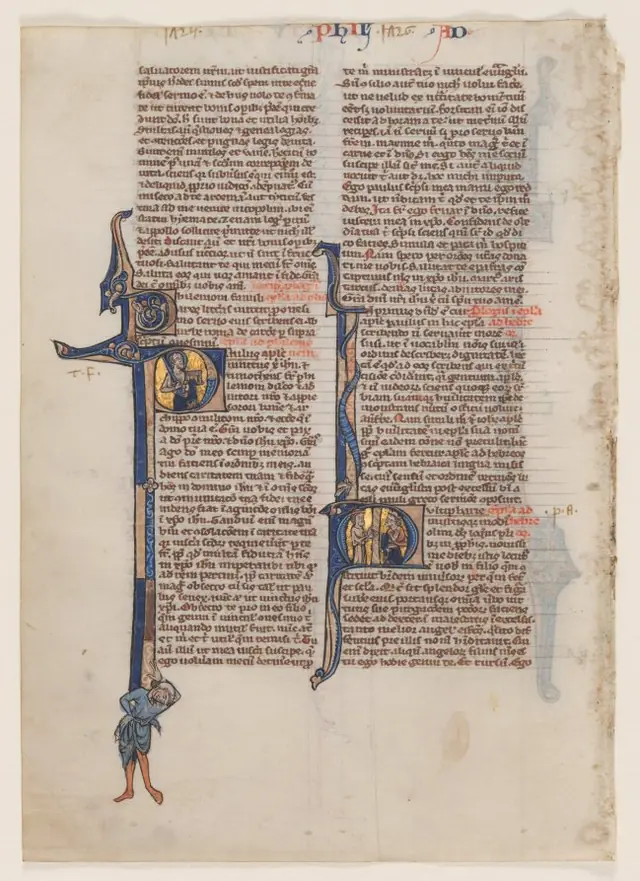
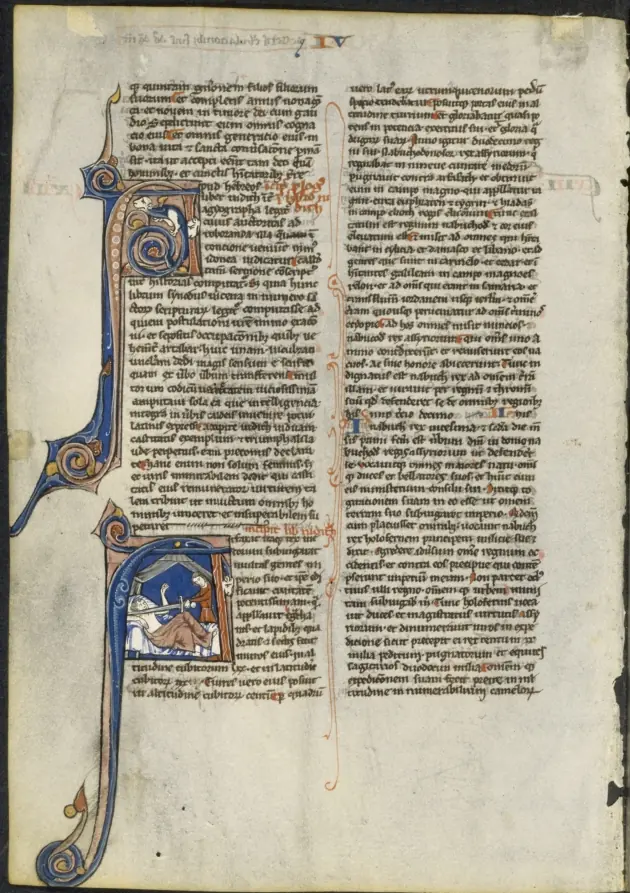
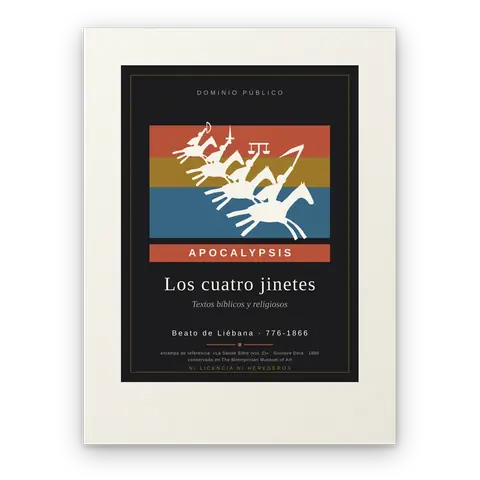
Revelation isn't read: it's looked at. And it is looked at through images that carry a signature and a date. The first major series is Spanish: Beatus of Liébana wrote his Commentary on the Apocalypse at the monastery of San Martín de Turieno, today Santo Toribio de Liébana, in 776, revising it in 784 and 786. Some thirty-five manuscript copies survive, most of them illuminated; the most quoted is the one Ferdinand I and Queen Sancha commissioned in 1047. These are Mozarabic miniatures: bands of flat colour, no depth, outsized eyes and beasts that look cut out with scissors.
In 1498 Albrecht Dürer published the Apocalipsis cum figuris in Nuremberg, fifteen woodcuts. One of them, The Four Horsemen, compresses the whole of chapter 6 into a single stampede and settles for good what those four look like: not four portraits, but a trampling.
Between 1625 and 1630 Matthäus Merian the Elder brought out the Icones Biblicae in Strasbourg, with texts in German, Latin and French by Johann Ludwig Gottfried. They ran to 233 copper plates in the end, gathered in 1630 into what is known as the Merian Bible. That is where one of the strangest things in the whole repertoire sits: Ezekiel's ophan, a wheel set inside another at right angles, with eyes all round the rims.
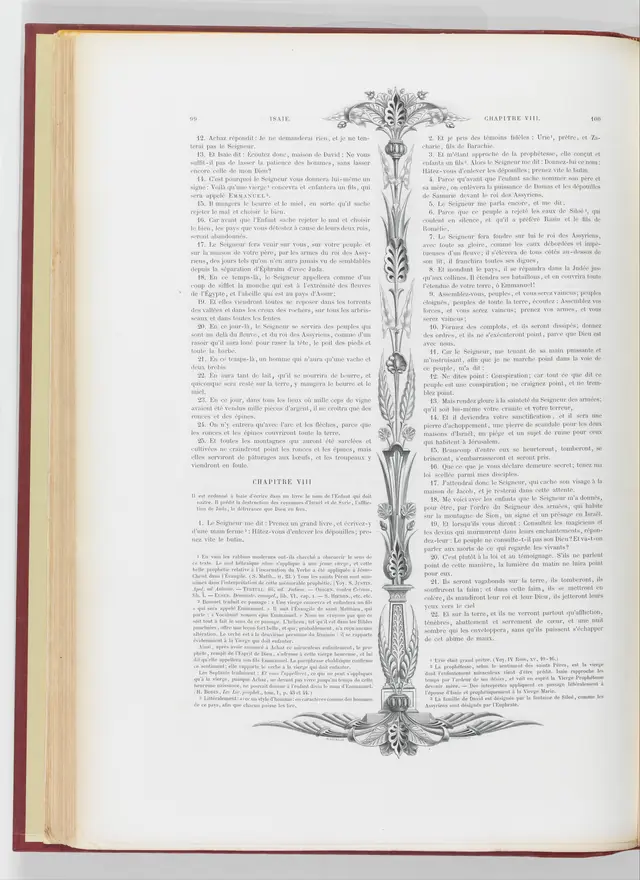
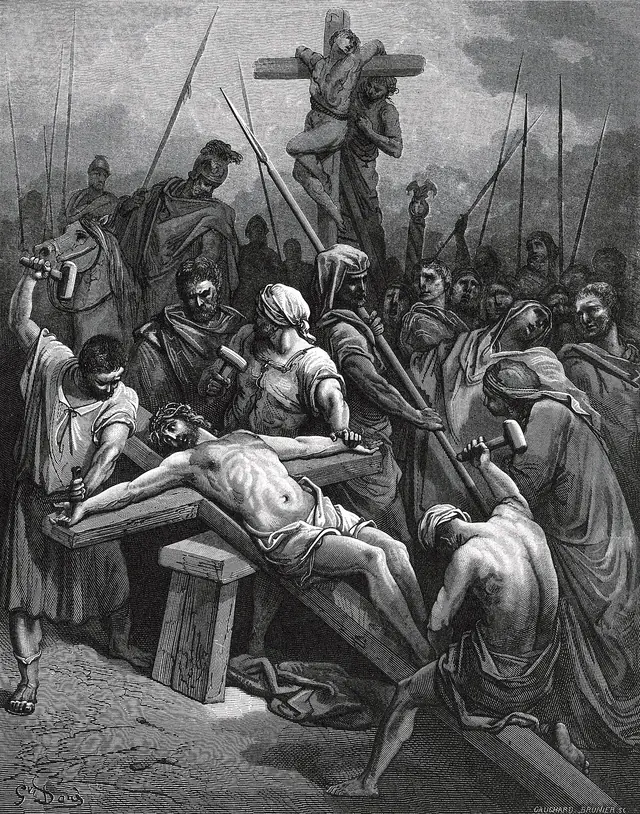
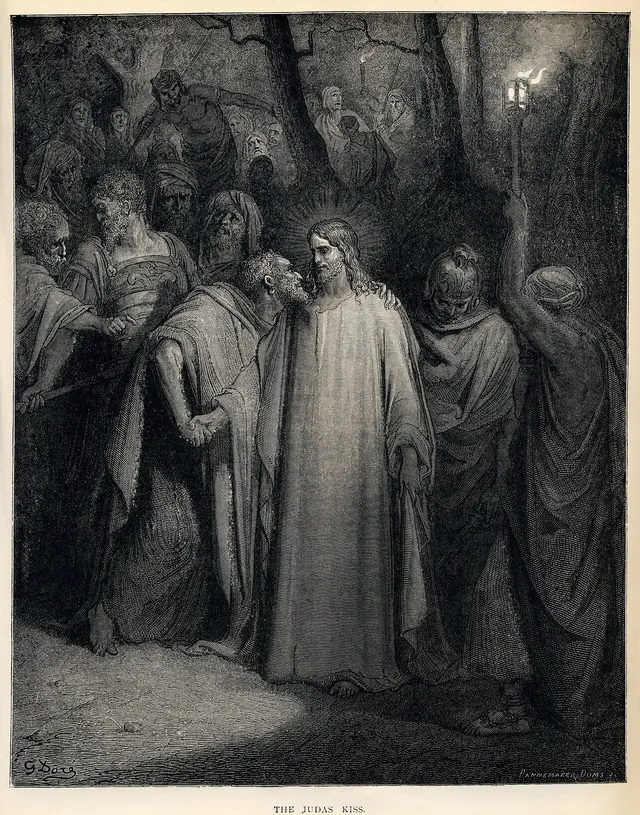
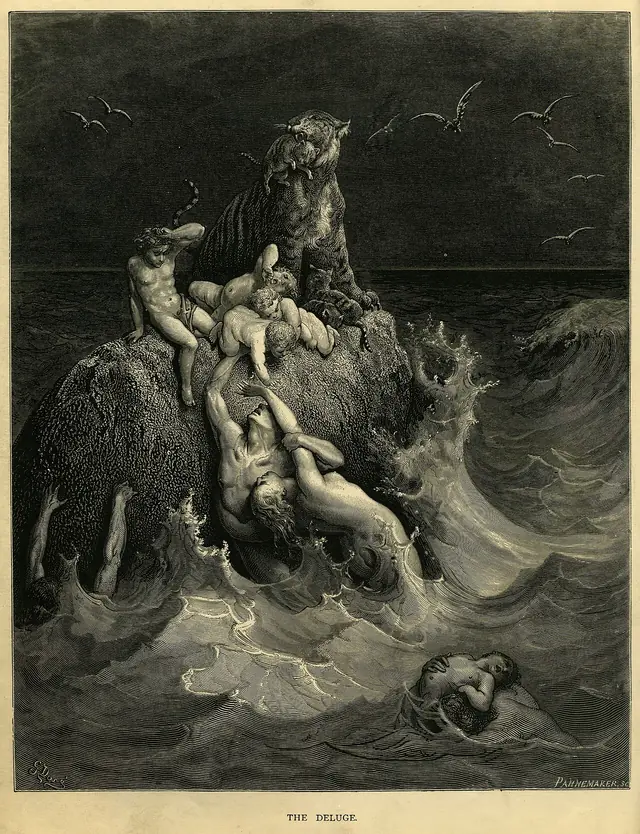
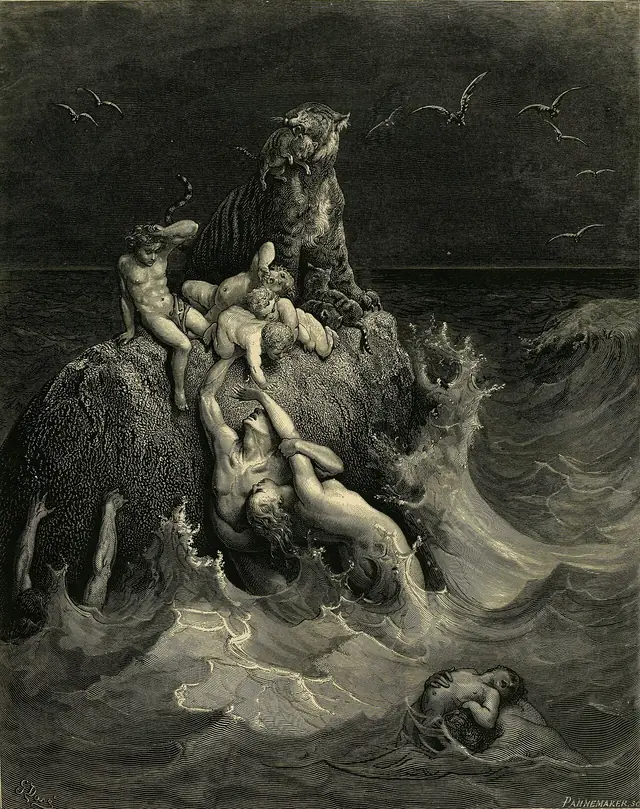
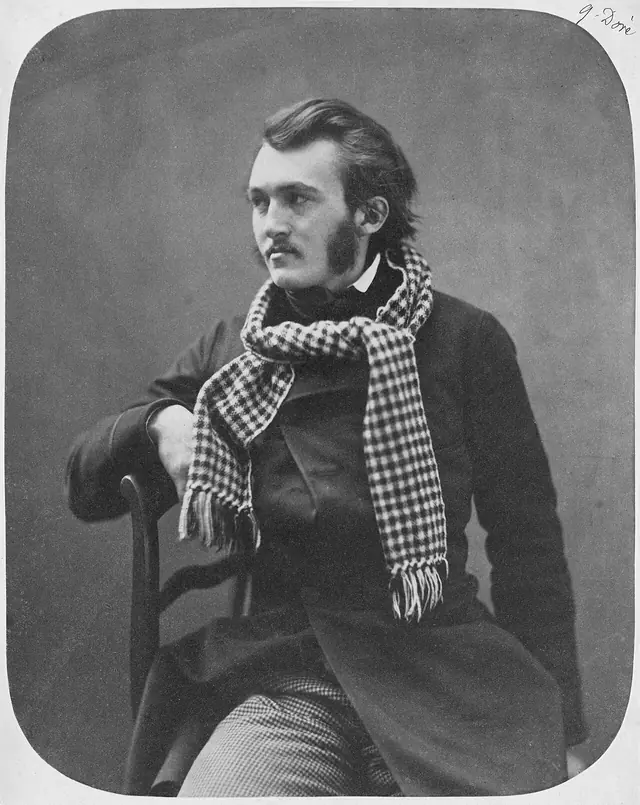
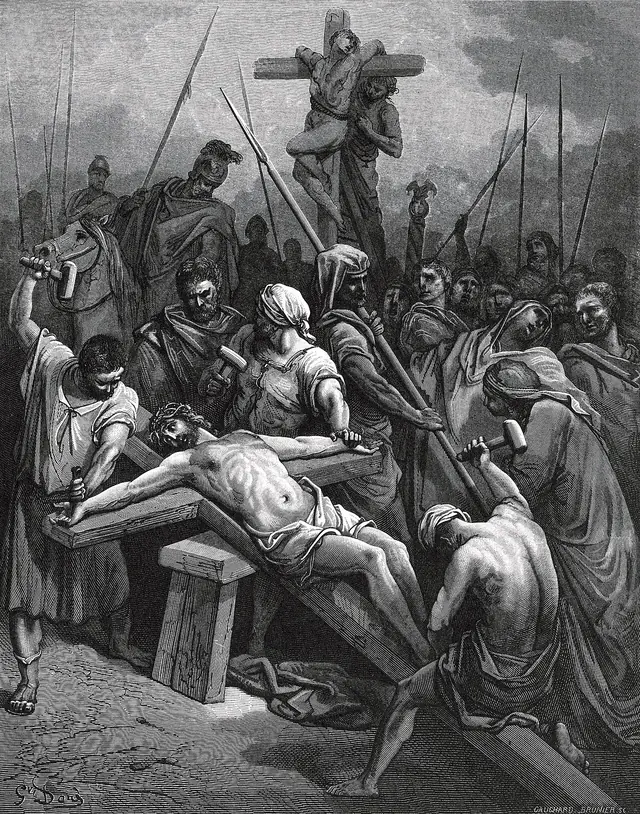
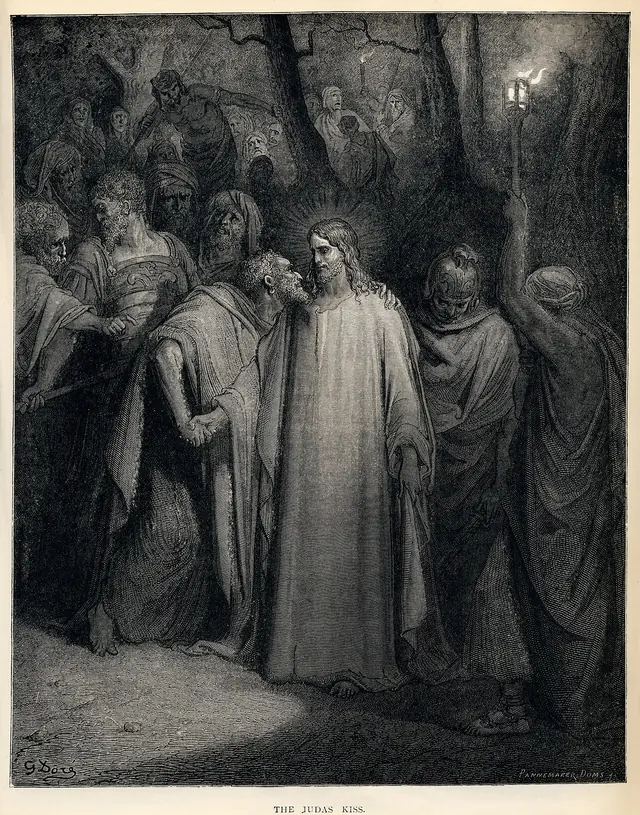
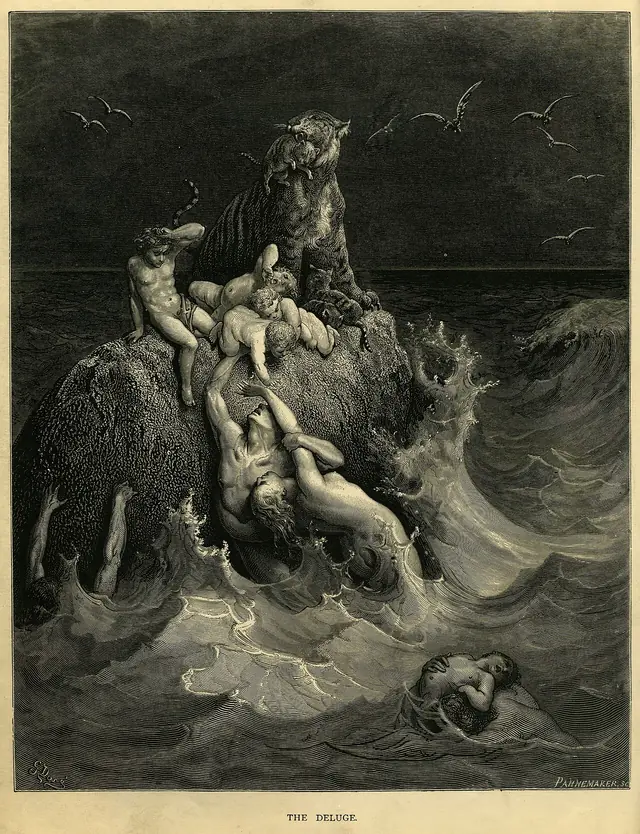
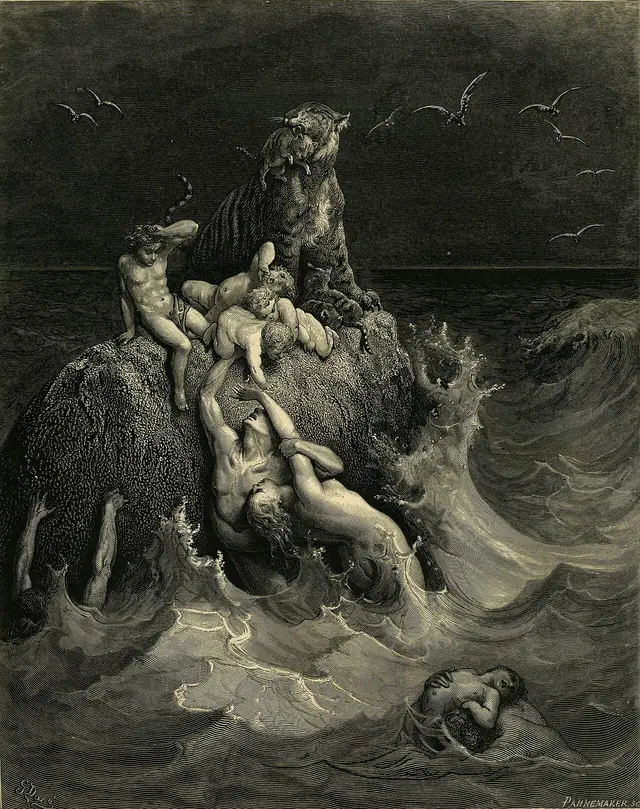
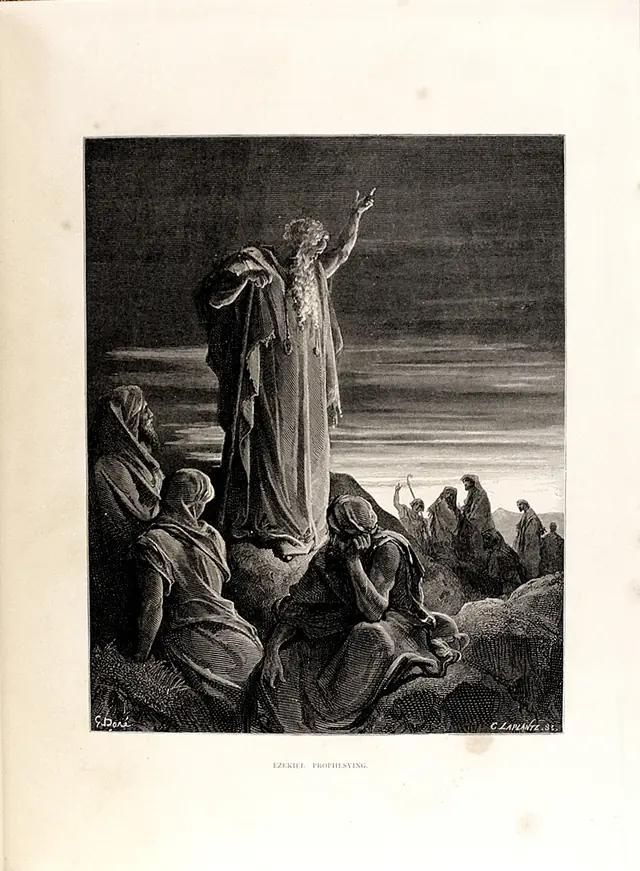
And in 1866 comes the one who swallowed the lot: Gustave Doré, 241 wood engravings for the Grande Bible de Tours, a two-volume folio published simultaneously by Mame in Tours and Cassell in London.
Moses's horns and the apple nobody bit
Two of the most recognisable objects in this iconography exist because of translation mistakes. In Exodus 34:29 the Hebrew says that Moses's face qaran as he came down from Sinai: the verb comes from the root for “horn” and describes a face shooting out rays. The Septuagint settled on “glorified”. Jerome, in the Vulgate, wrote cornuta. A thousand years of a horned Moses followed, all the way to Michelangelo's marble in San Pietro in Vincoli.
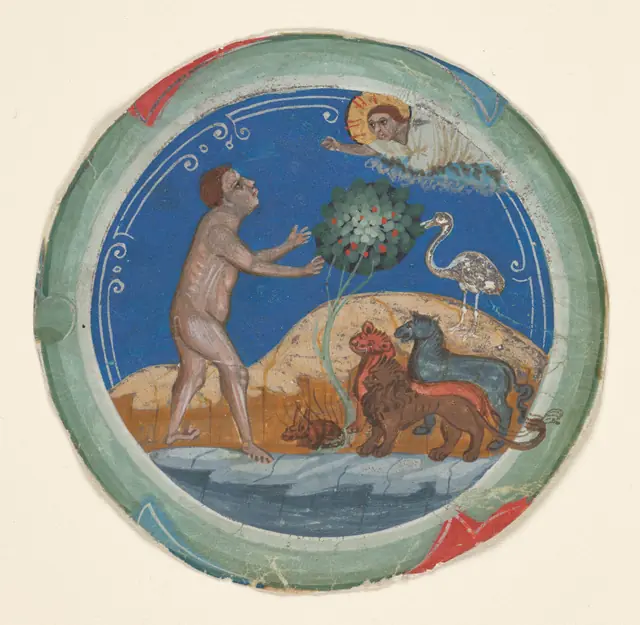
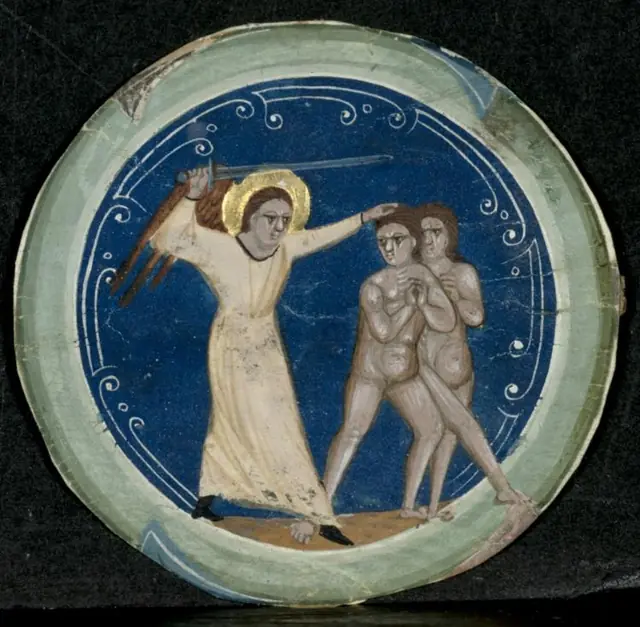
The other one is the apple. Genesis never says which fruit it was: it uses peri, “fruit”, and nothing more. In Latin, malum is apple and malum is evil. The engraving Adam and Eve that Dürer made in 1504 nailed it down, and ever since the serpent has been offering the same thing.
From the copper plate to the sound stage
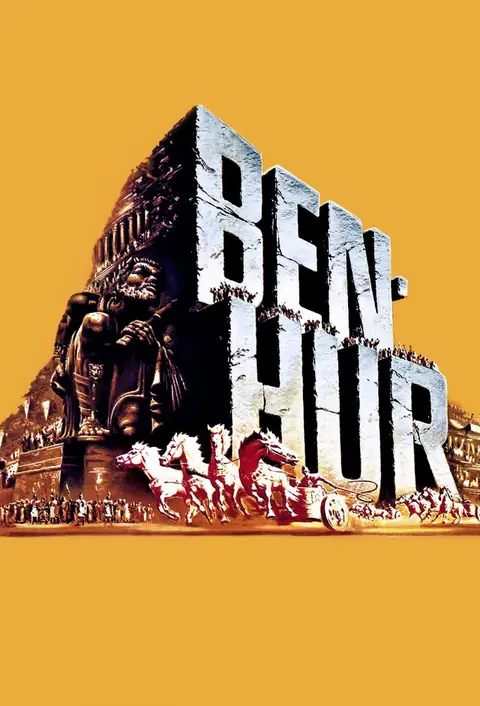
Cecil B. DeMille built The Ten Commandments, the 1923 one and the 1956 one, by copying Doré's compositions almost exactly, and he made no secret of it; D. W. Griffith had done the same before him. Hollywood's biblical cinema was born with an album of French engravings lying open on the director's desk.
Bergman opens and closes The Seventh Seal (1957) with Revelation 8:1, “there was silence in heaven about the space of half an hour”: the title of the film is the verse. Mel Gibson shot The Passion of the Christ (2004) in Aramaic, Hebrew and Latin, and its visual script owes as much to the gospels as to The Dolorous Passion of Our Lord Jesus Christ (1833), the visions of the nun Anne Catherine Emmerich transcribed by Clemens Brentano, the source of scenes that appear in no gospel at all. Darren Aronofsky took the Watchers in Noah (2014) — fallen angels turned into stone giants — from the first book of Enoch, a text left outside the canon.
The fact: the prophecy in The Omen isn't in the Bible
In The Omen (1976) a priest recites some lines about the Jews returning to Zion, a comet tearing open the sky and the rise of the Holy Roman Empire. It sounds like Revelation, it gets quoted as Revelation, and it is in no Bible: screenwriter David Seltzer wrote it for the film. What is verbatim is the verse at the end, Revelation 13:18, the one that tells you to count the number of the beast.
Second warning: Pazuzu, the demon in The Exorcist whose statue opens the film at a dig in Hatra, south-west of Mosul, where they really did shoot, is not biblical but Assyrian, and in the first millennium BC his face was worn as a protective amulet, above all to keep Lamashtu away from pregnant women and newborn children. He was on the side of the defenders.
What's coming out with this inside it
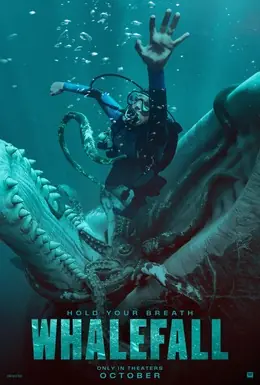
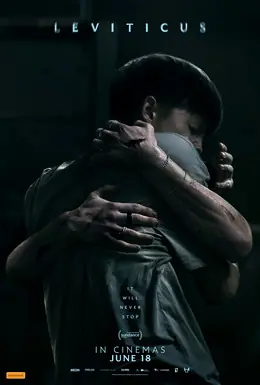
Whalefall (Brian Duffield, in cinemas on 16 October 2026) is Jonah 2 with a pressure gauge: a diver swallowed by a sixty-tonne sperm whale, with an hour of air. Leviticus, by Adrian Chiarella, premiered in Sundance's Midnight section on 23 January 2026, and puts two teenagers through a conversion ritual inside an isolated Christian community in the Australian state of Victoria, the title pointing at the book the quotations come from. Mike Flanagan's Carrie arrives on Prime Video on 7 October 2026, with Samantha Sloyan as Margaret White and all eight episodes at once. The Omen turns fifty, released on 6 June 1976. And Michael Lockshin's The Master and Margarita splits the story between 1930s Moscow and a Jerusalem with Claes Bang as Pontius Pilate.