

A Surgeon with a Notebook
The first source was written by a barber-surgeon. Alexandre Olivier Exquemelin, born around 1645, sailed with the buccaneers of Tortuga and Jamaica, was present at the sack of Panama with Henry Morgan, and went back to Amsterdam to tell the tale. De Americaensche Zee-Roovers appeared there in 1678, from the shop of the bookseller Jan ten Hoorn, with twelve engraved plates. It is the birth certificate of every piece of pirate imagery that followed.
The best of it isn't the boarding actions, it's the small print. Exquemelin copies out the articles of division the crew signed before sailing, and there the human body comes with a price list: six hundred pieces of eight — or six slaves — for the right arm, five hundred for the left, and all of it paid out before the plunder was shared. A pirate with a wooden leg wasn't a visual gag: he was a man who had collected on his insurance.
The English Read Their Pirates in Spanish
This is the bit almost nobody mentions. The Castilian translation, Piratas de la América, y luz a la defensa de las costas de Indias Occidentales, was signed in 1681 by Doctor Alonso de Buena-Maison, «a Spaniard, practising physician in the vast and magnificent city of Amsterdam», with a Colonia Agrippina imprint. And it was from that Spanish version — not from the Dutch original — that the English edition of 1684 was made.
Which is to say: the anglophone world met its pirates through a text in Spanish. And it was no neutral translation: it adds material and lays into the English. Which is why Henry Morgan, by then a knight and lieutenant governor of Jamaica, sued the London publishers William Crooke and Thomas Malthus for libel: he won two hundred pounds and the withdrawal of the passage in which he used nuns and friars as human shields.
14 May 1724
The second book is the one that manufactures characters. A General History of the Robberies and Murders of the most notorious Pyrates was published in London that day, printed for Ch. Rivington, J. Lacy and J. Stone and signed by a «Captain Charles Johnson» who has never turned up. In 1932 John Robert Moore attributed it to Daniel Defoe; today the money is more on the printer Nathaniel Mist. By 1726 it was into its fourth, enlarged edition. Almost everything specific comes from here:
- The portrait of Blackbeard engraved by Benjamin Cole and the text beside it: three brace of pistols «hanging in holsters like bandoliers» and «lighted matches under his hat, appearing on each side of his face».
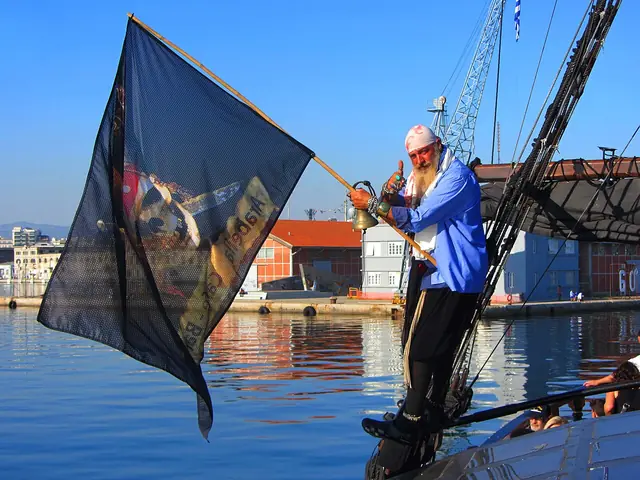
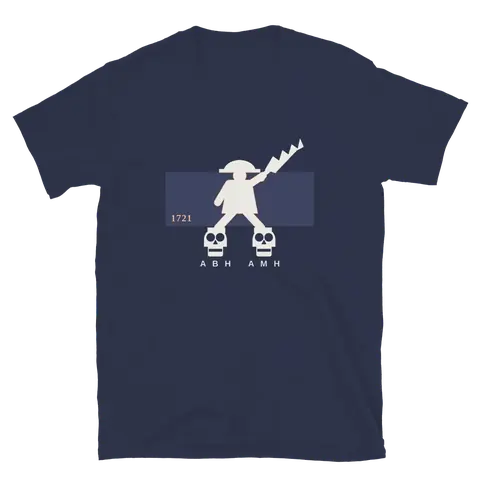
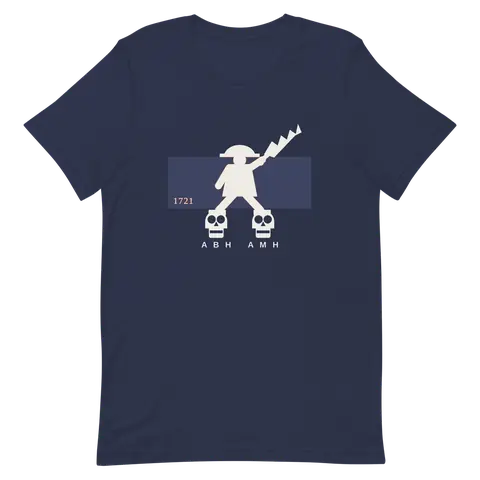
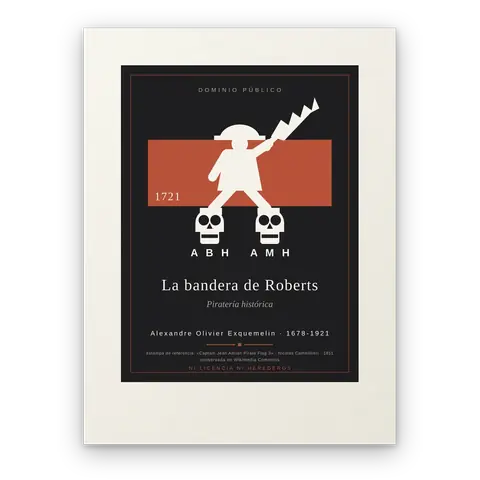
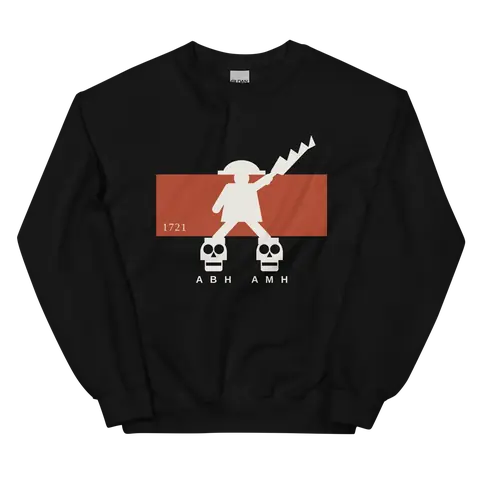
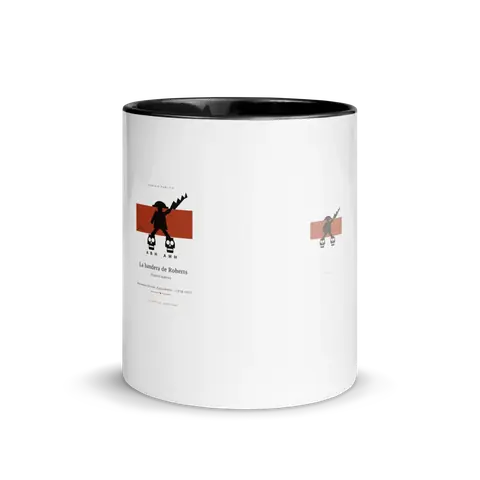
- Bartholomew Roberts's flag: the man himself with a flaming cutlass, standing on two skulls lettered ABH and AMH, a Barbadian's head and a Martinican's head. He is said to have had it made to order against the two islands that had fitted out ships to hunt him. It's worth saying that Johnson is the one telling us so, and that no contemporary document backs up that flag.
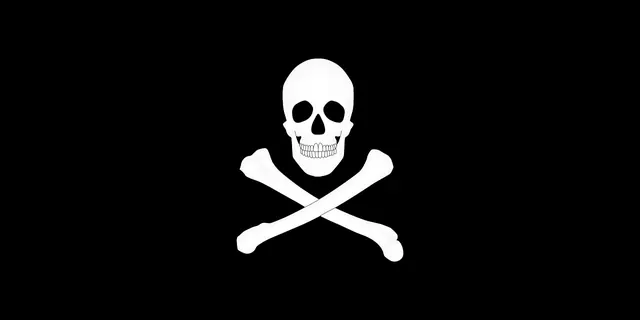
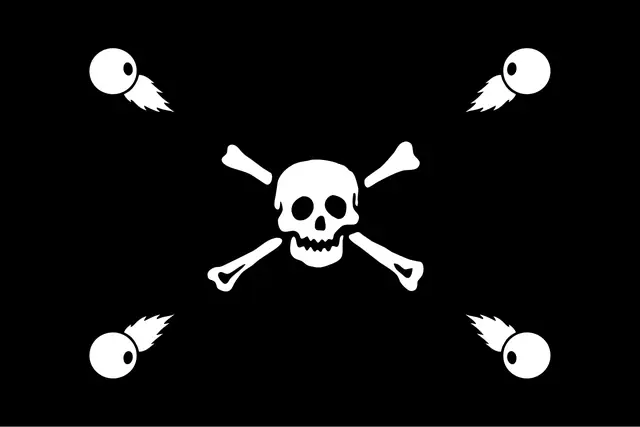
- The first recorded use of «Jolly Roger». Johnson hears it from Roberts in 1721 and from Francis Spriggs in 1723, and neither flag carried a skull and crossbones. It was a nickname for any black rag.
- The articles of Roberts's company, more house rules than blood code: lights out at eight, and anyone who wants to carry on drinking can take it up on deck in the dark; «the musicians shall have rest on the Sabbath day, and on that day only».
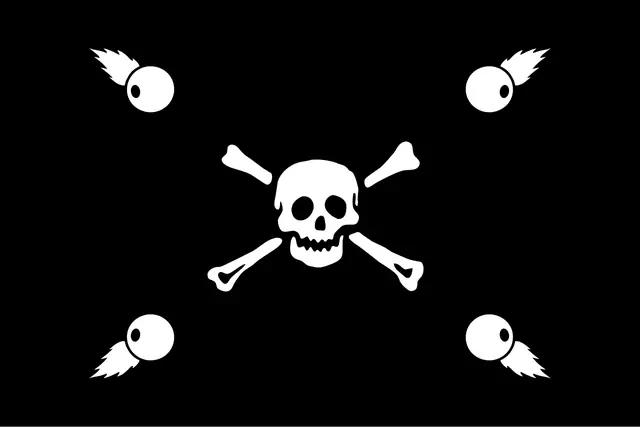
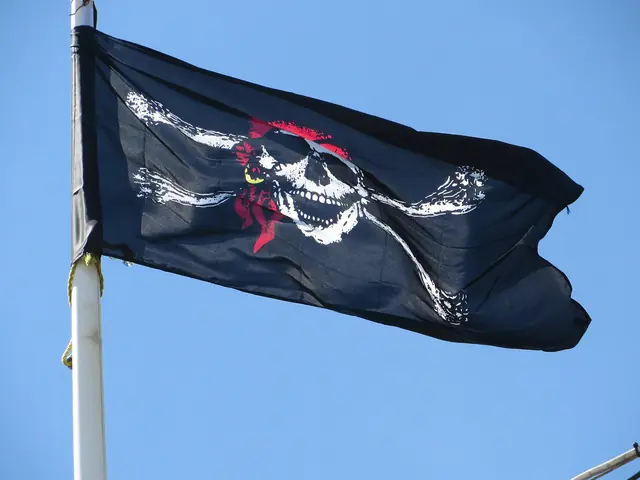
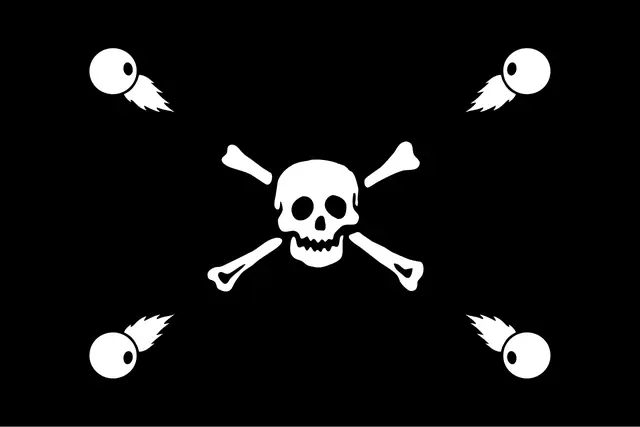
And it's worth saying what isn't there. The flags now hung on each individual pirate are almost all later invention: the horned skeleton spearing a heart, the one everybody calls Blackbeard's, appears in no eighteenth-century source at all. It is published in The Mariner's Mirror in 1912 as a generic pirate flag, attributed to nobody, and only around the 1970s does it start being given its name. Of the flags Blackbeard actually flew, all that survives is what a newspaper wrote in 1718: black rags with skulls and red rags.
And the women. In the English edition of 1724, Anne Bonny and Mary Read are engraved almost androgynous, in sailors' caps; in the Dutch edition of 1725, bare-breasted under men's clothes. One year apart, and the whole of the cinema to come is already there.
The Red Sash Came from a Delaware Illustrator
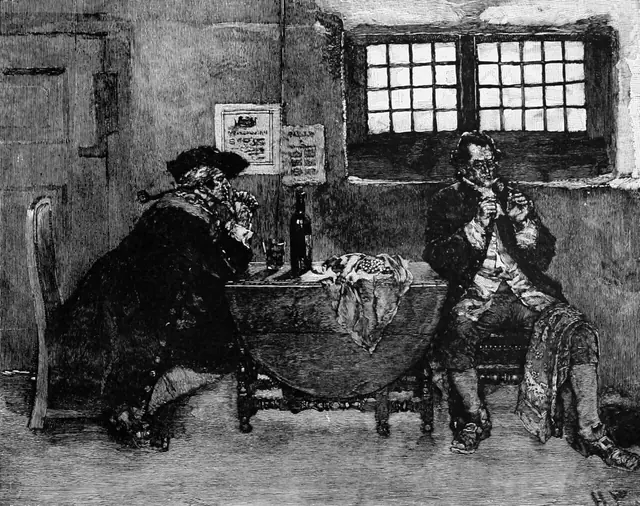
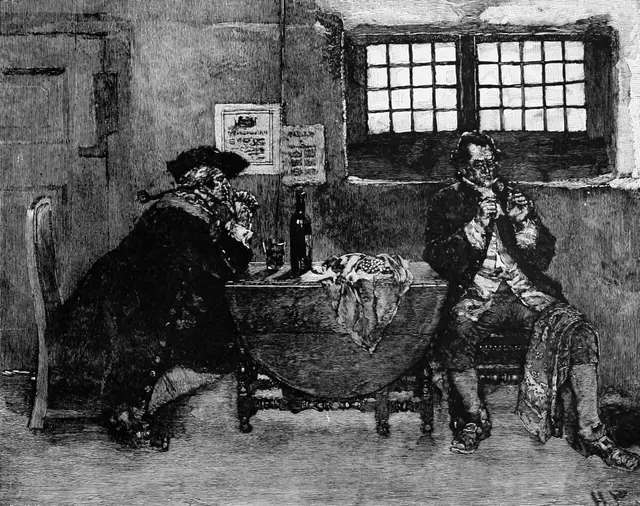
The third source is pure invention and it is the one that weighs most. In August and September 1887, Howard Pyle (Wilmington, 1853 – Florence, 1911) wrote and illustrated a two-part feature for Harper's Magazine titled «Buccaneers and Marooners of the Spanish Main». That's where Walking the Plank is. The plank appears in neither Exquemelin nor Johnson, the practice is almost certainly fictitious, and Pyle turned it into an icon at a stroke. He did the same with Blackbeard Buries His Treasure: burying the loot was vanishingly rare, because it was divided on the spot.
The costume isn't a sailor's either. Pyle added the red sash, the headscarf, the tricorne, the earrings and the buckled shoes, and he took the colour from the nineteenth-century imagery of Spanish bandits and gypsies — the world of Robert Kemm's Spanish Gypsies — not from anything worn aboard ship. His pupils spread it: N. C. Wyeth illustrated Scribner's Treasure Island in 1911, and that is the pirate who has never left. The collected Howard Pyle's Book of Pirates was put together by Merle Johnson in 1921, ten years after his death.
From Plate to Frame
The Black Pirate (1926) is the exact link in the chain. Jackie Coogan said years afterwards that it was he who showed Douglas Fairbanks his favourite book, Pyle's, and Fairbanks shot a plate in motion: the third feature made in two-strip Technicolor, with a deliberately muted palette taken from Rembrandt and from the illustrators — Pyle, Wyeth, Maxfield Parrish. «I cannot imagine piracy without colour», he wrote in 1925.
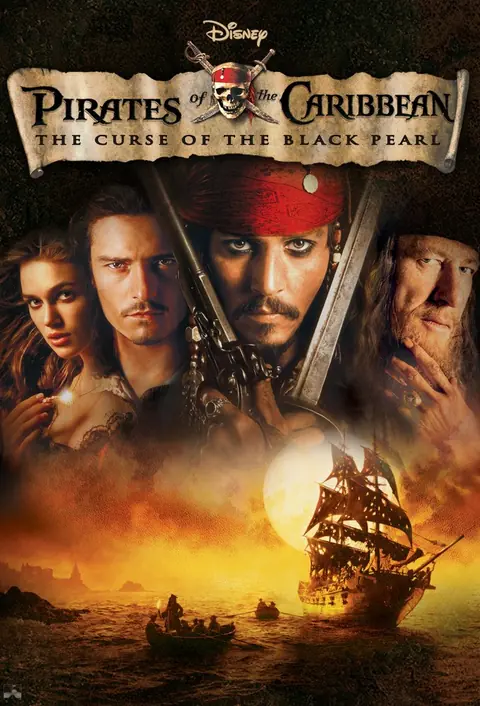
The voice came later. Robert Newton, born in Shaftesbury, Dorset, played up his own West Country accent for the John Silver of Treasure Island (1950) and did it again in Blackbeard, the Pirate (1952). That growl is what we now call «talking like a pirate», and it comes from no pirate at all: it comes from a farmhand in the English south-west. On 18 March 1967 Pirates of the Caribbean opened at Disneyland, the last attraction whose design Walt Disney oversaw in person; Marc Davis drew the characters with Pyle's plates in front of him. Thirty-six years later, the ride became a film.
What's on Screen Now
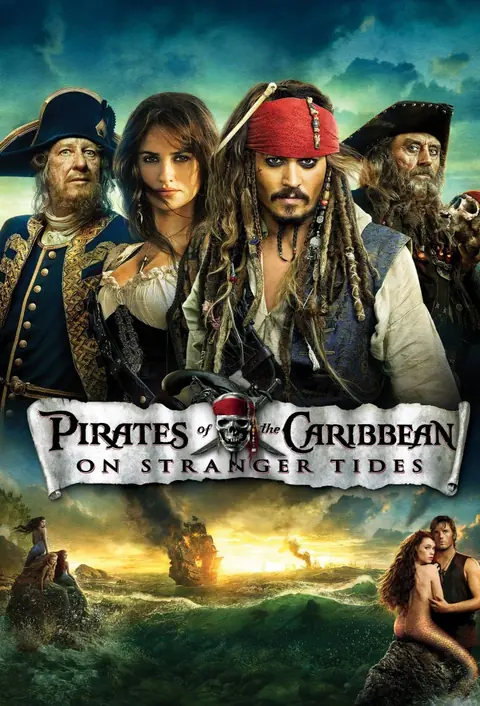
The Pirates of the Caribbean series (2003-2017) hands the sources back almost unfiltered: Ian McShane's Blackbeard in On Stranger Tides (2011) has lit fuses smoking around his face, which is Cole's picture exactly; that they burn in his beard rather than under his hat, as the 1724 text has it, is the cinema's own doing. Black Sails (2014-2017) goes further and uses Johnson's book as a cast list: Vane, Rackham, Bonny, Teach.
The rest points the same way. The Royal Merchant the Pogues are chasing in Outer Banks is a straight tracing of the real Merchant Royal, lost off Land's End on 23 September 1641 with four hundred bars of Mexican silver and nearly half a million pieces of eight, loaded at Cádiz to pay the Spanish tercios in Flanders. In One Piece each crew has its own Jolly Roger bearing its captain's mark, which is exactly how it worked: there was no such thing as «the» pirate flag, there was so-and-so's flag. And in Castle in the Sky (1986), back in cinemas this year, Miyazaki keeps the part hardly anyone tells: the pirates are a family who share out the takings, and the frightening one is the man from the government.