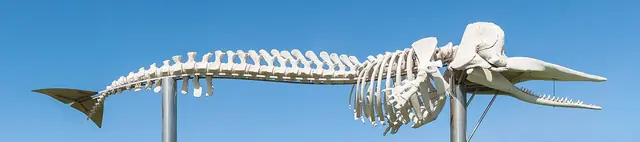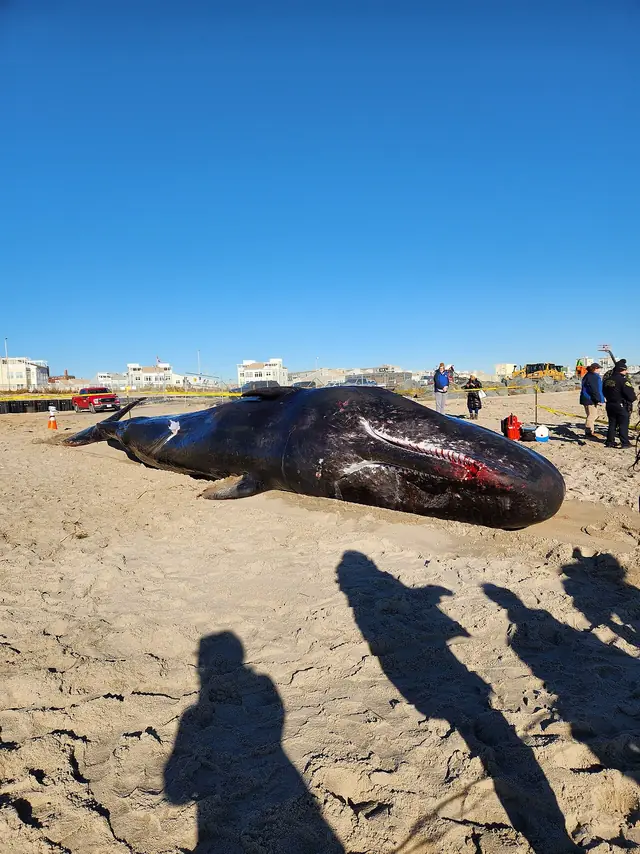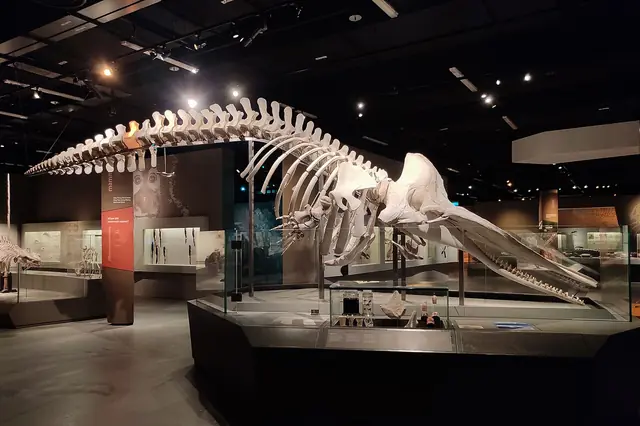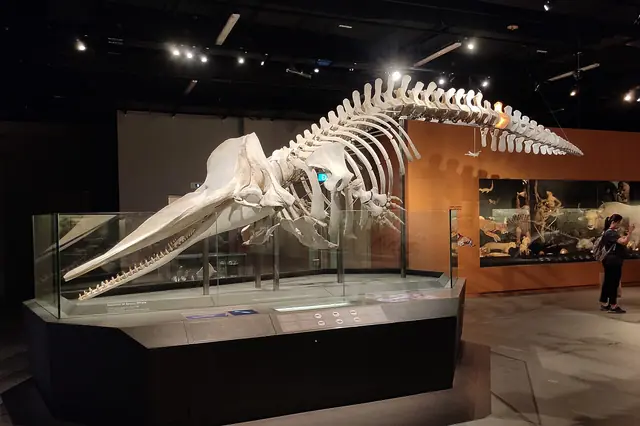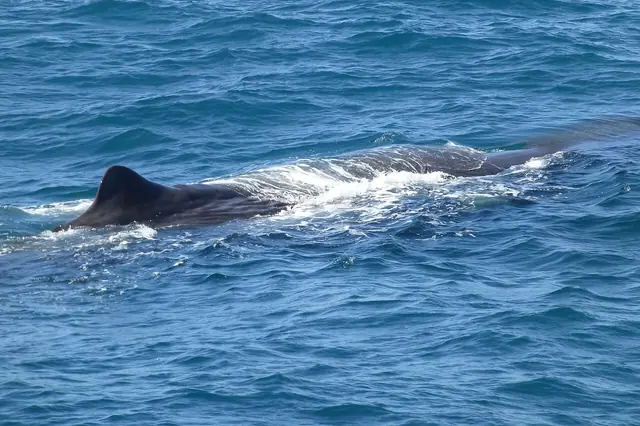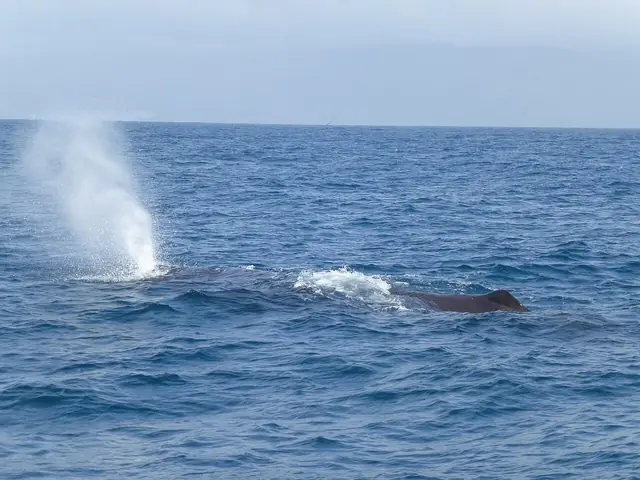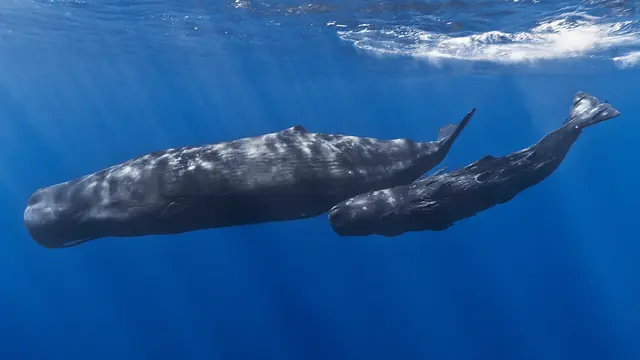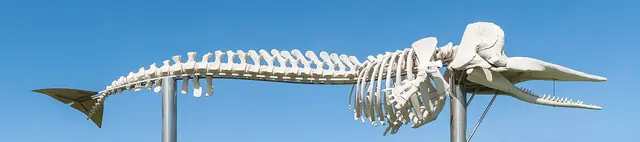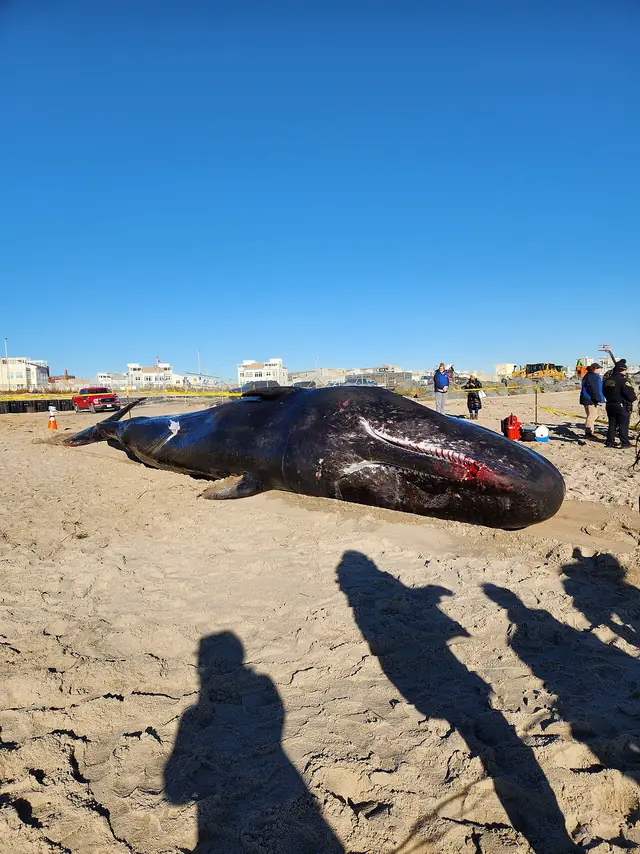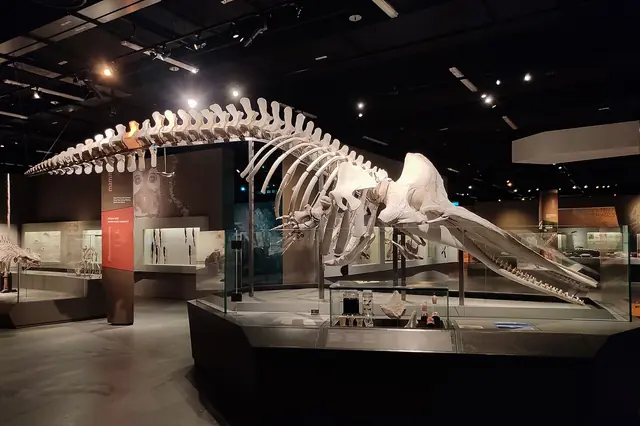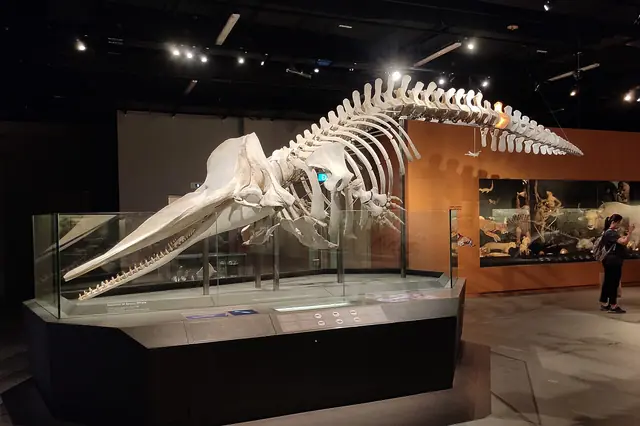







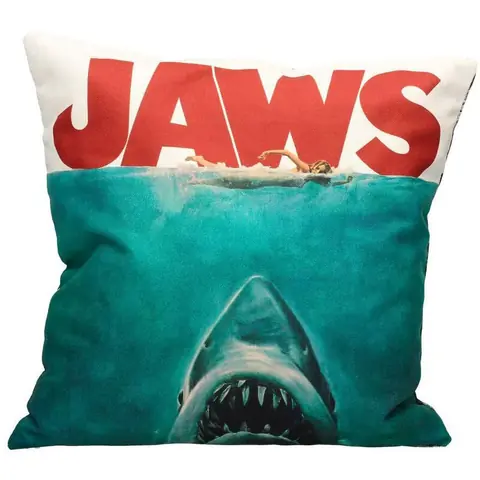
A sperm whale really did sink a ship
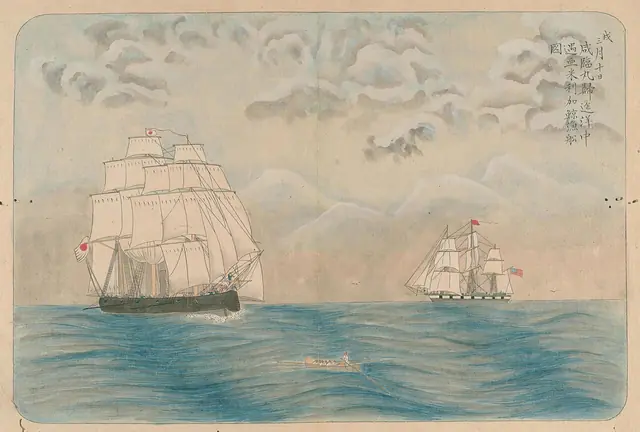
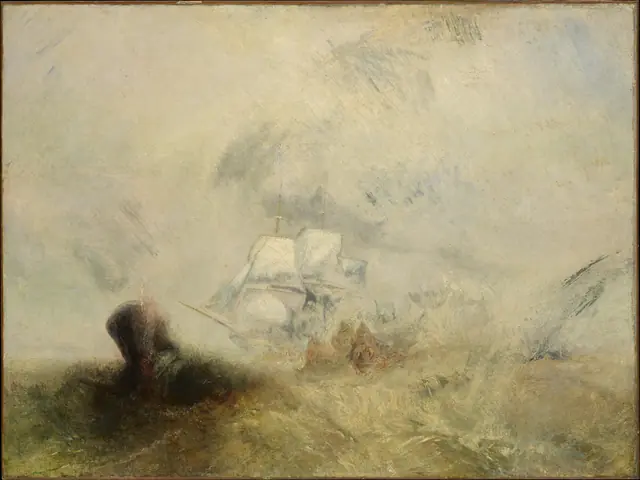
On 20 November 1820, in the middle of the Pacific, a sperm whale rammed the Nantucket whaleship Essex twice and sank her. The first mate, Owen Chase, published his account of the wreck in 1821: months in open boats, starvation, drawing lots, cannibalism. Twenty years on, a young man from New York signed aboard the Acushnet as a green hand; she sailed from Fairhaven on 3 January 1841. Out at sea somebody lent him that little book. His name was Herman Melville, and he jumped ship at Nuku Hiva, in the Marquesas, in July 1842.
The colour came from somewhere else: “Mocha Dick: or The White Whale of the Pacific”, by Jeremiah N. Reynolds, published in the New York magazine The Knickerbocker in May 1839. Reynolds told the story of an albino sperm whale that haunted the waters off the Chilean island of Mocha and had spent thirty years smashing boats. A ship sunk on one side, a white whale on the other: Melville welded the two pieces together.
Two titles, 3,415 copies and a lost epilogue
The book came out twice, under two names. Richard Bentley published it in London on 18 October 1851, in three volumes, as The Whale; Harper & Brothers brought it out in New York on 14 November as Moby-Dick; or, The Whale. The double edition secured copyright in both countries. Bentley printed some 500 copies; Harper, 2,915. It is dedicated to Nathaniel Hawthorne, “in token of my admiration for his genius”.
The English edition lost the epilogue, the one where Ishmael explains how he survived. Without it, the novel is a first-person narrative in which everybody dies: the Spectator, on 25 October 1851, closed its review with precisely that objection — a narrator who cannot possibly be telling what he tells.
On 20 August 1851, with the book already at the printer's, a sperm whale sank the whaleship Ann Alexander in the Pacific. Melville heard about it in November, from a cutting sent by his friend Evert Duyckinck.
“Ye Gods! What a Commentator is this Ann Alexander whale. I wonder if my evil art has raised this monster.”
He died on 28 September 1891 with the book out of print. The New York Times obituary ran to four lines and called the novel “Mobie Dick”; a letter to the editor on 6 October said goodbye to “the late Hiram Melville”.
Jonah, or the fish that was never a whale
Before he ships out, Ishmael steps into the Whaleman's Chapel in New Bedford and hears Father Mapple preach from a pulpit shaped like a ship's bow, reached by a rope ladder that he then hauls up behind him. The scene runs across chapters 7 to 9 — the chapel, the pulpit, the sermon — and the sermon is about Jonah.
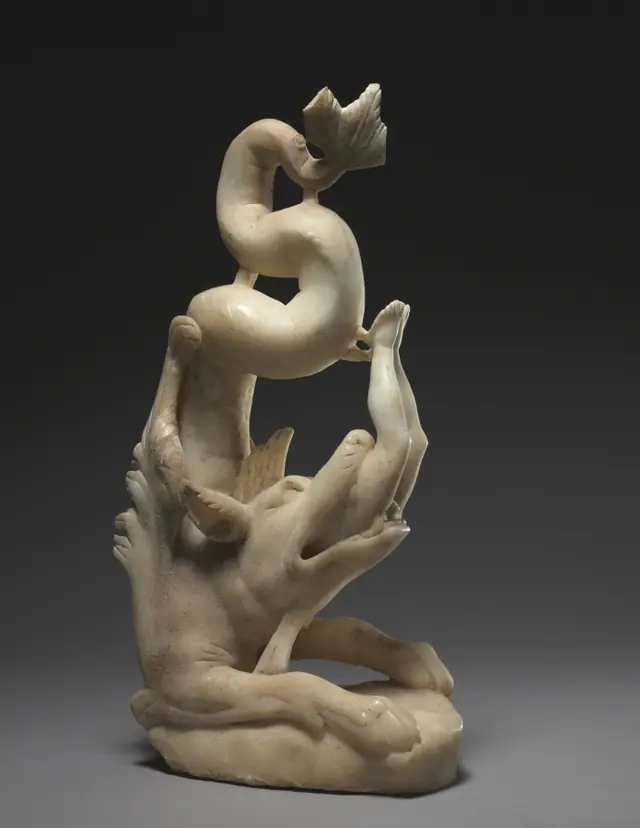
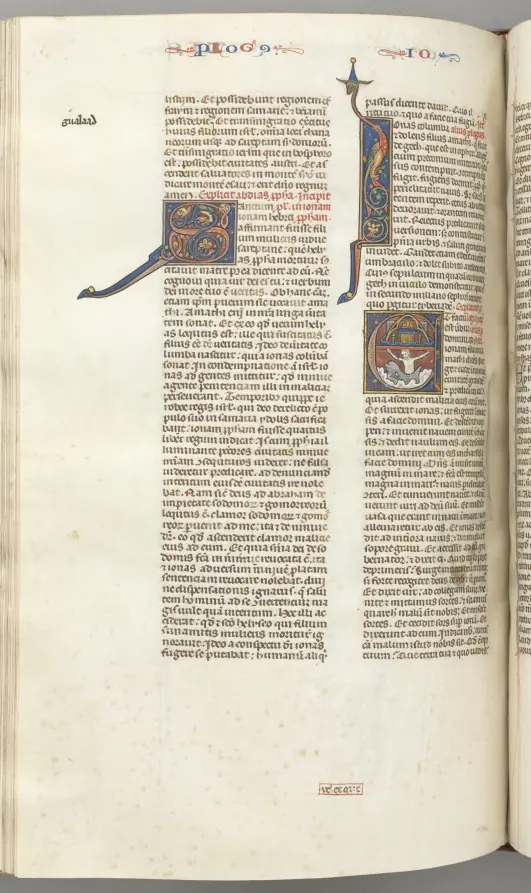
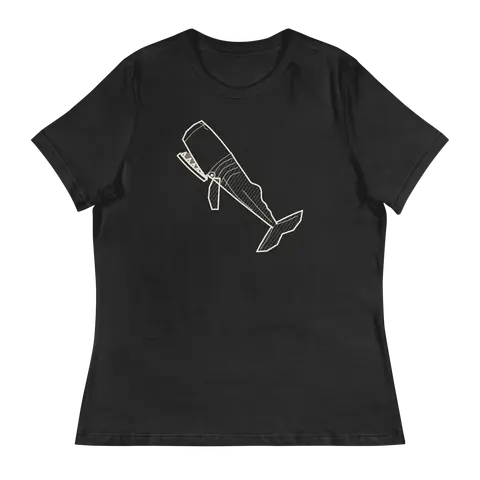
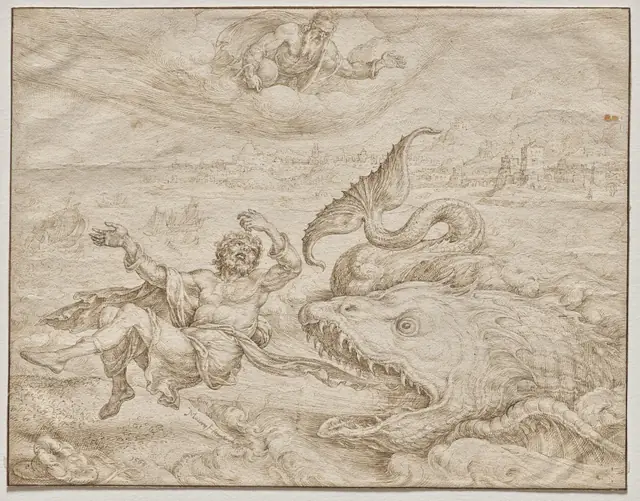
And here is the detail almost nobody knows: the Bible does not say whale. The Hebrew of Jonah 2:1 has dag gadol, “great fish”. The Greek Septuagint rendered it kētos; the Vulgate put piscis grandis in Jonah but ventre ceti in Matthew 12:40; and Tyndale, in 1534, wrote “greate fyshe” in one place and “whale” in the other. Jonah's whale is a translation accident with twenty centuries of mileage on it. The image, by contrast, was fixed from birth: a naked man going head first into a pair of jaws.
The Pequod's inventory
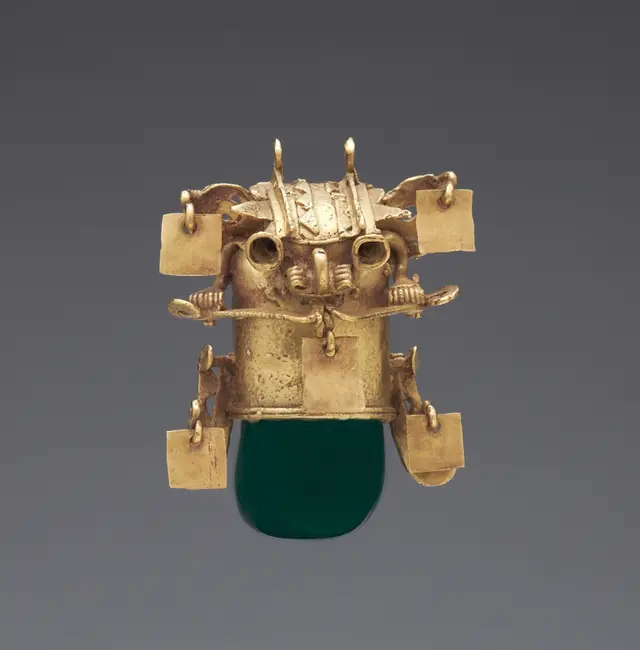
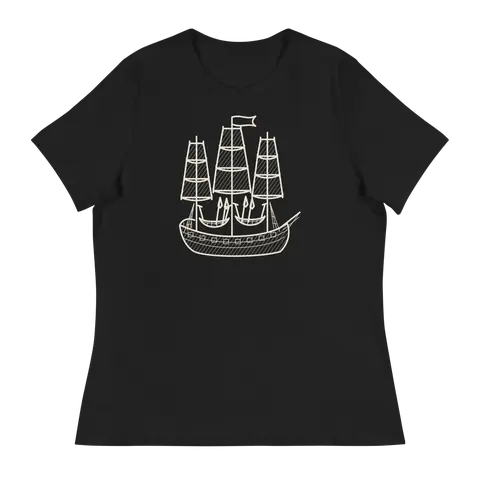
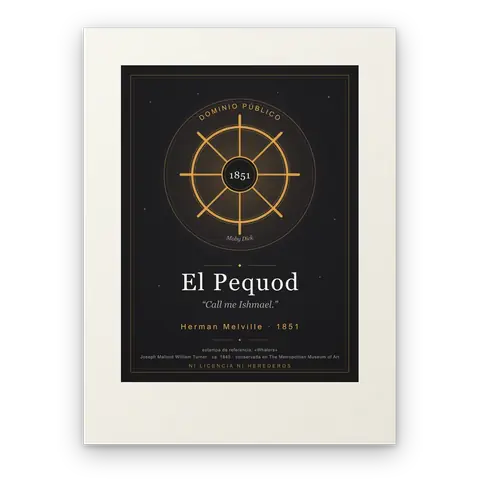
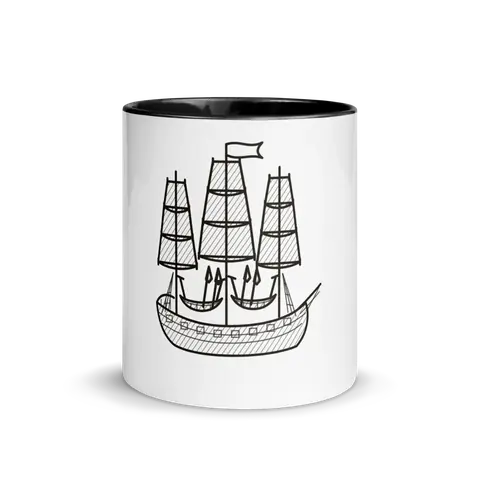
Melville writes like a man taking stock of a warehouse, which is why the novel works as a catalogue. The Pequod's bulwarks bristle with sperm whale teeth driven in to serve as belaying pins, and her tiller is “in one mass, curiously carved from the long narrow lower jaw of her hereditary foe” (chapter 16). Ahab walks on a leg of jawbone. In chapter 99 he nails to the mainmast a gold Ecuadorian doubloon struck in Quito, showing three Andean peaks — one crowned by a flame, another by a tower, the third by a crowing cock — with the zodiac running round them; every man aboard reads his own meaning into it.
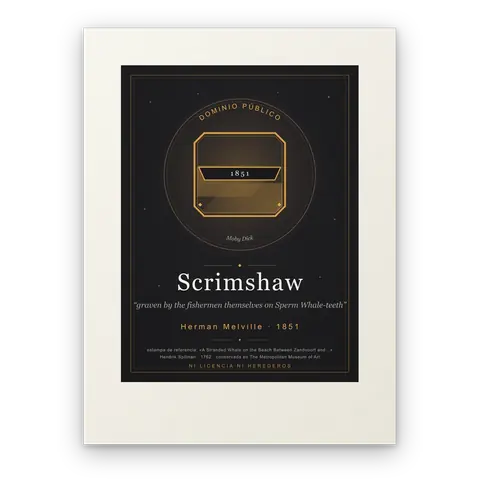
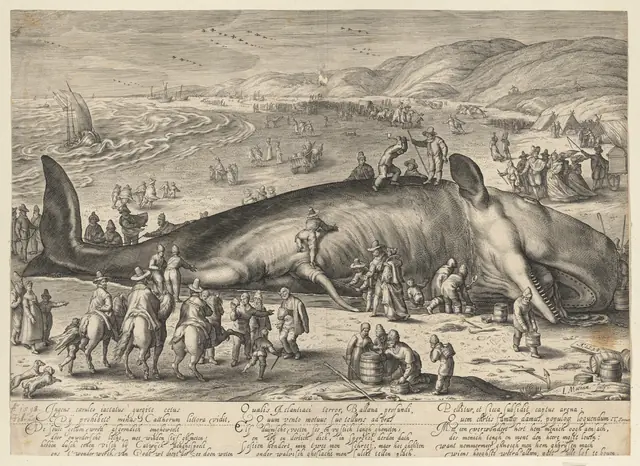
The final harpoon is forged in chapter 113 out of twelve twisted rods and tempered in the blood of the three harpooneers — Queequeg, Tashtego and Daggoo — while Ahab howls “Ego non baptizo te in nomine patris, sed in nomine diaboli”. Add St Elmo's fire on the yardarms, the smoke-blackened painting in the Spouter-Inn — a whale impaling itself on a ship's three masts — and Queequeg's coffin turned into a life-buoy. And the scrimshaw, which Melville spells “skrimshander” in chapter 57: whalemen scratching hunting scenes onto sperm whale teeth with a jackknife. When he wanted to point readers to trustworthy pictures of the work, he picked two French engravings taken from paintings by Ambroise Louis Garneray (1783-1857), one of the sperm whale hunt and one of the right whale: questionable anatomy, faultless seamanship.
Ahab on screen: from Barrymore to Ron Howard
The cinema got there early, and it got there changing the ending. The Sea Beast (1926), directed by Millard Webb, with John Barrymore and Dolores Costello, turns the novel into melodrama: Ahab does not lose his leg to blind chance, he is tipped into the water by his half-brother Derek, who wants the girl, and at the end he comes home and marries her. The 1930 sound remake, with Barrymore again, repeats the trick.
The canonical version is John Huston's, 1956, scripted by Huston and Ray Bradbury, with Gregory Peck as Ahab and Orson Welles as Father Mapple; Welles shot his scene in 1954 and the following year staged his own theatre version in London, Moby Dick—Rehearsed, which he tried to film and gave up on after three days. Huston's shoot was a wreck in its own right: two model whales were lost at sea and a third had to be built for the sequences in the Canaries.
After that: Franc Roddam's 1998 miniseries, with Patrick Stewart as Ahab and Gregory Peck as Father Mapple in his last role, which took a Golden Globe; Mike Barker's 2011 version with William Hurt; the anime Hakugei (1997), in which the whales are derelict spacecraft; and In the Heart of the Sea (2015), Ron Howard's return to the Essex, which puts Melville himself on screen (Ben Whishaw) coaxing the story out of a survivor.
The Ahabs who carry no harpoon
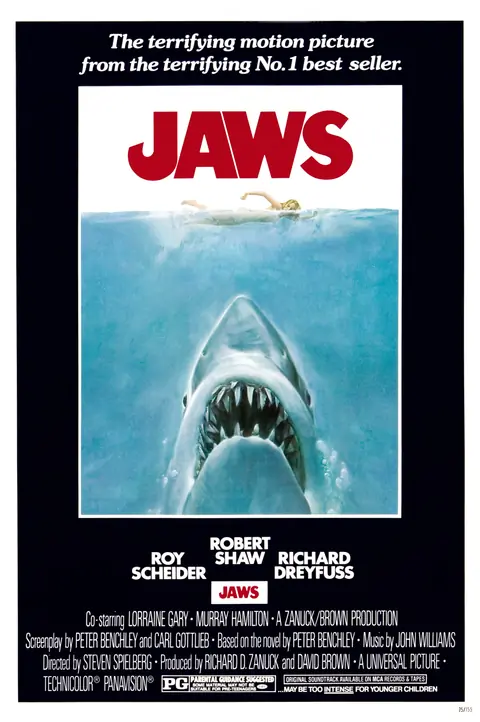
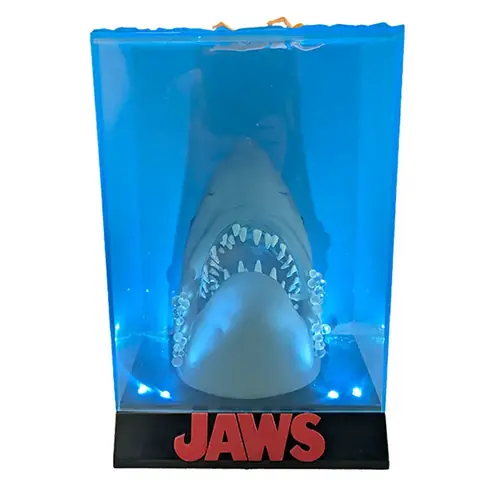
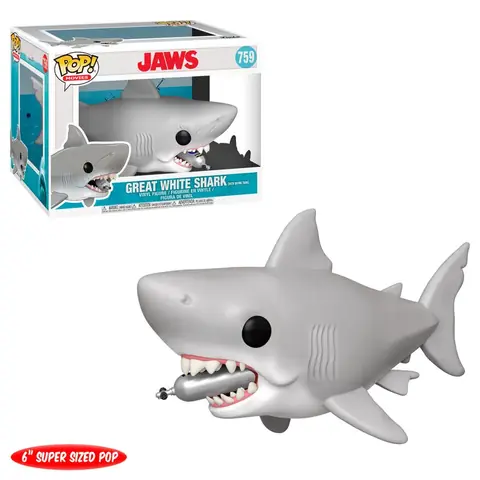
Quint, in Jaws (1975), is Ahab with a fishing licence. Early drafts of the script had him in a cinema, roaring with laughter at Huston's Moby Dick, but Gregory Peck, who owned the rights to that film and hated his own performance in it, refused permission and the scene was dropped.
In Star Trek II: The Wrath of Khan (1982), Khan dies reciting the end of chapter 135 almost word for word: “to the last I grapple with thee; from hell's heart I stab at thee; for hate's sake I spit my last breath at thee”. In Star Trek: First Contact (1996), Lily tells Picard that “Captain Ahab has to go hunt his whale”, and Picard, alone a moment later, recites to himself the passage where Ahab heaps the hatred of his whole species onto that white hump. And the sperm whale that swallows Geppetto in Disney's Pinocchio (1940) is called Monstro: in Collodi he was a pesce-cane, a dogfish, and on screen he turns back into the mouth of Jonah.
![Single Leaf from a Bible: Initial E[t factum est] with Jonah Swallowed by the Whale](/img/museo/melville_moby_dick-c6beedd5f4.jpg?w=640)