The book that went out signed by its own hero
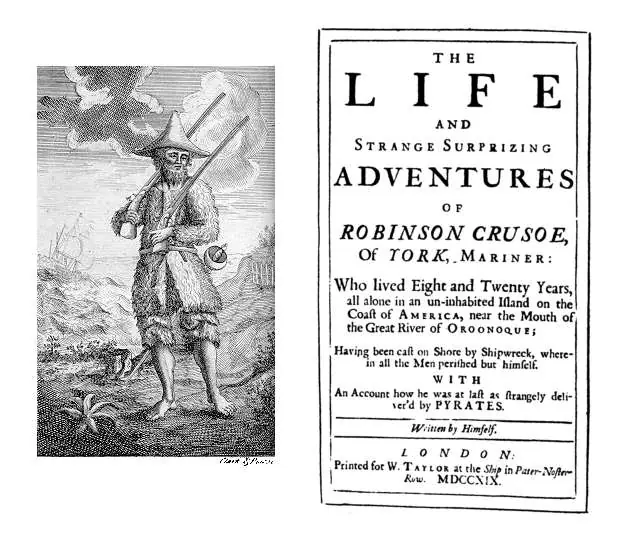
On 25 April 1719 the London bookseller William Taylor put The Life and Strange Surprizing Adventures of Robinson Crusoe, of York, Mariner on sale. Daniel Defoe's name was nowhere on the title page: the stated author was Crusoe himself, and the subtitle finished the job with "Written by Himself". Plenty of people bought it believing exactly that, the journal of a real survivor. Four editions had come and gone before 1719 was out.
Defoe was pushing sixty and came out of pamphleteering, bankruptcy and the pillory. He rode the wave with two sequels, The Farther Adventures that same year and Serious Reflections in 1720, neither of which anyone reads now. The first part had run to more than seven hundred editions, translations and imitations by the end of the nineteenth century, and in Emile (1762) Rousseau ruled that it be the only book his pupil was allowed to touch before the age of twelve.
One detail almost everybody has backwards: the island in the novel is not in the Pacific. Crusoe runs aground in the Caribbean, near the mouth of the Orinoco, and christens the place the Island of Despair.
The Scot who asked to be left ashore
The real model was Alexander Selkirk, sailing master of the Cinque Ports. In September 1704 he fell out with his captain, Thomas Stradling, over the state of the hull and asked to be put ashore on Más a Tierra, in the Juan Fernández archipelago, 670 kilometres off Chile. They left him a musket, an axe, a knife, a cooking pot, a Bible and some clothes. He was right about the hull: the Cinque Ports went down soon afterwards near Malpelo Island.
He lasted four years and four months on feral goats, crayfish and wild turnips, and when his clothes fell apart he stitched himself new ones out of goatskin, using a nail for a needle. Woodes Rogers's Duke picked him up on 2 February 1709. Rogers published the case in A Cruising Voyage Round the World (1712) and Richard Steele interviewed him for The Englishman in 1713. Selkirk died in 1721 aboard HMS Weymouth, off the coast of Africa.
In February 2005 a dig at Aguas Buenas, on that same island, turned up a fragment of copper alloy identified as part of a pair of early eighteenth-century navigational dividers: the closest anyone has come to Selkirk's camp. The find was published in Post-Medieval Archaeology in 2007.
Nor was he the first. In the Royal Commentaries of the Incas (1609) Inca Garcilaso told the story of Pedro Serrano, a Spanish castaway stranded on a Caribbean sandbank between 1526 and 1534: three years alone, drinking turtle blood, his hair and beard grown so long he plaited them to sleep.
The goatskin umbrella
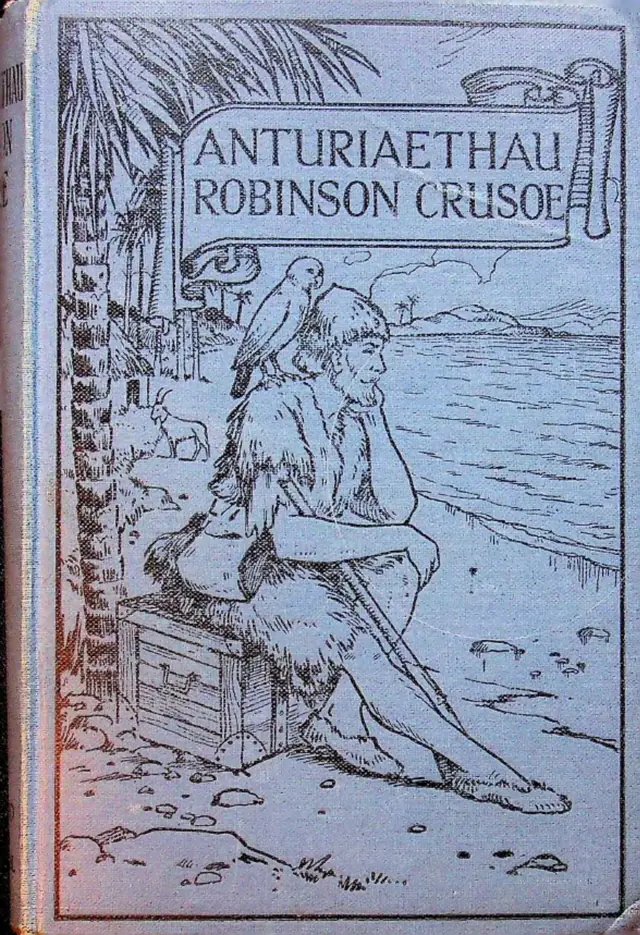
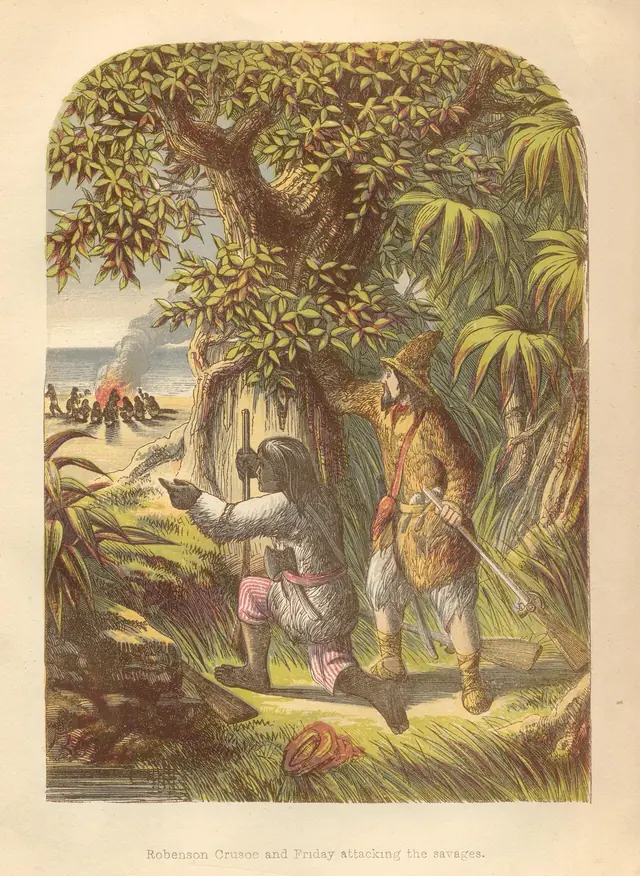
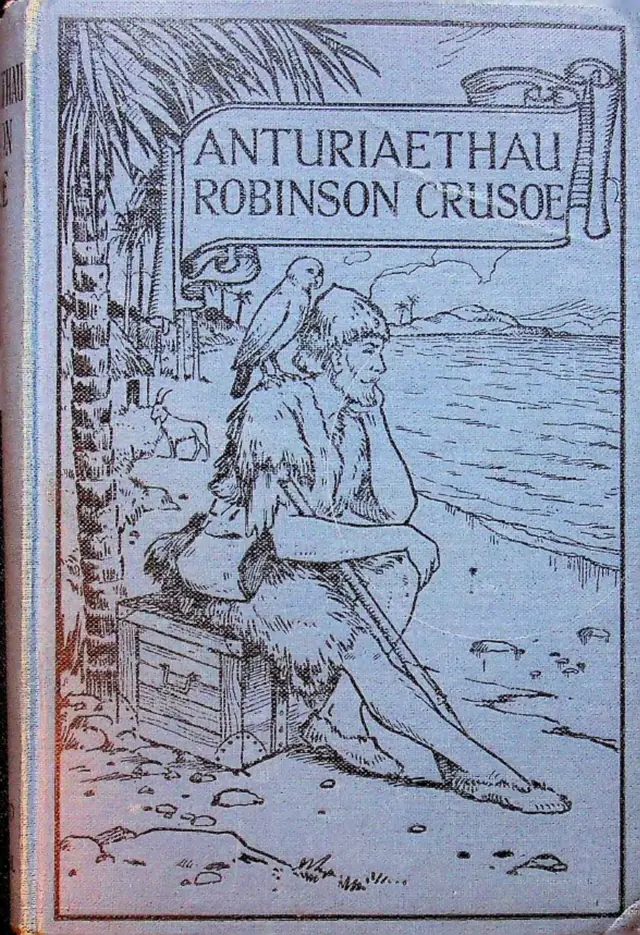
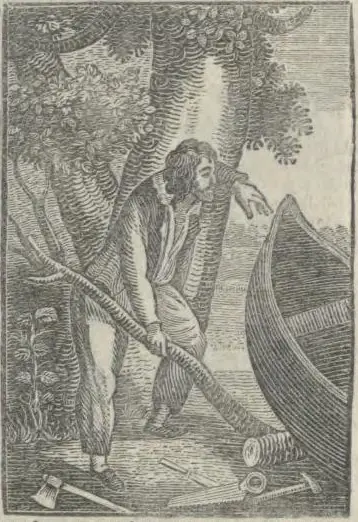
What gets drawn here are objects, not symbols. The bare footprint in the sand. The notched post, one cut a day and a longer one on Sundays, because without it you lose count. The goatskin parasol sewn with the hair turned outwards so the rain runs off. The raft of barrels and planks he uses to strip the grounded ship before the sea swallows it. The double-staked palisade in front of the cave. The goats, the parrot that learns to say his name, the map of the island.
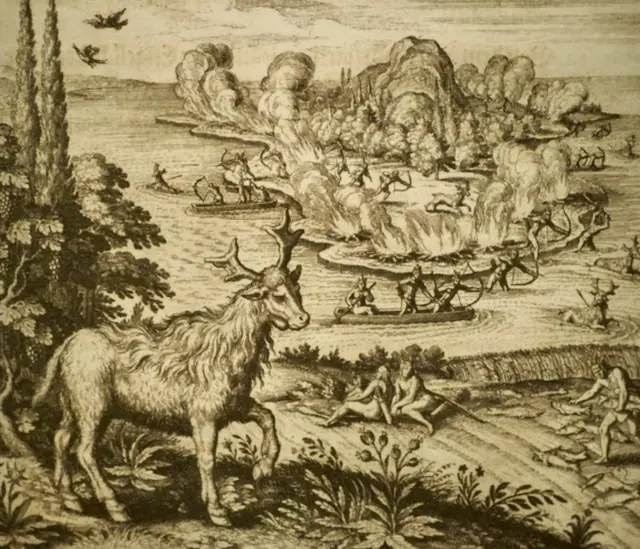
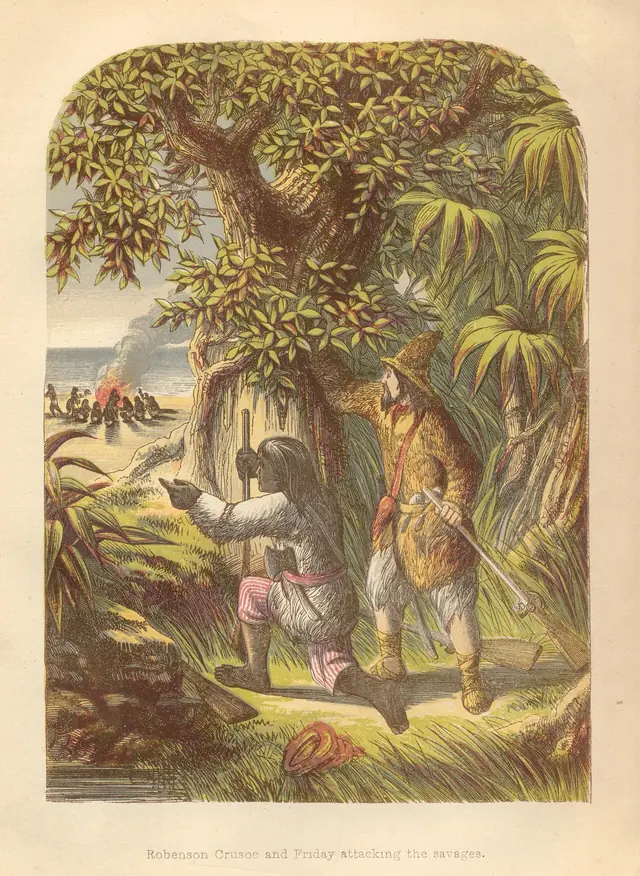
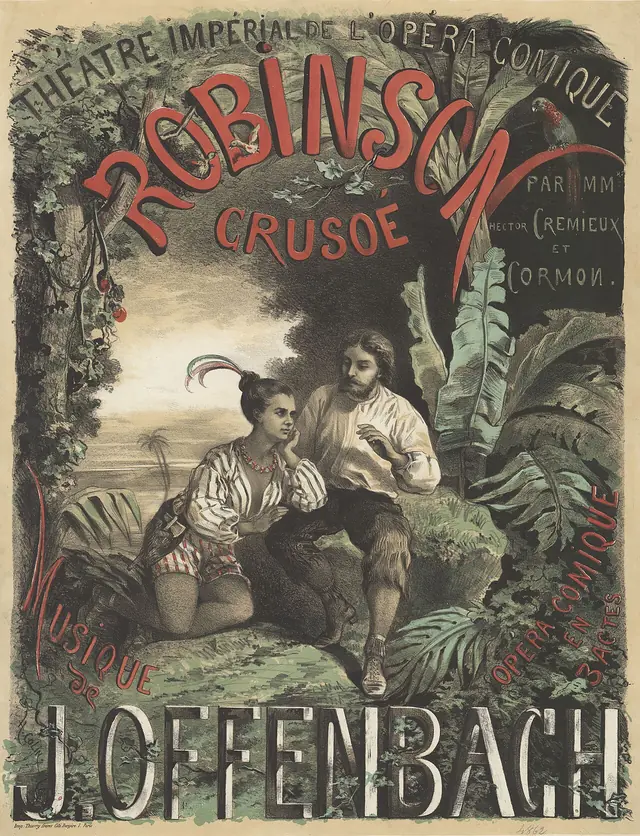
The engravings come out of exactly that. The first edition carried only a frontispiece signed by John Clark and John Pine, and no illustrations inside: plates were an extra, added once a book had proved it sold. It sold. George Cruikshank illustrated it in 1831, J. J. Grandville packed more than two hundred engravings into the French edition of 1840, and Walter Paget signed the 120 plates of Cassell's 1891 edition, the most copied of the century. Paget was the brother of Sidney, who drew Sherlock Holmes, and sat as his model.
Beside all this sits the other vocabulary, the one belonging to shipwreck itself: The Raft of the Medusa, which Géricault painted in 1819 after the wreck of the frigate Méduse on 2 July 1816. Thirteen days adrift, fifteen survivors out of at least a hundred and forty-seven.
From the copper plate to the sound stage
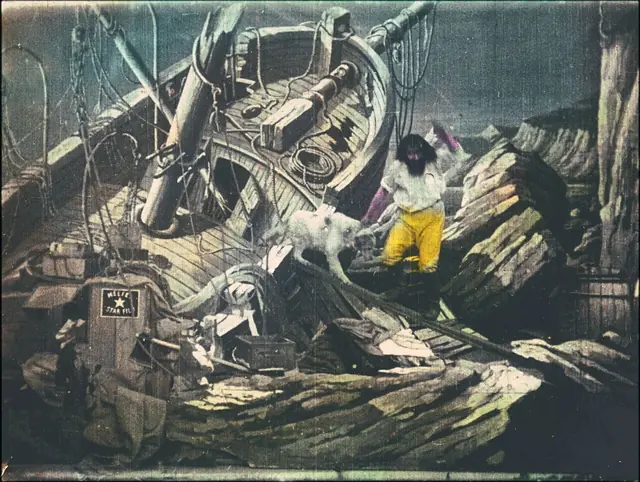
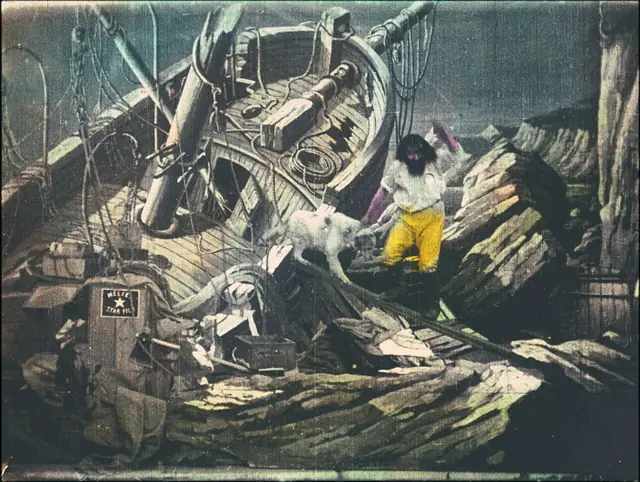
The first film dates from 1902 and is Georges Méliès's: fifteen minutes with the sets traced straight off Grandville's engravings. For decades only a black-and-white fragment survived, until a hand-coloured nitrate print surfaced in 2011 in a batch donated to the Cinémathèque française. Restored, it was screened again at Pordenone in 2012.
The version that holds up best is Luis Buñuel's, shot in 1952 near Manzanillo, in Colima, with interiors at the Tepeyac studios. It was his first film in colour and his first in English, shot simultaneously in two languages. Dan O'Herlihy took a Best Actor nomination at the 1955 Oscars for a part in which he spends half the film with nobody to talk to.
Two from 1964 matter. Robinson Crusoe on Mars, by Byron Haskin, the man behind The War of the Worlds, shot at Zabriskie Point in Death Valley and framed from the ridgelines so that Mars would not look like a western: Adam West gets himself killed in the opening minutes and the first co-star is a monkey. And the French-German series with Robert Hoffmann, which the BBC cut into thirteen episodes; the BBC insisted on a new theme before buying it, commissioned one from Robert Mellin and Gian Piero Reverberi, and that music was the British school summer holiday until 1982. Then came Man Friday (1975), with Peter O'Toole and the story told from Friday's side; Crusoe (1988); and the 1997 version with Pierce Brosnan.
Robinsonades
The word has been around since 1731. The German Johann Gottfried Schnabel coined it in the preface to Die Insel Felsenburg, the year Defoe died, to give a name to the flood of imitations.
The genre is still turning without ever crediting the novel. Cast Away (2000) is the textbook case: the screenwriter William Broyles Jr. had himself marooned for a week on a beach in the Gulf of California to write it, and a Wilson-brand volleyball washed up at his feet. The Martian (2015) is Crusoe with potatoes. Lost (2004) is the island turned into a series. Always the same machinery: an inventory, a routine and a signal.
The last twist is on the map. In 1966 Chile renamed the archipelago to draw tourists: Más a Tierra became Robinson Crusoe Island and Más Afuera became Alejandro Selkirk Island. Selkirk never set foot on Más Afuera. He spent four years on the other one, the one that now carries the invented character's name.
![A Desert [sic]–Imitation of Modern Fashion](/img/museo/defoe_naufragos-9999feb44c.jpg?w=640)
![Cactus culture : illustrated cacti and desert plant catalogue / Desert Plant Co. ; [Mrs. C.E. Pattison, manager].](/img/museo/defoe_naufragos-6e8ea1f64e.jpg?w=640)
![Cactus culture : illustrated cacti and desert plant catalogue / Desert Plant Co. ; [Mrs. C.E. Pattison, manager].](/img/museo/defoe_naufragos-e5de7a5830.jpg?w=640)