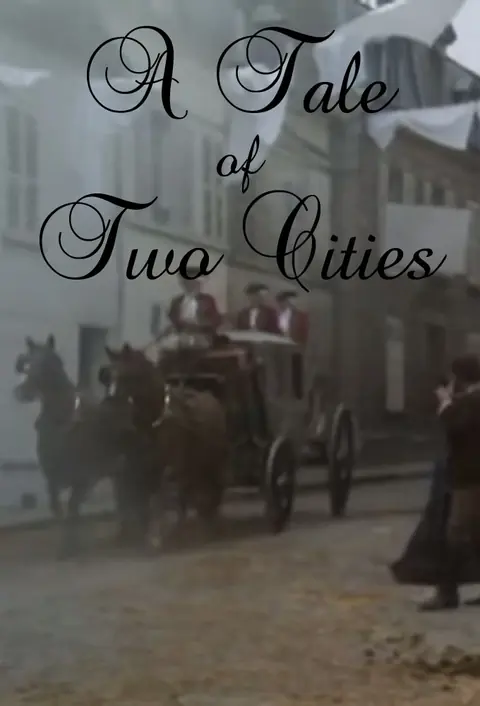
A Tale of Two Cities
See the merch from A Tale of Two Cities →
A four-part limited series with Kit Harington as Sydney Carton, François Civil as Charles Darnay and Mirren Mack as Lucie Manette: Dickens's novel told as a psychological thriller, from Georgian London to Revolutionary Paris. Created and written by Daniel West and directed by Hong Khaou and Richard Clark, it premieres 6 September 2026 on MGM+, with BBC One in the UK and Prime Video internationally.
- Screenplay
- Daniel West
- Cast
- Kit Harington · François Civil · Mirren Mack
- Studio
- Amazon MGM Studios · BBC
Poster and metadata from TheTVDB. You can add anything missing or subscribe over there.
Merch
The whole shop →3 designs for this story


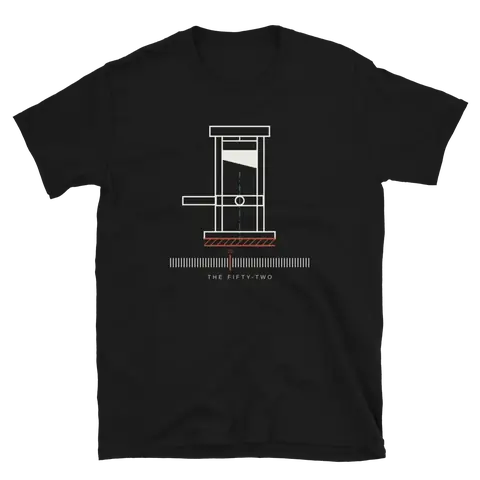
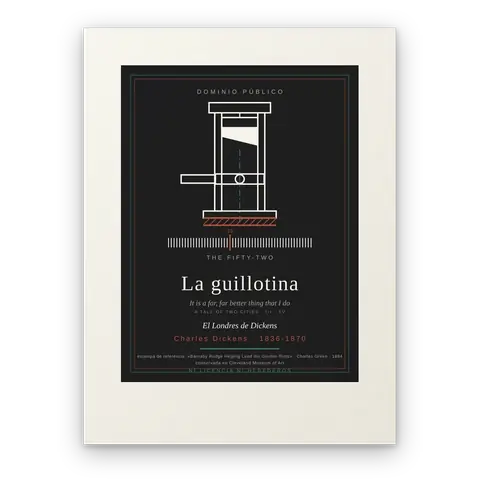
La guillotina
-
sizes S to 3XL
A Tale of Two Cities T-shirt · La guillotina
Delivery in 3-4 days · printed in the EU
-
sizes S to 2XL
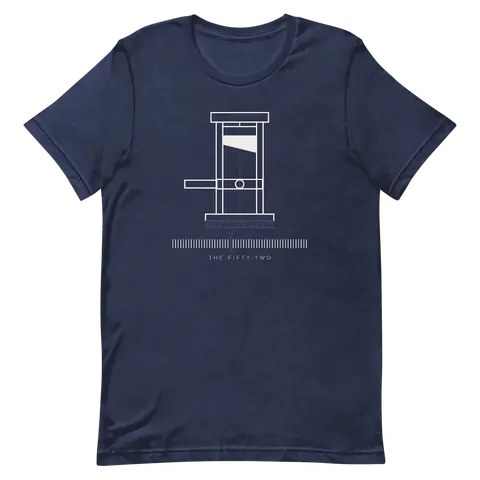
A Tale of Two Cities Premium T-shirt · La guillotina
Delivery in 3-4 days · printed in the EU
32.95 € Buy A Tale of Two Cities Premium T-shirt · La guillotina
-
sizes S to 2XL
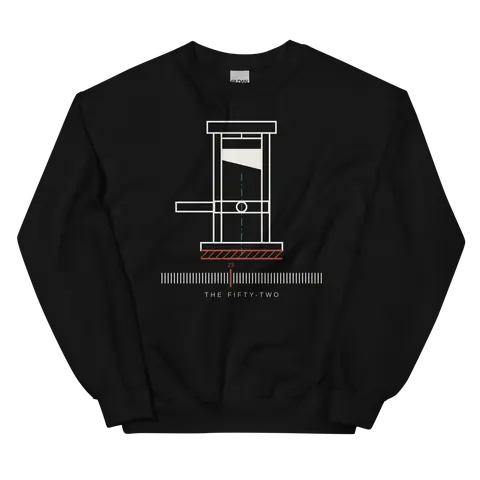
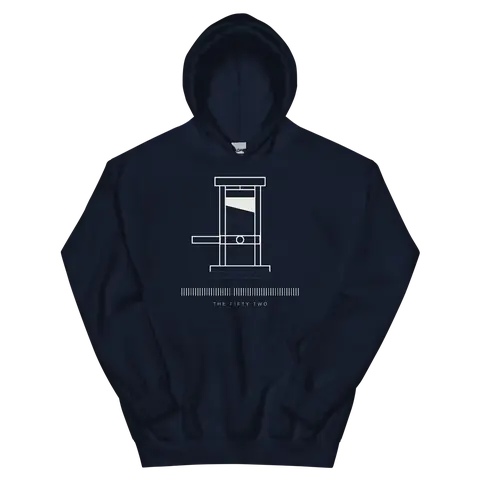
A Tale of Two Cities Sweatshirt · La guillotina
Delivery in 3-4 days · printed in the EU
-
sizes S to 2XL
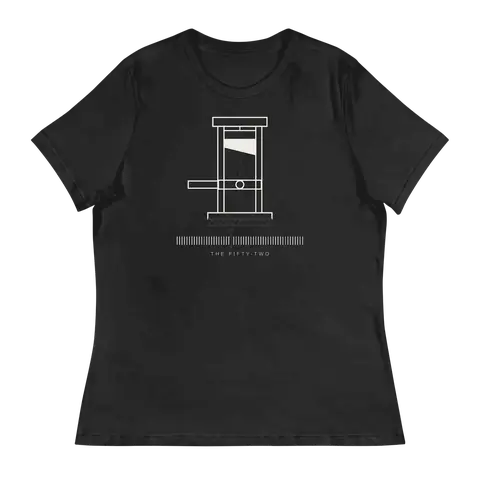
A Tale of Two Cities Women's T-shirt · La guillotina
Delivery in 3-4 days · printed in the EU
33.95 € Buy A Tale of Two Cities Women's T-shirt · La guillotina
The cast against the text
Who is who in the poem
The 3 actors announced for the limited series, and who each character is in Dickens's A Tale of Two Cities. All 3 parts exist in the novel under those same names; under each one you get which of the three books they appear in and what they do there.
- The «triangle» the series is selling does not exist as a rivalry in the novel: Dickens closes it in chapter 13 of Book II, with Carton giving Lucie up before Darnay has even proposed, and making her the promise that is the exact blueprint of the ending — «there is a man who would give his life, to keep a life you love beside you». What the trailer sells as a contest, the book writes as a renunciation kept thirty chapters later. If the series turns it into a competition, that will be its decision, not Dickens's.
- The physical likeness between Carton and Darnay is not an easter egg: it is the engine of the whole plot, and it saves Darnay's life TWICE — at the Old Bailey confrontation (II, 3), where showing Carton without his wig is enough to wreck the witness, and at the cell swap (III, 13). That is why casting matters more here than in almost any classic: Harington and Civil are no doubles, and every adaptation has to decide whether the likeness is filmed or told. Giving the French aristocrat to a French actor and the English barrister to an Englishman is, at least, the exact geography of the book.
-
Kit Harington Sydney Carton
Books II and III
The brilliant, wasted English barrister and Darnay's physical double: at the Old Bailey trial (II, 3) he only has to take off his wig to wreck the witness who swore he could identify the accused. He opens his heart to Lucie asking nothing back (II, 13), and the last page of the novel is his — probably the most quoted ending Dickens ever wrote.
-
François Civil Charles Darnay
Books II and III
The French aristocrat who renounces his family name — Evrémonde — and earns his keep in London teaching French. Tried for treason in England (II, 3) and saved by his likeness to Carton, he returns to Paris at the height of the Revolution to help his old steward Gabelle (II, 24), and is condemned by the testimony his father-in-law left written in the Bastille (III, 10).
-
Mirren Mack Lucie Manette
Books I-III
«The golden thread» that names the second book: the daughter who collects in Paris a father she has never known, imprisoned eighteen years in the Bastille without trial, and recalls him to life (I, 5-6, the shoemaker scene). Everything else is woven around her: Darnay marries her, Carton makes her the promise he keeps at the end, and even the echoing footsteps of her Soho parlour (II, 6) are a warning of what is coming from Paris.
Every character was checked against the original English text of 1859, which is in the public domain — Dickens died in 1870, so it clears even the Spanish eighty-year rule. The novel runs in three books («Recalled to Life», «The Golden Thread», «The Track of a Storm») and references are to those books and their chapters, not to episodes of the series. Read the translation.
Who plays whom, cross-checked against TheTVDB, the English Wikipedia, «A Tale of Two Cities (2026 TV series)» (CC BY-SA 4.0).
This page reports on a film and has no connection whatsoever with its production or its distributor. What RELIC draws and sells comes from Dickens's A Tale of Two Cities, which is in the public domain: the print carries no film poster, no stills and no studio logo. The title you see in the shop is the title of the work the drawing comes from, not a licence from the studio.
Questions
- How many episodes is A Tale of Two Cities, and where can you watch it?
- Four episodes — it is a closed limited series. It premieres on 6 September 2026 on MGM+ in the United States; in the UK it goes to BBC One and internationally to Prime Video. It is created and written by Daniel West and directed by Hong Khaou and Richard Clark, with Kit Harington also serving as executive producer.
- What book is the series based on?
- Charles Dickens's 1859 novel, serialised in All the Year Round, Dickens's own magazine. It is in the public domain: you can read the whole thing free and legally at the source link above. Three books, forty-five chapters, and the most quoted opening line a novel ever had: «It was the best of times, it was the worst of times».
- Who is Sydney Carton in the novel?
- A brilliant barrister who despises himself and works to make another man shine, until a hopeless love for Lucie gives him somewhere to spend his whole life at once. His final thought — «it is a far, far better thing that I do, than I have ever done» — closes the novel and is one of the most famous farewells in literature.
Official trailer in your language.
What it is made of
The source
Dickens's London
Objects, not symbols: Marley's chain, made of cash-boxes, keys, padlocks, ledgers, deeds and heavy purses wrought in steel, and the bandage holding his jaw shut. The giant candle extinguisher the first spirit carries under its arm for a cap, the second's torch shaped like a horn of plenty, and the faceless black robe with nothing showing but a single hand. On the other side, Satis House: the yellowing wedding dress, the bride-cake overrun with cobwebs, one shoe never put on, and every clock stopped at twenty to nine.
From the same source
-
 Film · 2009
Ghosts of Girlfriends Past
-
 Film · 1946
Grandes esperanzas
-
 Film · 1968
Oliver