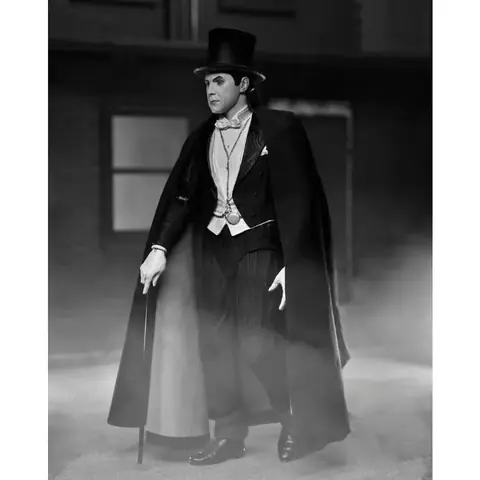











A wager lost in a summer with no sun
By June 1816 the volcano Tambora had been spitting ash for a year and Europe simply had no summer. Shut indoors by the rain at the Villa Diodati, on the shore of Lake Geneva, Lord Byron, his physician John Polidori, Percy Bysshe Shelley and Mary Godwin — eighteen years old — spent their evenings reading Fantasmagoriana, a German anthology of ghost stories in French translation. Byron proposed that each of them write one of their own. Polidori got The Vampyre out of it. Mary got Frankenstein.
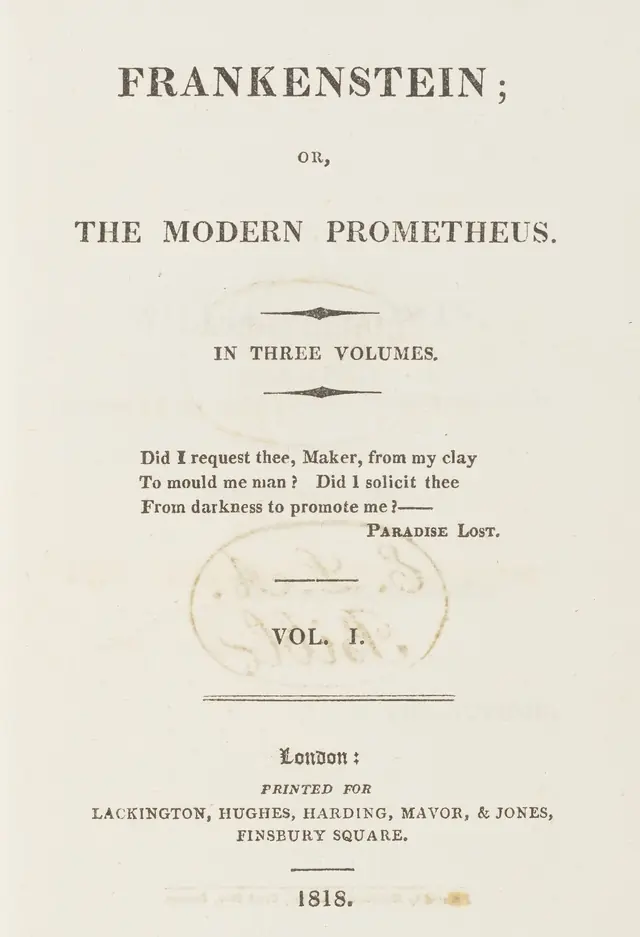
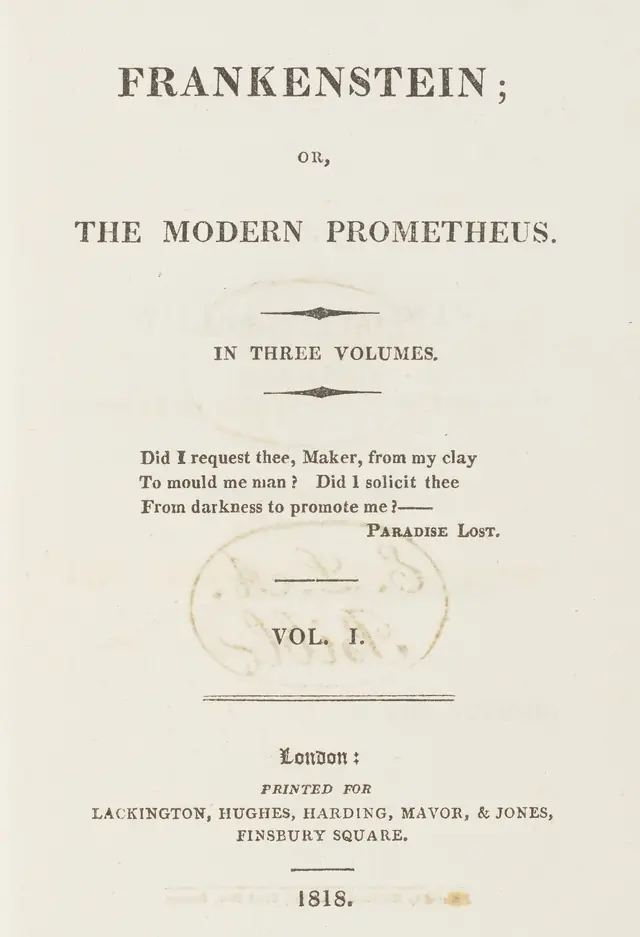
It appeared on 1 January 1818 from Lackington, Hughes, Harding, Mavor & Jones: three volumes, five hundred copies, no author's name, a preface by Percy and a dedication to Mary's father, William Godwin. Half of London took it for granted that the husband had written it. Her name did not reach a title page until the second edition, on 11 August 1823, and it got there on the coat-tails of a stage adaptation that was filling theatres. In 1831 Colburn and Bentley published the single-volume version almost all of us have read: Shelley went through the whole thing, filed down the most radical edges and added the introduction that tells the Diodati story.
What is in the book and not on the screen
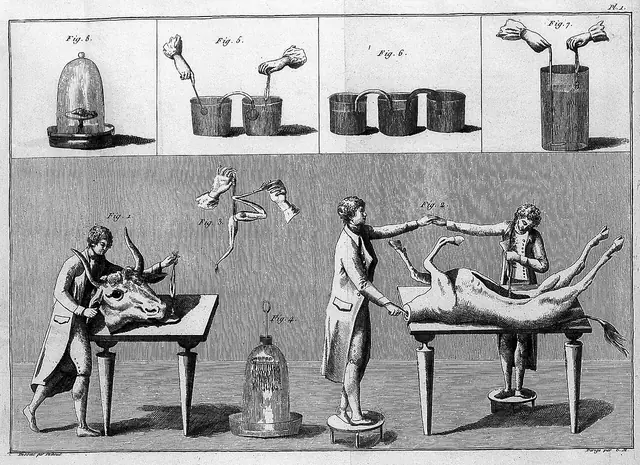
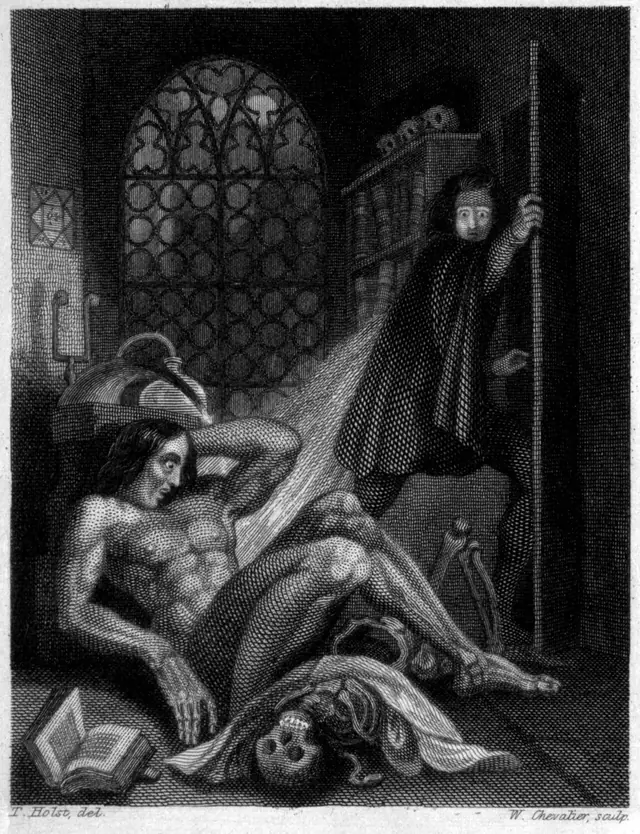
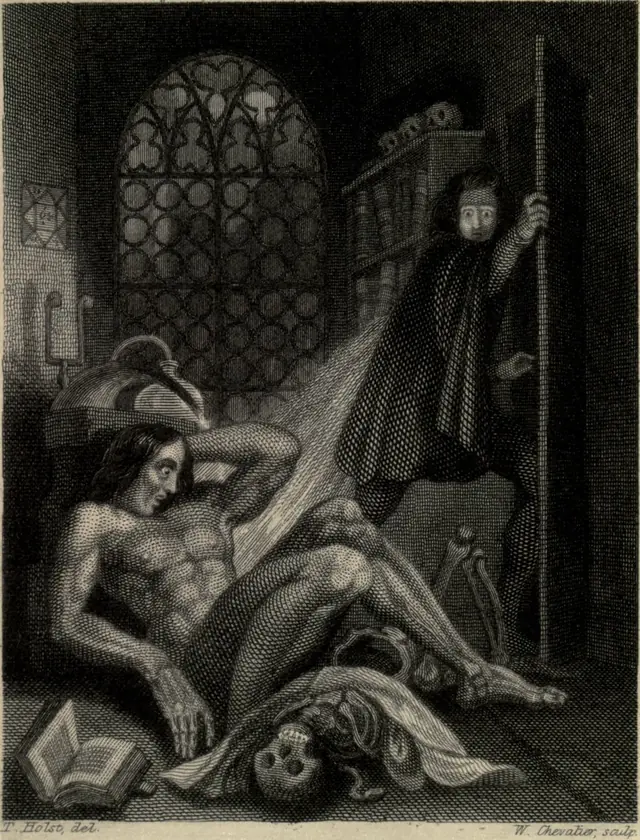
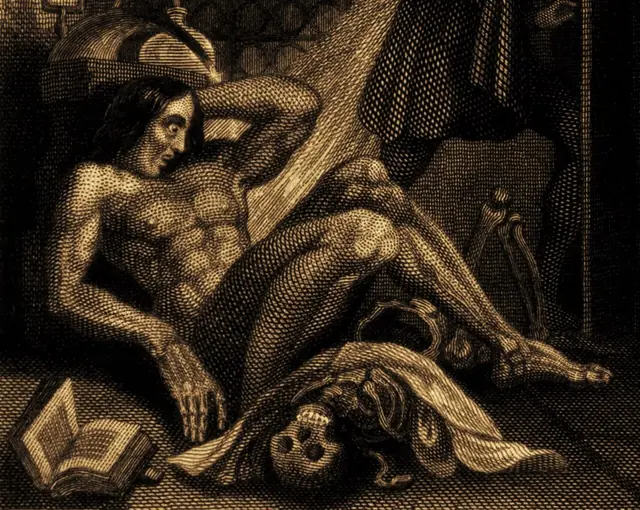
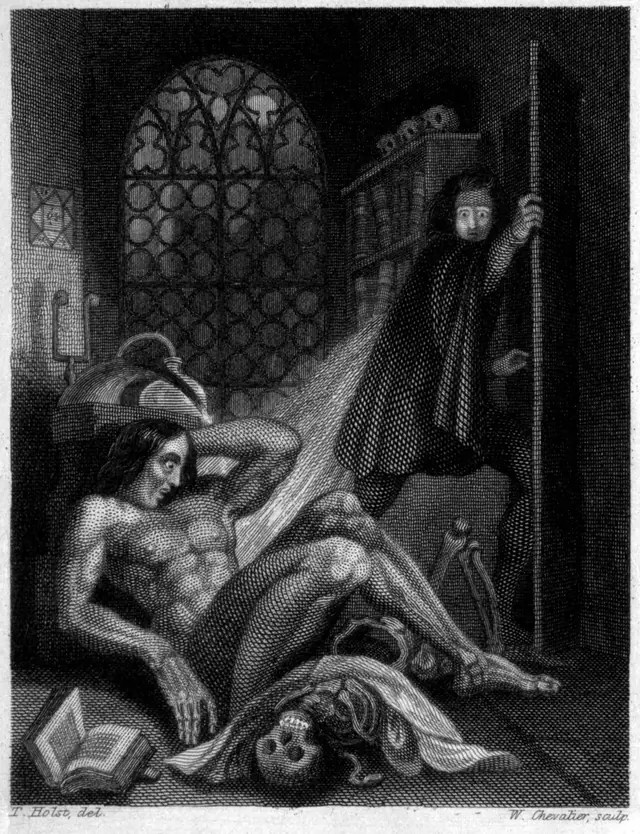
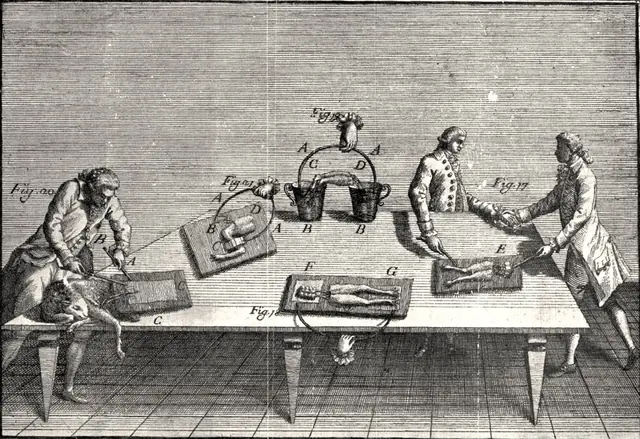
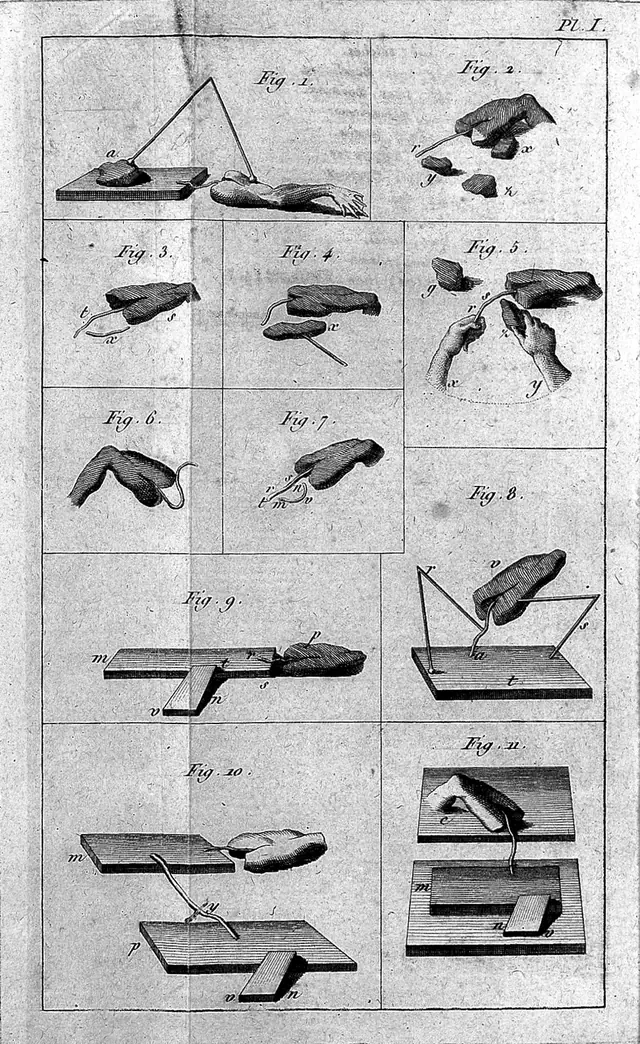
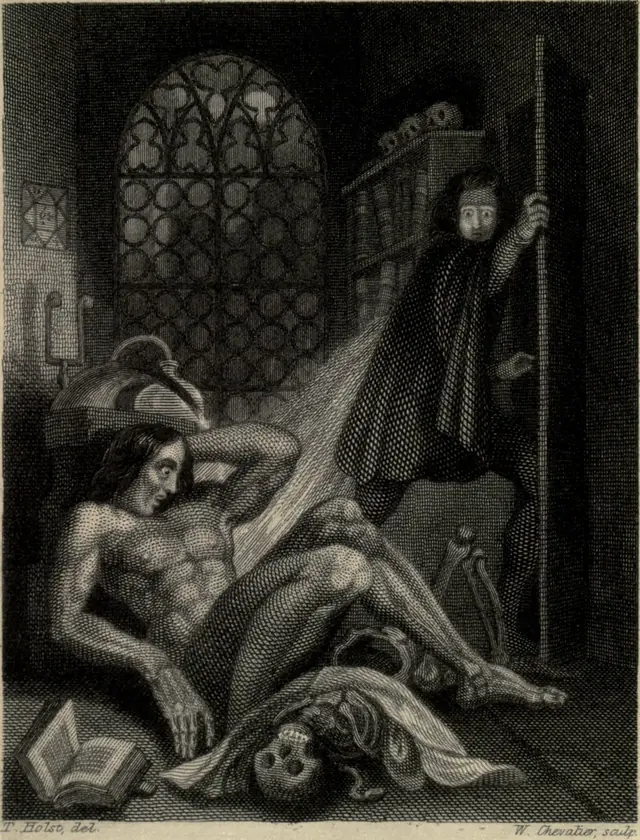
The laboratory in the novel is no tower bristling with lightning rods. It is «a solitary chamber, or rather cell, at the top of the house», what Victor calls his workshop of filthy creation. The materials come from the dissecting room and the slaughterhouse. There is no assistant, no lightning bolt, and Shelley never explains how any of it is done: that gap is what drives the book. The whole scene fits into a candle burning down on a November night and a yellow eye that opens.
This is how Shelley describes what Victor sees as his creature wakes:
His yellow skin scarcely covered the work of muscles and arteries beneath; his hair was of a lustrous black, and flowing; his teeth of a pearly whiteness; but these luxuriances only formed a more horrid contrast with his watery eyes, that seemed almost of the same colour as the dun-white sockets in which they were set, his shrivelled complexion and straight black lips.
He stands eight feet tall, speaks better than anyone else in the cast, is a vegetarian on principle and learns to read by spying on a family through a chink in the wall: his books are Paradise Lost, Plutarch's Lives and Goethe's The Sorrows of Young Werther. The locations are specific: the sea of ice below Mont Blanc, where creature and creator argue face to face; an island in the Orkneys, where Victor tears apart the half-finished mate; and the Arctic, where Captain Robert Walton picks a finished man off the ice.
From a burning dummy to Karloff's electrodes
The first film is Edison's. Frankenstein opened on 18 March 1910, was directed by J. Searle Dawley, ran to 975 feet of celluloid and had Charles Ogle playing the creature under an enormous wig. The birth was shot by burning a dummy and running the film backwards, so that the monster forms itself out of the fire. It was given up for lost for decades: the only known print was bought in the fifties by Alois F. Dettlaff, a Wisconsin collector, and nothing was heard of it until the mid-seventies. The Library of Congress finished restoring it on 15 November 2018.
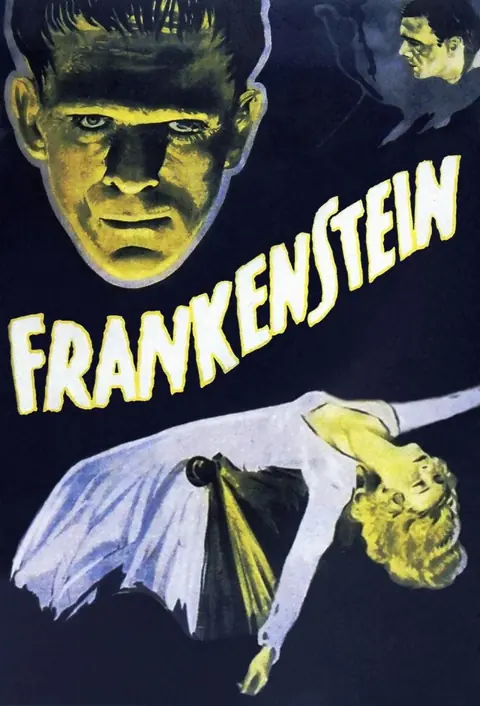
The face we all carry in our heads is from 1931: James Whale, Universal, Boris Karloff and Jack P. Pierce's make-up, with the skull squared off flat, the leaden eyelids and two pieces of metal in the neck that are electrical terminals, not bolts holding anything together. The script came not from the novel but from Peggy Webling's 1927 play. The crackling apparatus was built by Kenneth Strickfaden. Three censorship boards cut the line «now I know what it feels like to be God».
Bride of Frankenstein (1935) is the stranger film and the better one. Elsa Lanchester plays two parts: Mary Shelley herself in the prologue and the Bride at the end, who is on screen for about three minutes and walks off with the poster. Pierce built the vertical hairstyle with its white streaks over a wire frame, with one eye on Nefertiti. Ernest Thesiger keeps homunculi in glass jars. Karloff objected to the creature being given speech.
When Hammer came back in 1957 with The Curse of Frankenstein — Terence Fisher directing, Peter Cushing as the baron, Christopher Lee as the creature, the first Frankenstein in colour — it could not touch Pierce's design, which belonged to Universal. Phil Leakey had to invent a face that looked nothing at all like Karloff's.
There is a Victor in the 1931 film, and he is not the scientist
Whale changed the hero's name. In the novel he is Victor Frankenstein; in the 1931 film Colin Clive plays Henry Frankenstein, and the name Victor goes to somebody else altogether: Victor Moritz, the friend and rival in love played by John Boles. The confusion has been travelling for ninety years.
With Igor much the same thing happens, only worse. In the novel he does not exist at all: Victor works alone. In the 1931 film the hunchbacked assistant is called Fritz and is played by Dwight Frye. Ygor, with a y, turns up in 1939 in Son of Frankenstein and is played by Bela Lugosi: a blacksmith hanged for stealing corpses, who survived with a broken neck and uses the monster to take revenge on the jury that convicted him. He is nobody's lab assistant. The Igor everybody thinks they remember was pinned down by Marty Feldman in Young Frankenstein (1974), pronouncing it «eye-gore» and answering «what hump?».
That film, what is more, was shot with the genuine equipment: Strickfaden had kept it in his garage since 1931 and lent it to Mel Brooks on one condition, that he be given a screen credit. Universal had never once done so.
The creature has never stopped working
Kenneth Branagh took it back to the book in 1994 with Robert De Niro as the creature. Victor Frankenstein (2015) handed the point of view to the assistant. And Guillermo del Toro closed off thirty years of attempts with his own version: Venice on 30 August 2025, cinemas on 17 October and Netflix on 7 November, with Oscar Isaac and Jacob Elordi. It restores the novel's Arctic frame and gives Karloff a deliberately wide berth: its visual reference is the Frankenstein Bernie Wrightson illustrated in 1983.
Beyond the surname, the mould is everywhere. Somebody makes a thing, abandons it the moment it works, and the thing comes back to hold its maker to account. Every time a film sets a creation in front of its creator to reproach it for having been born, it is playing the scene on the sea of ice again.

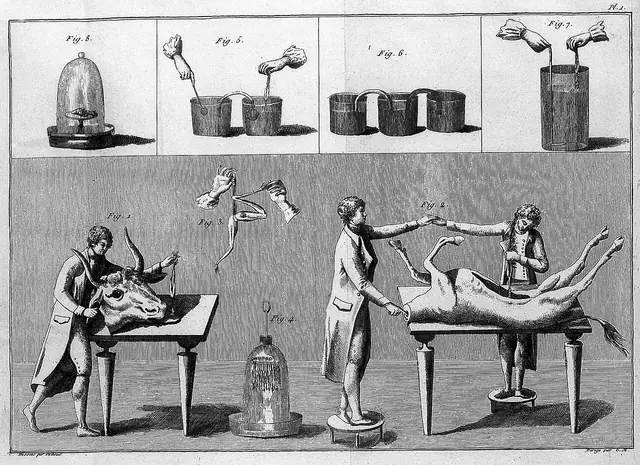

![An account of the history and present state of galvanism [microform]](/img/museo/shelley_frankenstein-9f960f178d.jpg?w=640)


![An account of the history and present state of galvanism [microform]](/img/museo/shelley_frankenstein-fa0245753d.jpg?w=640)