A fact has no author
Spanish law protects “original creations” (article 10 of the consolidated Spanish Intellectual Property Act), and article 13 places legal provisions, court rulings and the acts, agreements, deliberations and opinions of public bodies outside protection altogether. That covers the battle report, the census, the passenger list and the judgment. What happened at Notre-Dame on 2 December 1804 belongs to nobody: not the date, not the place, not who was there, not what they were wearing.
What does have an owner is the telling. The novel about Trafalgar, the screenplay, the documentary, the particular shot. The line falls exactly there, and it explains why you can design around Waterloo or the Paris Commune without asking anyone's permission, yet cannot touch a single frame of the film that tells the story.
This is not a theoretical line. It has been fought over, and the case that fixed it for cinema involves a burning airship.
The map, the plate and the poster
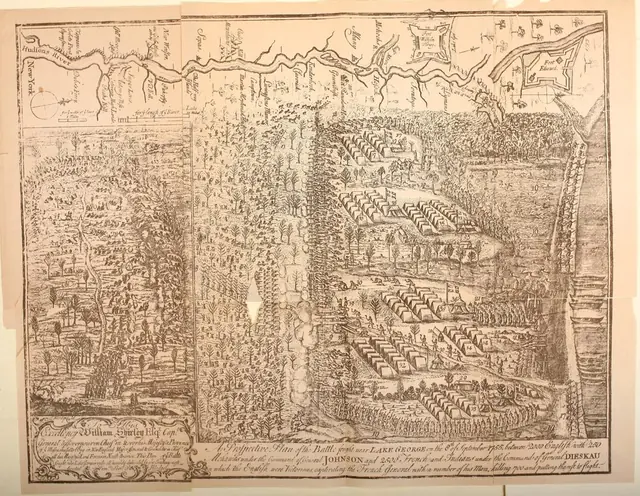
What is drawn here is not “history”: these are objects with catalogue entries. Olaus Magnus's Carta marina, printed in Venice in 1539 from nine woodblocks to a total of 1.70 × 1.25 metres, fills the North Atlantic with serpents, tusked whales and whirlpools that carry their own Latin names. It is a serious map with monsters in it, which is precisely what makes it worth drawing.
The hieroglyphs come from two specific places. From the plates of the Description de l'Égypte, published in Paris volume by volume between 1809 and 1829 by the hundred and sixty scholars Bonaparte took to Egypt; and from the four plates of the Lettre à M. Dacier that Champollion read before the Académie des Inscriptions on 27 September 1822.
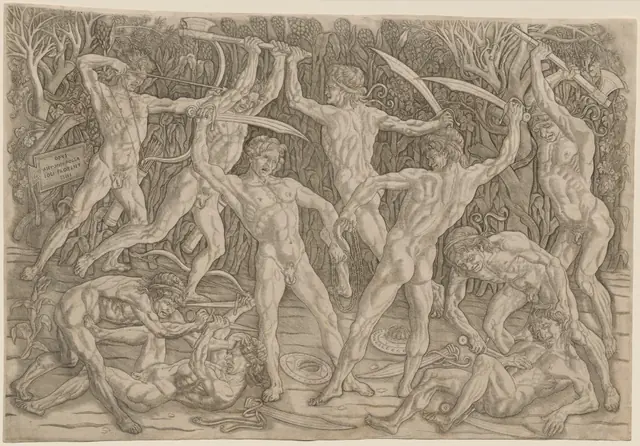
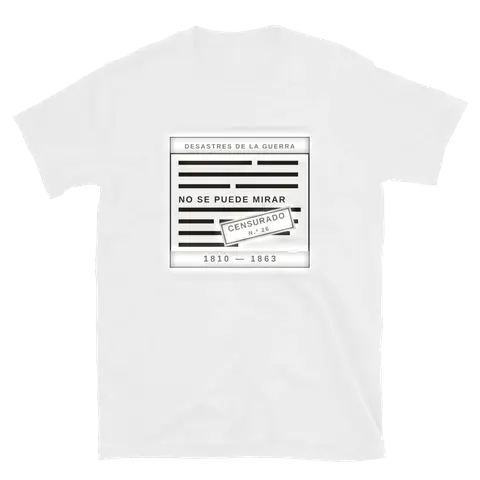
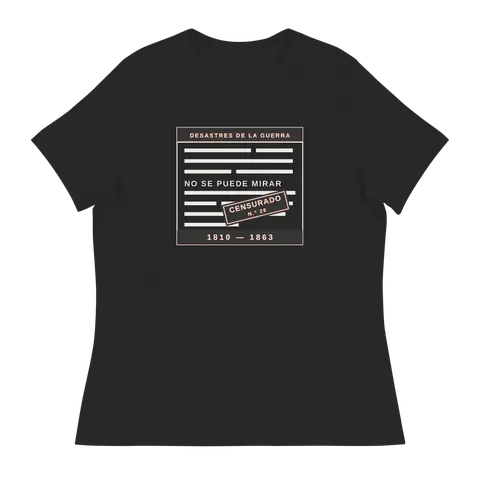
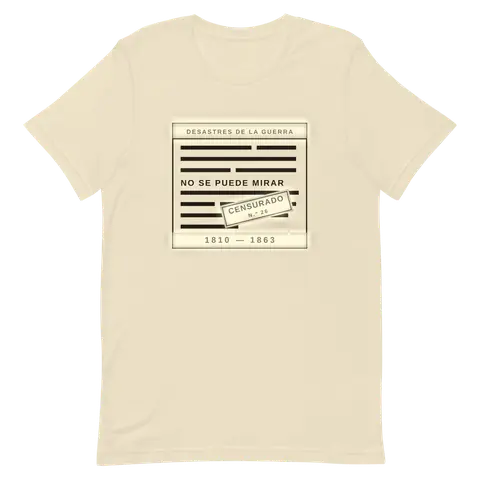
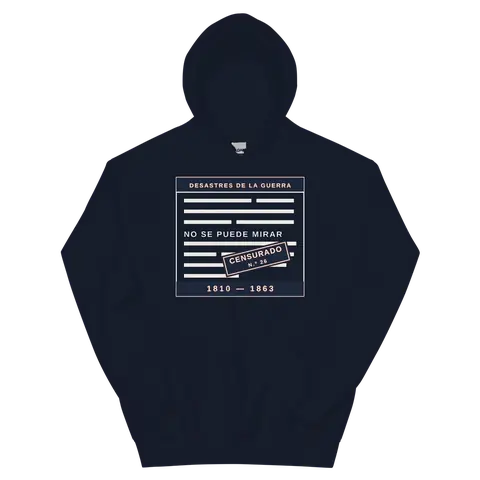
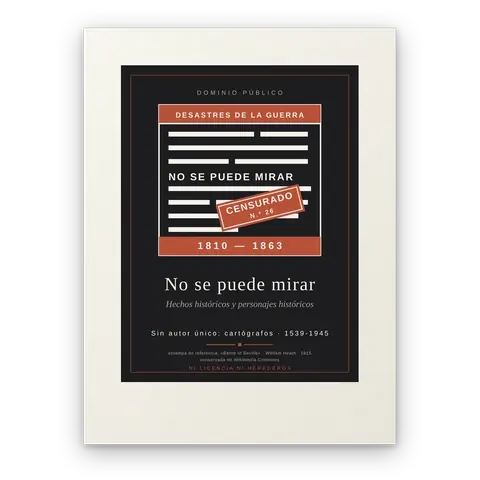
The war comes from Goya. The Disasters of War is eighty-two prints, etched between 1810 and around 1820 — the last of them, the emphatic caprichos (numbers 65 to 82), no longer aimed at the invasion but at the absolutism of Ferdinand VII. The Academy of Fine Arts of San Fernando bought the plates in 1862 and brought out the first edition in 1863, thirty-five years after Goya's death, with only eighty prints: plates 81 and 82 arrived later. The recruiting is supplied by the posters: Alfred Leete's Kitchener pointing his finger, the cover of London Opinion of 5 September 1914.
Paintings the cinema copies shot for shot
When a period production does its research, it does not go to the books, it goes to the pictures. In Napoleon (Ridley Scott, 2023) the coronation is built on Jacques-Louis David's Le Sacre (1807, the Louvre): the family's costumes, the velvets embroidered in silver and gold, exactly where everyone stands. The joke is sealed by a shot of David sketching inside the scene, which is what David did in his own canvas: he painted himself into it.
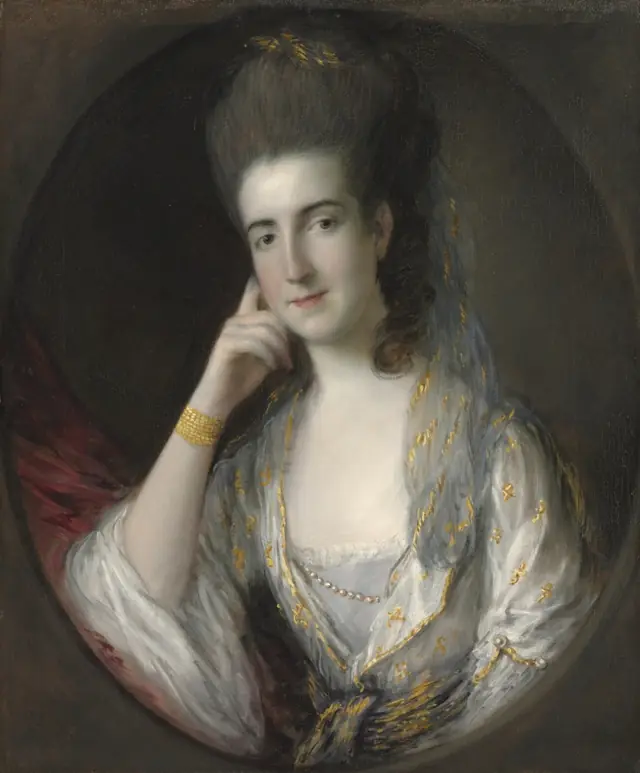
Barry Lyndon (Kubrick, 1975) did the same with the English eighteenth century, with compositions lifted from Hogarth and Gainsborough. Shooting the interiors by candlelight alone meant tracking down a 50mm f/0.7 Zeiss made for NASA and stripping a camera down to house it.
Sometimes the borrowing is not seen but heard. For Lincoln (Spielberg, 2012), sound designer Ben Burtt travelled to Frankfort, Kentucky, to record the ticking of Lincoln's actual pocket watch, held by the Kentucky Historical Society, which believes it to be the one he was carrying on the night of the assassination.
The Odessa Steps never happened
The Potemkin mutiny was real: June 1905, the rotten meat, the dead officers. The massacre on the Odessa Steps that Eisenstein filmed in Battleship Potemkin (1925) was not. Troops did fire in the city and hundreds died, but there was no such column descending the steps and no pram. Eisenstein staged it to provoke a very particular reaction, and it worked so well that a century later plenty of people remember it as documentary footage.
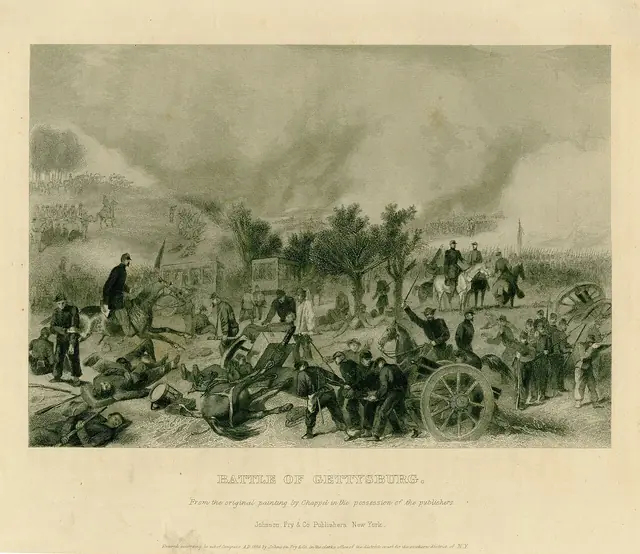
The habit is older than cinema. The most famous photograph of Gettysburg, Home of a Rebel Sharpshooter (July 1863), was taken by Timothy O'Sullivan, Alexander Gardner's assistant: he dragged the body from the southern edge of Devil's Den to a stone wall, propped a knapsack under the head and leaned a rifle beside it that was neither the dead man's nor a sharpshooter's. The historian William A. Frassanito proved it in Gettysburg: A Journey in Time (1975), identifying the same corpse in six separate exposures.
Designing from facts means knowing which of them are facts. Here the staging is part of the material.
Who beat the Hindenburg in court
In 1962 A. A. Hoehling published Who Destroyed the Hindenburg?, arguing that the airship burned not by accident but through sabotage by a crew member, the rigger Eric Spehl. Ten years later Michael MacDonald Mooney published another book with the same thesis, Universal bought the rights and Robert Wise made The Hindenburg (1975). Hoehling sued the lot of them.
The Court of Appeals for the Second Circuit ruled in 1980 (Hoehling v. Universal City Studios, 618 F.2d 972) and said something almost nobody expects to hear. Hoehling's entire reconstruction — Spehl's life, the girlfriend with anti-Nazi connections, the fire starting in gas cell number 4, the dry-cell battery found in the wreckage — is interpretation of historical fact.
Such an historical interpretation, whether or not it originated with Mr. Hoehling, is not protected by his copyright and can be freely used by subsequent authors.
Spend twenty years working out what happened and you still do not own what happened. That is the ground half the biopic industry stands on, and it is this collection's silent permission slip too.
Three things that look free and aren't
The first is Uncle Sam. James Montgomery Flagg's drawing appeared first as the cover of Leslie's Weekly of 6 July 1916, captioned “What Are You Doing for Preparedness?”; the Army turned it into the recruitment poster I Want YOU for U.S. Army in 1917. It has been free in the United States for decades. In Spain it is not: Flagg died in 1960, so the eighty-year term applies and it does not come free until 1 January 2041. The poster he copied the pose from, Leete's Kitchener, has been free here since 1 January 2014, because Leete died in 1933. Two sibling posters, twenty-seven years apart.
The second is photographs. Article 128 of the Spanish Intellectual Property Act creates an odd category, the “mere photograph”: one that documents without amounting to an original creation. It lasts neither seventy nor eighty years, but twenty-five from the 1 January following the shot. A good deal of period reportage falls into it, and the sum is a different one.
The third is people. Facts are free; people not entirely. Where the subjects are living or recent, the right to one's own image comes into play (Organic Law 1/1982), which is not intellectual property and works under separate rules. That is why the material stops in 1945.