





The joker who ended up as the canon
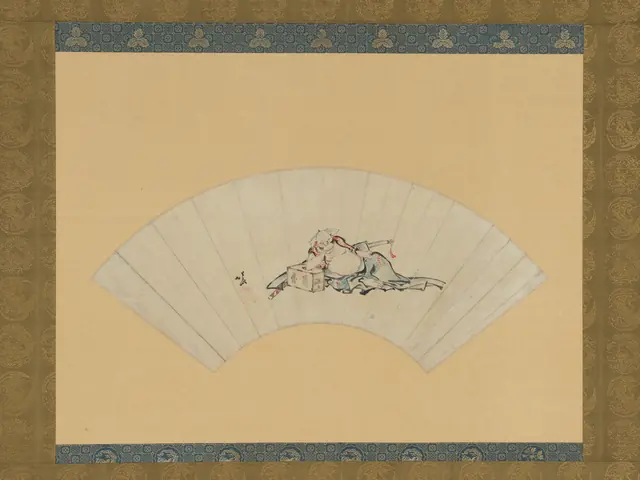
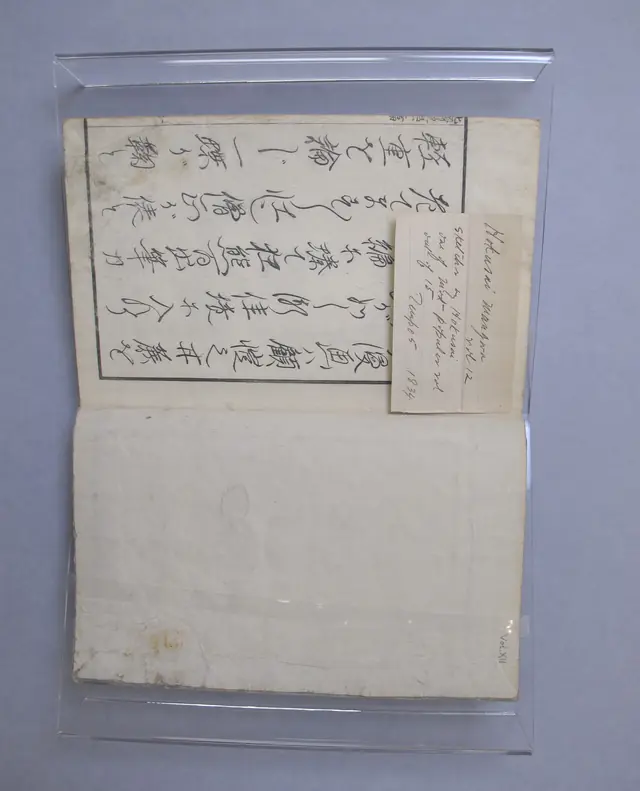
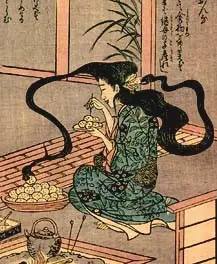
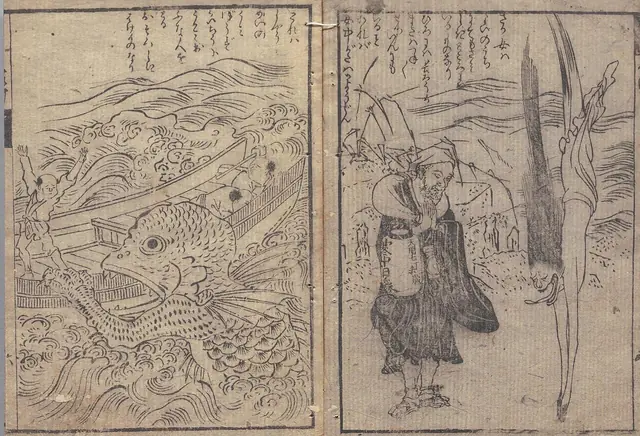
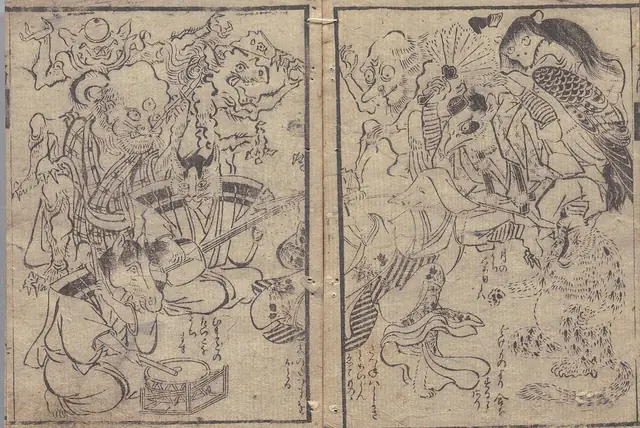
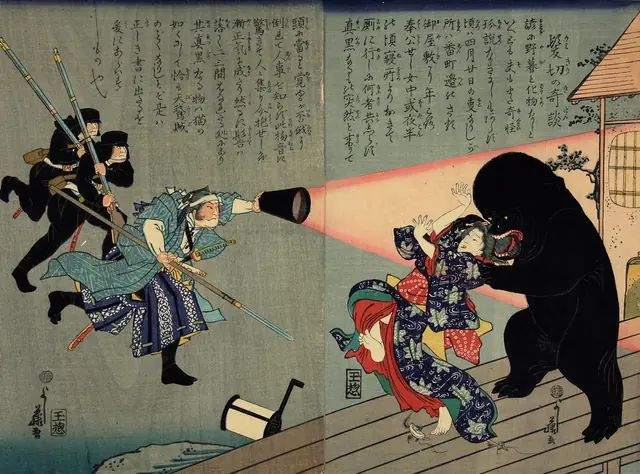
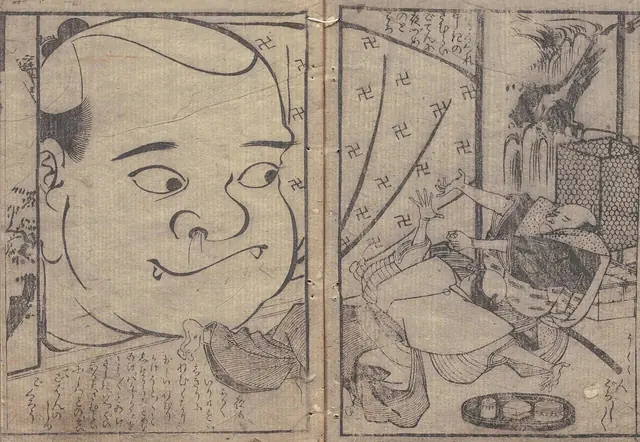
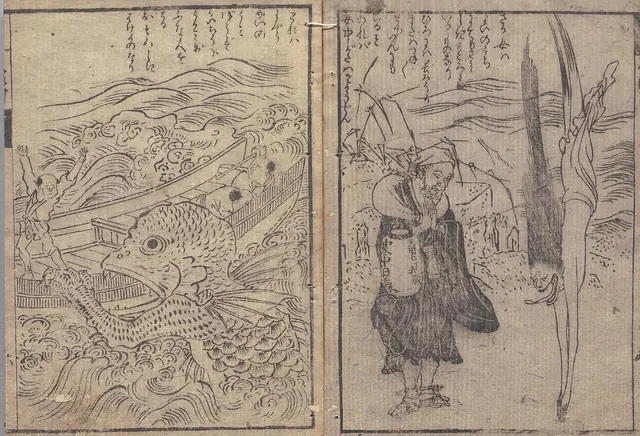
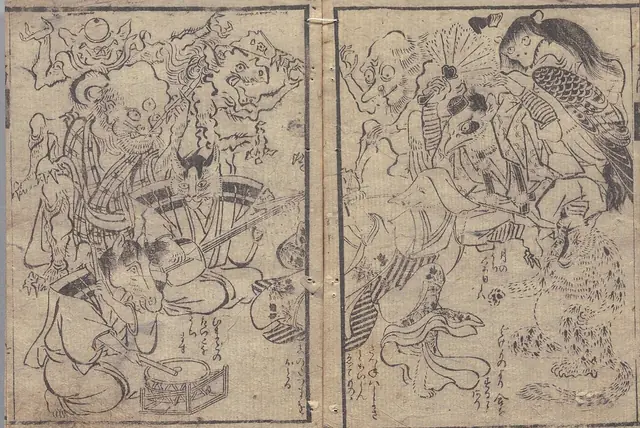
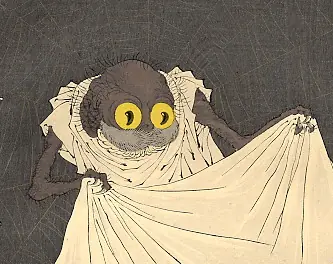
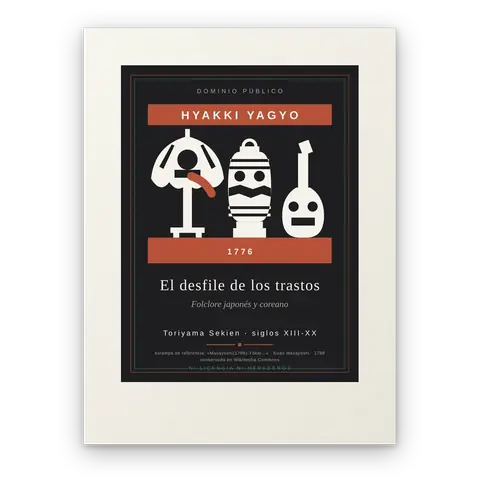
In 1776 an Edo painter named Toriyama Sekien (1712-1788) published «Gazu Hyakki Yagyō», the illustrated night parade of a hundred demons: three volumes titled Yin, Yang and Wind, fifty-one creatures, one to a page. The kodama, the tengu, the kappa, the nekomata, the yuki-onna, the neck-stretching rokurokubi, the nurarihyon. Three more followed: «Konjaku gazu zoku hyakki» (1779), «Konjaku hyakki shūi» (1781) and «Gazu hyakki tsurezure bukuro» (1784).
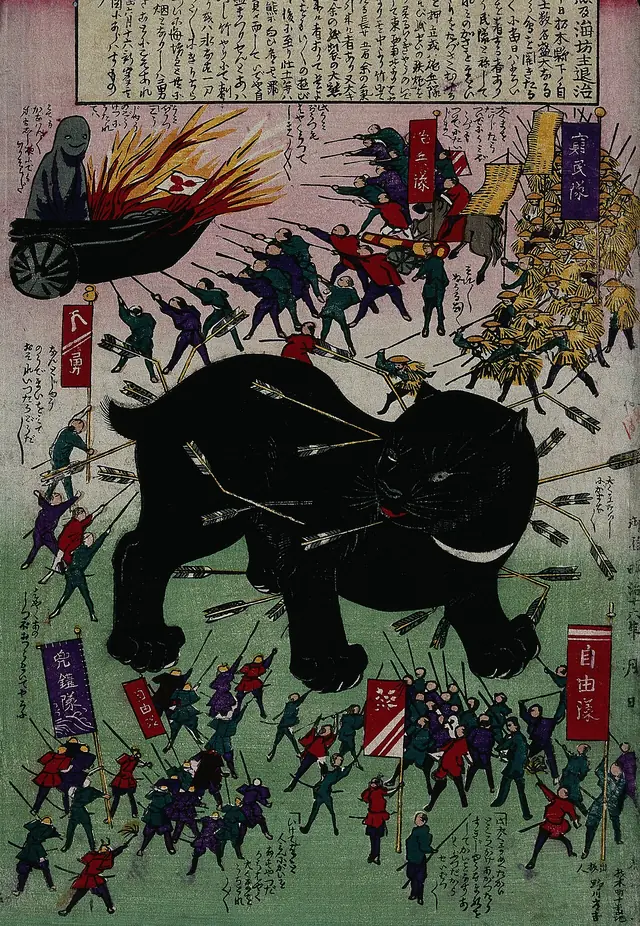
Sekien was no demonologist and no field folklorist: he was a painter and a poet, and he had a sense of humour. Plenty of his creatures did come out of folklore, but others were visual gags of his own with no popular ancestor whatsoever. His English translators, Hiroko Yoda and Matt Alt, say so flatly in «Japandemonium Illustrated» (Dover, 2016): the books are in large part satire, and Sekien would have been tickled to find them treated today as the authoritative source. They are. When a yōkai turns up in an anime, it almost always wears the shape he gave it.
Seven and a half metres of resentful crockery
Before print, the parade travelled rolled up. The «Hyakki yagyō emaki» kept at the Shinju-an, a sub-temple of Daitoku-ji in Kyoto, measures 747.1 cm and is dated to the first half of the sixteenth century; Guinness records it as the oldest surviving depiction of the procession. The traditional attribution to Tosa Mitsunobu is now held to be baseless, so the scroll is anonymous.
What files past inside it is sixty-nine figures, nearly all of them tsukumogami: household objects that wake up on reaching a hundred years old. A biwa, a koto, a shoe with a face, an umbrella. These are not demons from some other world. It is the crockery, and it has come with a grudge.
When the ghost's feet were rubbed out
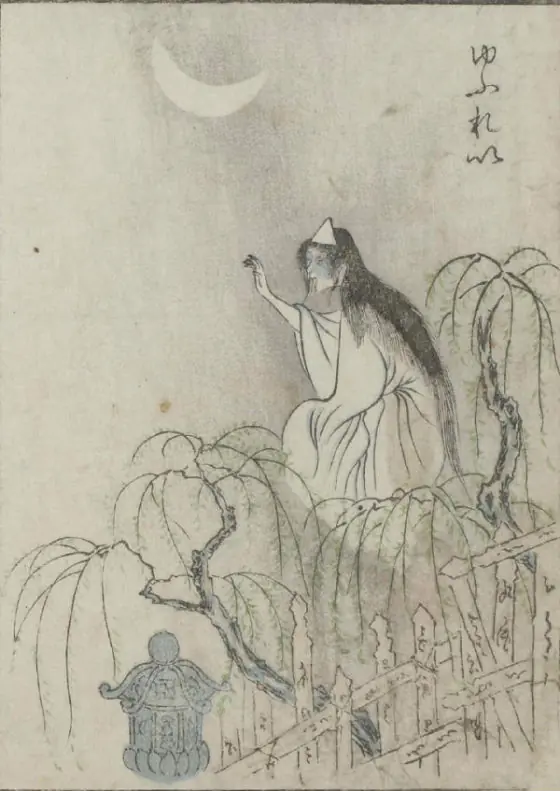
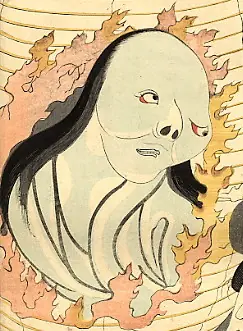
The shape of the Japanese ghost is settled in the eighteenth century. In 1750 Maruyama Ōkyo (1733-1795) paints «The Ghost of Oyuki» with every feature we now take for granted: loose black hair, white burial kimono, hands hanging limp, a body verging on transparent and nothing at all below the waist. The feet disappear, and they never come back.
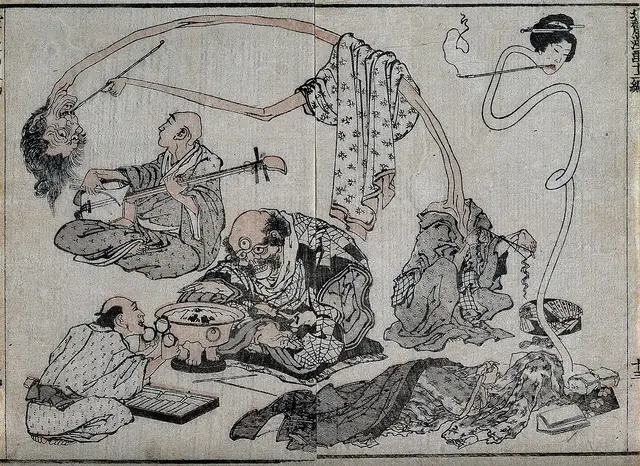
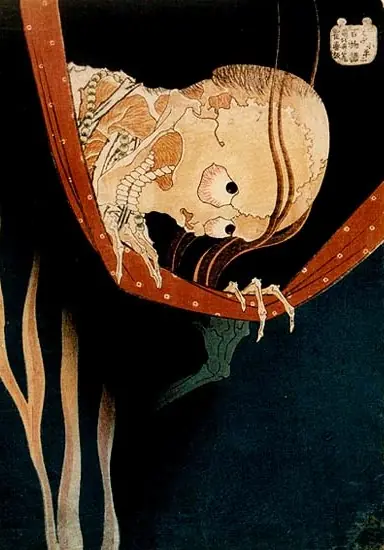
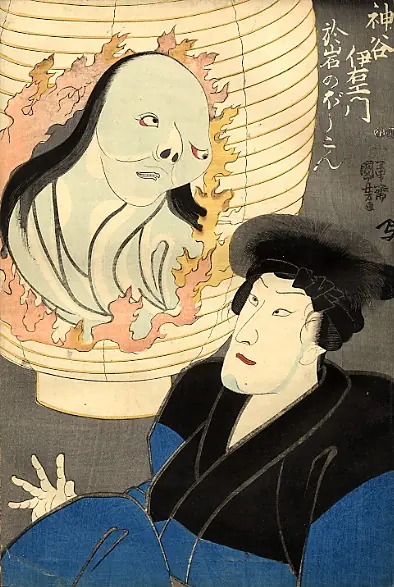
Then come the names. Okiku, the murdered maid who rises from the well counting plates and sticks at nine, opened as a bunraku at the Toyotakeza theatre in July 1741. Oiwa, poisoned by her husband, returns with half her face collapsed in July 1825 at the Nakamura-za in Edo, in «Tōkaidō Yotsuya Kaidan» by Tsuruya Nanboku IV. Hokusai prints them both around 1831-32 in «Hyaku monogatari», a series advertised as a hundred sheets of which only five are known. The Prussian blue that colours them had just come down in price, and to an Edo audience it read as the colour of death, not of sky.
Cheoyong danced and the demon knelt
The Korean material is older in writing. The monk Iryeon (1206-1289) compiled the «Samguk Yusa» around 1281-1285, and Cheoyong is in it: son of the dragon king, he arrives at the court of King Heongang of Silla in 879, comes home one night and finds the spirit of smallpox with his wife. Rather than kill it, he sings and dances. The demon kneels and promises never to enter anywhere it sees that face; hence the custom of nailing Cheoyong's mask to the door. The dance, the cheoyongmu, is still performed and sits on UNESCO's Intangible Heritage list.
The dokkaebi runs on a different logic. It is not a dead person: it is an old bit of household kit, a broom or a mortar stained with blood, that comes to life, gambles with humans, punishes the miser and carries a club that makes whatever it is asked for. The gumiho, the nine-tailed fox, takes the form of a woman and goes for the liver.
What you see on screen
- Ugetsu (Ugetsu monogatari, 1953, Kenji Mizoguchi) welds two Ueda Akinari tales published in 1776 —the same year as the first Sekien— onto a story by Maupassant. Silver Lion at Venice.
- Kwaidan (1964, Masaki Kobayashi) adapts four Lafcadio Hearn stories and was shot almost entirely inside an aircraft hangar in Uji, Kyoto, with the skies painted by hand. It was one of the most expensive Japanese films made to that point, it bankrupted its production company and Kobayashi had to sell his house. Special Jury Prize at Cannes in 1965 and an Oscar nomination. It reached the United States mutilated: the distributor cut the snow-woman episode out altogether, leaving 125 minutes against the 183 of the Japanese cut.
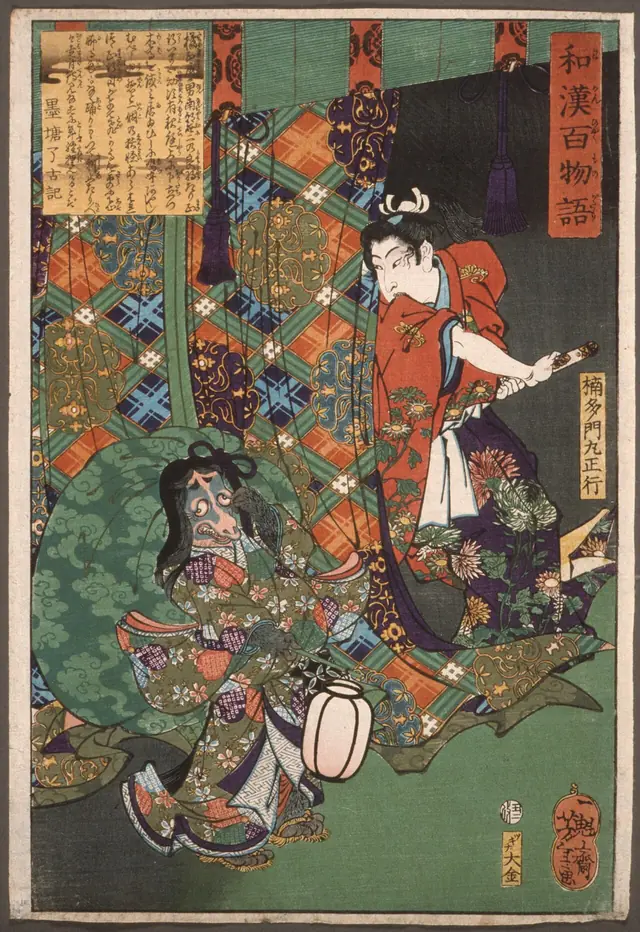
- Kuroneko (1968, Kaneto Shindō) gives you two bakeneko, vengeful cat-women, staged in the grammar of nō theatre.
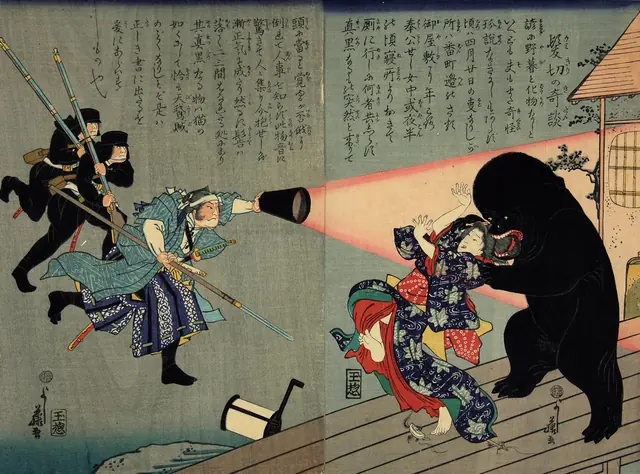
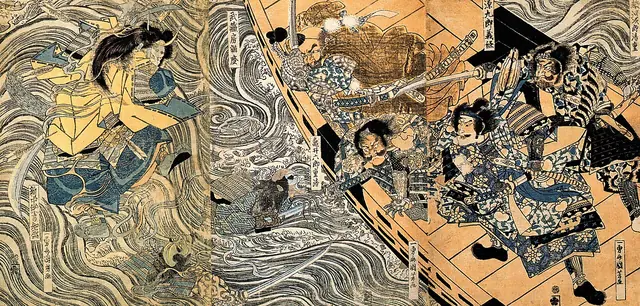
- Pom Poko (1994, Isao Takahata) builds its climax as a textbook hyakki yagyō, giant skeleton and all, lifted from Utagawa Kuniyoshi's print of Takiyasha the witch.
- Ringu (1998, Hideo Nakata) and Ju-on (2002, Takashi Shimizu) are pure onryō: the well comes from Okiku, the ruined eye from Oiwa, the white kimono and the loose hair from kabuki.
- Exhuma (2024, Jang Jae-hyun) passed ten million admissions in Korea with a mudang performing a real gut against a spirit that turns out not to be Korean at all, but Japanese.
Two things almost nobody mentions
Sadako has a mother in the fiction, Shizuko Yamamura, and that mother has an original. Chizuko Mifune (17 July 1886 - 19 January 1911) was a supposed clairvoyant put through remote-viewing tests by Professor Fukurai Tomokichi. On 15 September 1910, at a public demonstration presided over by Baron Yamakawa Kenjirō, president of the University of Tokyo, she appeared to read messages inside sealed envelopes; when it came out that Fukurai and not Yamakawa had written them, the press tore her to pieces. Four months later she poisoned herself. She was 24.
The second note comes from the other shore. The horned, tiger-skinned, club-carrying dokkaebi of Korean children's books is not Korean at all: that figure is the Japanese oni, which arrived through school textbooks during the occupation (1910-1945) to prop up the claim that the two cultures had a single root. Korean illustrators have spent decades trying to undo it.