One light in, and let the black eat the rest
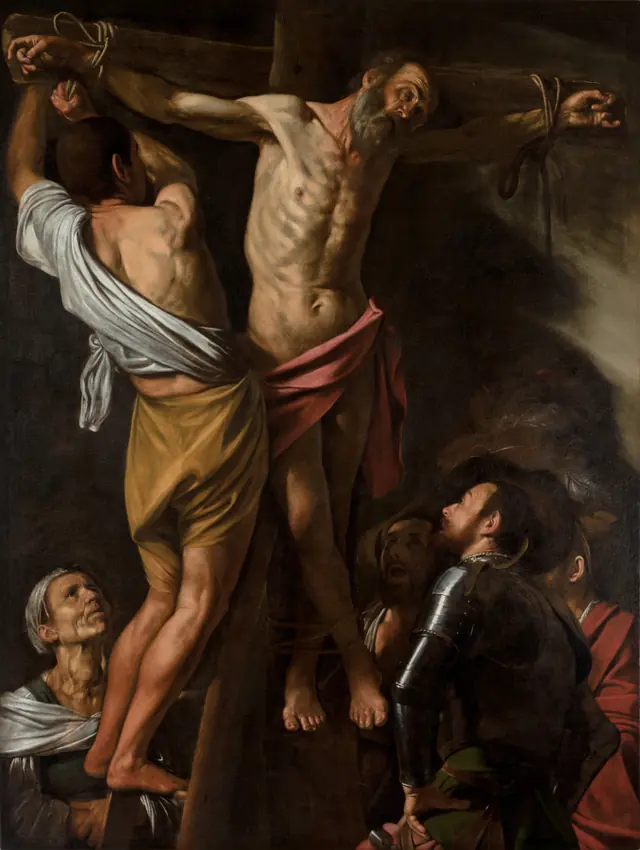
Caravaggio (1571-1610), Rembrandt (1606-1669) and Goya (1746-1828) share neither a country nor a century, but they share a move: let a single light in and allow the darkness to swallow the rest of the picture. In The Calling of Saint Matthew (1599-1600), painted for the Contarelli Chapel of San Luigi dei Francesi in Rome, the whole scene hangs on one oblique beam falling from the upper right. The tax collectors sit in half-shadow counting coins: the pointing hand is visible, the faces that do not matter are not.
Rembrandt got to the same place through printmaking. He left some three hundred prints, nearly all of them etchings that he bit and reworked plate by plate until he pulled blacks that Dutch printing of his day could not give him. Goya closes the sequence in the nineteenth century, deaf, with the Inquisition breathing down his neck and no commission at all: he painted the Black Paintings for himself, on the walls of his own house.
Owls, filthy soles and a plate of eyeballs
There are no vague symbols here, there are things. In Caravaggio you see the pilgrims' bare feet black with grime, the feathers in the hats, the dented jugs, and a severed head to which the painter gave his own face (David with the Head of Goliath, c. 1610, Borghese Gallery). In Rembrandt: beggars, old men in turbans, self-portraits gurning into the mirror, and the print known as the Hundred Guilder Print (Christ Healing the Sick, c. 1649) after what it fetched in the artist's lifetime.
Goya offers an entire bestiary. The eighty Caprichos are full of owls, bats, donkeys dressed as doctors and witches riding broomsticks; number 43, The Sleep of Reason Produces Monsters, is a man asleep at his desk with the swarm of creatures overhead. Then come the Black Paintings: Saturn biting the arm off a headless body, a witches' sabbath presided over by a goat in profile, and a dog poking its head above a slope of ochre, looking at nothing at all.
How a Hollywood bodge ended up named after Rembrandt
In 1915, while shooting The Warrens of Virginia, Cecil B. DeMille borrowed portable spotlights from the Mason Opera House in Los Angeles so he could throw shadows where real life would have thrown them. His partner Samuel Goldfish, later Samuel Goldwyn, saw half an actor vanish into the dark and said the exhibitors would only pay half price for the film. DeMille told him it was Rembrandt lighting.
For Rembrandt lighting they'll pay double.
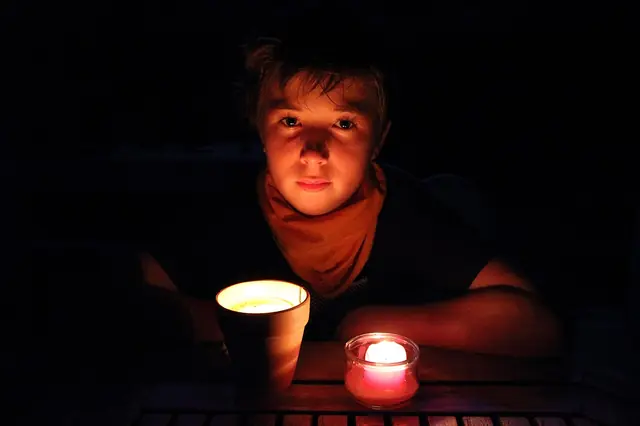
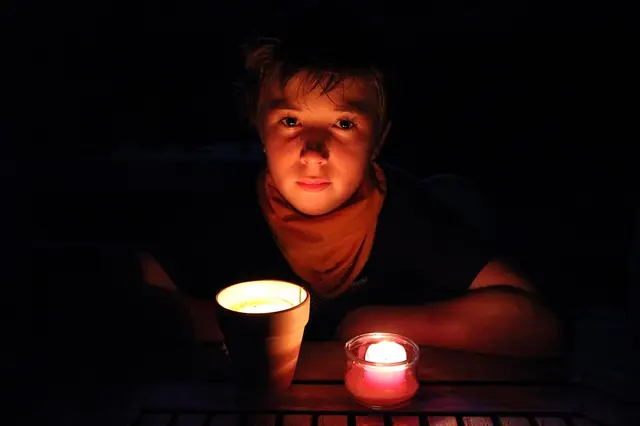
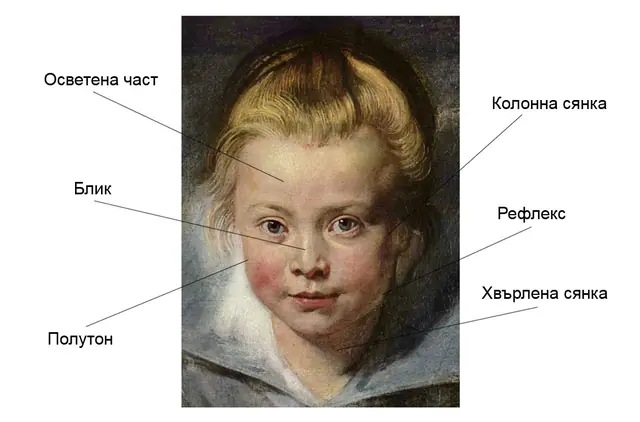
That is how it was advertised, and the name stuck. A century on it is still an exact technical term: the key light at about 45 degrees and a little above eye level, so that a triangle of light appears on the shaded cheek. Any camera operator sets it up without thinking twice. It comes from here.
From the altarpiece to a bar in Little Italy
Scorsese put it bluntly: the bar scenes in Mean Streets (1973) are The Calling of Saint Matthew, only in New York. What drew him in, he told The Guardian, was the instant Caravaggio chooses to light; you walk into the scene halfway through and you stay inside it. That, he said, was already film staging.
Guillermo del Toro is every bit as literal about the other one. The Pale Man in Pan's Labyrinth (El laberinto del fauno, 2006), seated before a banquet he never touches, his eyeballs on a plate until he presses them into his palms, comes straight out of the Saturn: Goya was an obvious reference, the director has said, above all for that character. When he stands up and bites the head off a fairy, he is repeating the posture of the painting.
The most Caravaggesque series of recent years is Ripley (Netflix, 2024): eight episodes written and directed by Steven Zaillian and shot in black and white by Robert Elswit, who worked on the Alexa LF with a monochrome LUT modelled on old Kodak 5231. The paintings are not set dressing. Dickie takes Tom to see The Seven Works of Mercy (1607) in Naples; The Calling turns up in San Luigi dei Francesi, along with the Borghese David and the Palermo Nativity; and the final episode heads back to the seventeenth century with the painter on the run after killing Ranuccio Tomassoni.
- Caravaggio (1986), by Derek Jarman, with Tilda Swinton in her first feature.
- Nightwatching (2007), by Peter Greenaway, with Martin Freeman playing Rembrandt.
- Goya in Bordeaux (Goya en Burdeos, 1999), in which Carlos Saura has Vittorio Storaro light Paco Rabal and walks off with the Goya for best cinematography.
- The Plague (La peste, Movistar+, January 2018): Alberto Rodríguez and his cinematographer Pau Esteve Birba went so far down the tenebrist road that half the country complained it couldn't see a thing, and for the second series they had to think, in the director's words, about the worst possible conditions for watching it.
The 1874 photograph that proved the dog was looking at something
Goya bought the Quinta del Sordo in February 1819 and painted fourteen murals in oil straight onto the plaster of two rooms. In 1874 the banker Frédéric Émile d'Erlanger, who had bought the house the year before, commissioned the Prado's restorer Salvador Martínez Cubells to strip them off and transfer them to canvas. The technique, strappo, is brutal, and paint was lost.
How much, nobody would know had the photographer Jean Laurent not gone into the house beforehand to photograph the walls. In his plates, The Dog (131.5 × 79.3 cm) has a background: a large rock and a few shapes that look like birds, exactly where the animal is lifting its head. On the canvas hanging in the Prado today there is nothing. The bleakest picture in Spanish painting is, in part, a restoration accident.
D'Erlanger took the paintings to the Paris Exposition Universelle of 1878, where almost nobody gave them a second look, and in 1881 he made a gift of them to the Spanish state. They have been in the Prado ever since, and on public display since 1889.
Seven hundred and seventeen billion pixels
The Night Watch (1642) is not all there either. In 1715, when it was moved to Amsterdam's town hall, it was trimmed on all four sides to fit between two doors, and the offcuts have never turned up. In 2021 the Rijksmuseum reconstructed them with neural networks, working from a seventeenth-century copy.
On 3 January 2022 the museum published the largest photograph ever made of a work of art: 717 billion pixels, 5.6 terabytes, 8,439 exposures from a 100-megapixel Hasselblad stitched together. Each pixel measures five microns, so you can zoom in far enough to make out loose grains of pigment. That is why a design taken from it stands up to printing: the source file holds more information than the cloth does.