




Two unsigned poems and a volume of monsters
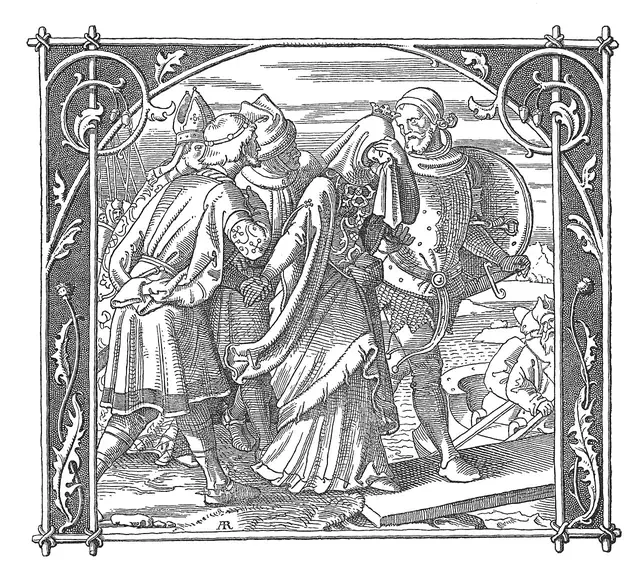
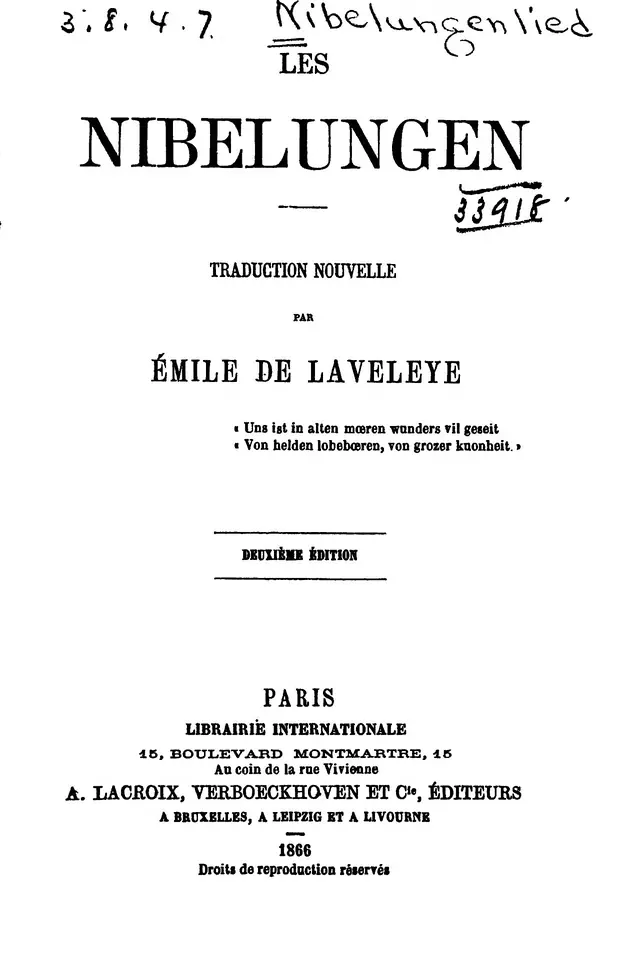
The Nibelungenlied (the Song of the Nibelungs) was composed around 1200, most likely in the circle around Passau, on the banks of the Danube, under the patronage of Bishop Wolfger von Erla (1191-1204). Nobody signed it. Thirty-seven manuscripts and fragments survive, and the three that matter are all thirteenth-century: A (Bavarian State Library, Munich, Cgm 34), B (Abbey of Saint Gall, Cod. Sang. 857) and C (Karlsruhe, Cod. Donaueschingen 63). UNESCO added them to the Memory of the World register in 2009.
The poem spent centuries out of sight. In 1755 Jacob Hermann Obereit stumbled on manuscript C, Johann Jacob Bodmer brought its final third to light in 1757, and Karl Lachmann's critical edition of 1826 settled the text for good. It is written in stanzas of four long lines — the Nibelungenstrophe — meant to be sung, though not one melody has come down to us.
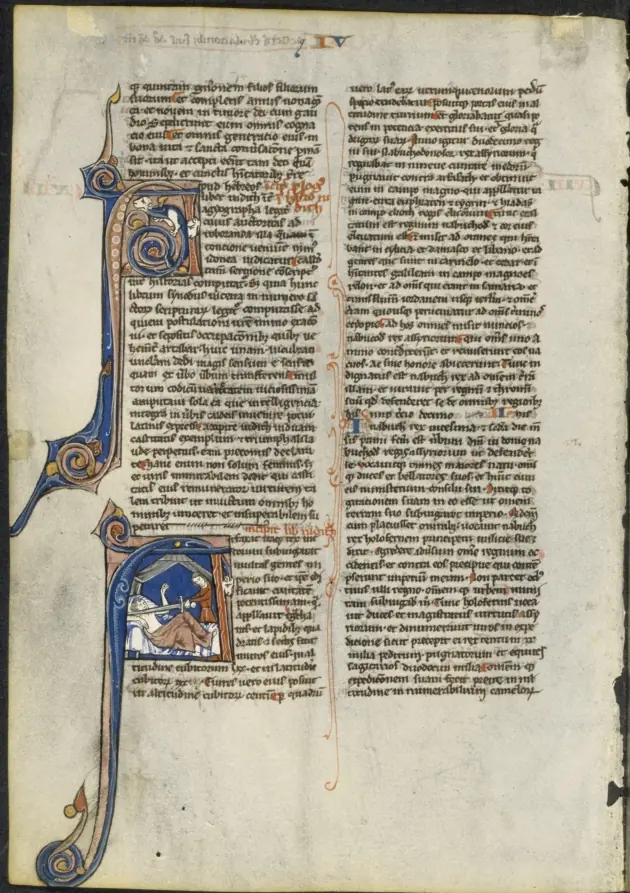
Beowulf comes by another road: 3,182 alliterative lines of Old English, copied by two different scribes around the year 1000 into what is known as the Nowell Codex, today bound inside the British Library's Cotton MS Vitellius A.xv. It does not travel alone: it sits bound with The Wonders of the East, Alexander's Letter to Aristotle, a fragment of the Life of Saint Christopher and an incomplete Judith. Someone deliberately assembled a volume of monsters. In the manuscript, incidentally, the poem has no title.
The inventory: what you see, not what it stands for
Siegfried bathes in a dragon's blood and comes out invulnerable but for one spot on his back, where a linden leaf had settled. He carries the sword Balmung and the Tarnkappe, a cloak that makes him invisible. Behind all of it sits the Rhine hoard, which Hagen ends up sinking in the river so that nobody can have it.
The Scandinavian version of the same hero — Sigurd — left pictures behind, and they beat any description. The Ramsund carving (Sö 101, Södermanland, Sweden, around 1030) tells the whole story inside the serpent body of the dragon itself: Sigurd stabs Fafnir from below, roasts the heart, burns his thumb and, sucking it, understands the birds warning him of the betrayal; beside that, Regin's severed head among his scattered blacksmith's tools, and the horse Grani loaded with the gold. The portal of the Hylestad stave church (Norway, carved around 1170, now in the Museum of Cultural History in Oslo) runs through the same sequence in seven scenes and adds the best of them all: Gunnar in the snake pit, playing the harp with his feet.
Beowulf supplies a different stock: the hall Heorot; Grendel's arm ripped off and nailed above the door; the sword Hrunting, which fails at the decisive moment; the hilt of a giants' sword that melts like ice in the blood of the mere; Nægling, which snaps; and a dragon standing guard over a barrow. The Sutton Hoo helmet, excavated in 1939 and dated to around 620-625, is the real object closest to what the poem describes: garnet-inlaid brows finished with gilded boars' heads, and a dragon running down the face mask until the face itself becomes an animal with its wings spread.
Fritz Lang casts the mould in 1924
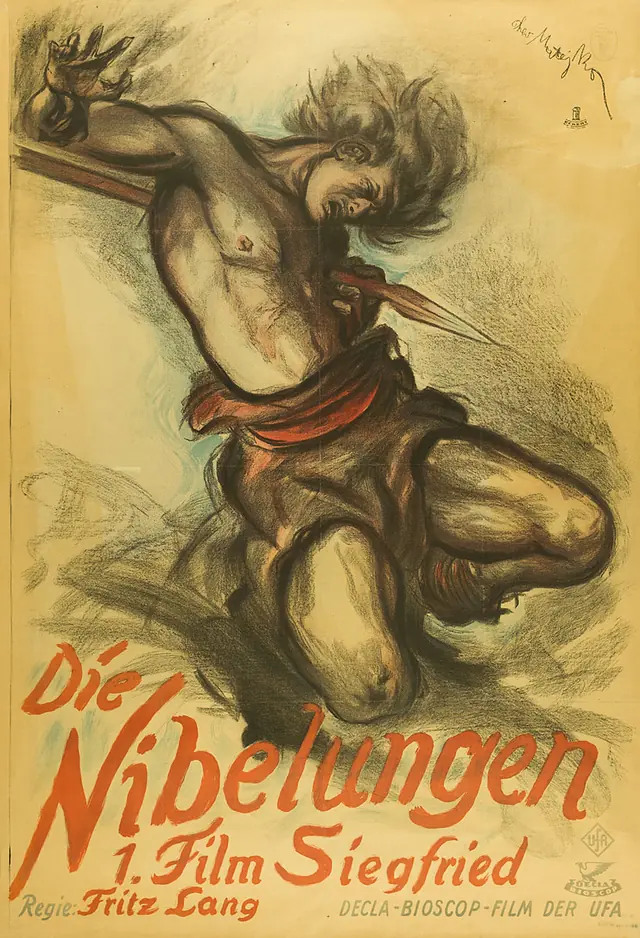
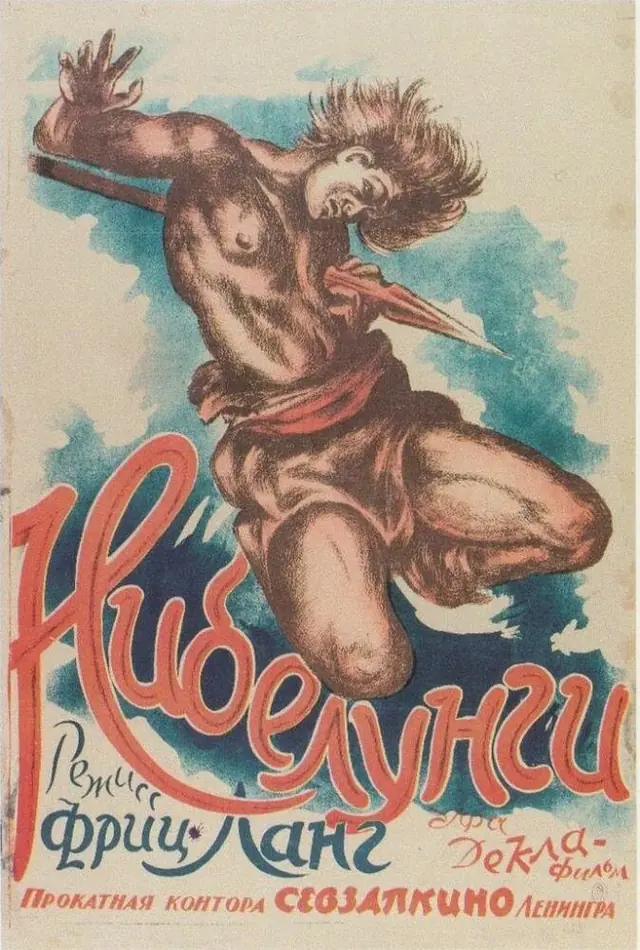
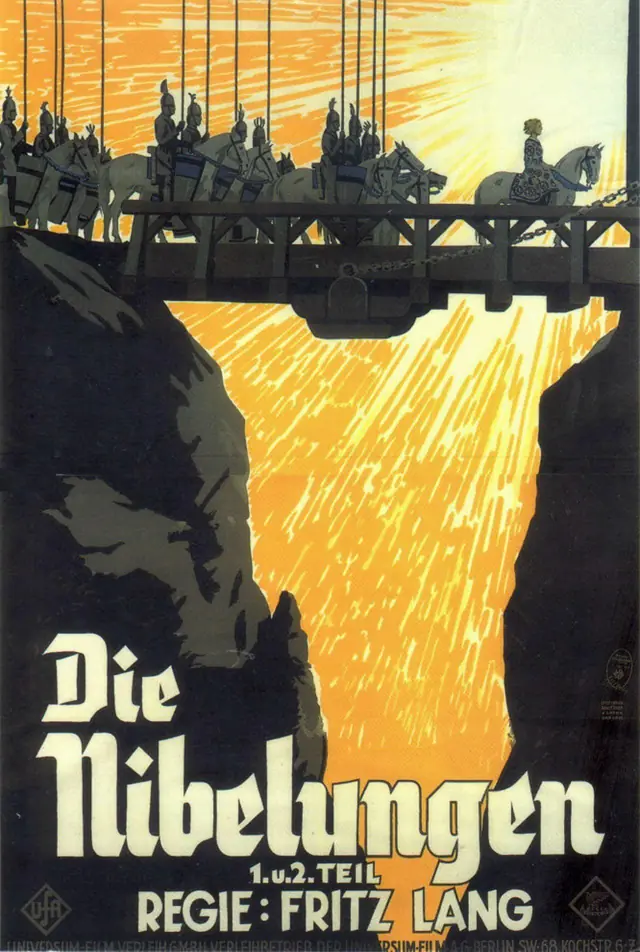
Lang shot both parts at the Babelsberg studios, with the city of Worms and Etzel's palace built to scale, and premiered them at the Ufa-Palast am Zoo in Berlin: Siegfried on 14 February 1924 and Kriemhild's Revenge on 26 April. Nearly five hours in all (293 minutes), scripted by Lang and Thea von Harbou, with one animated sequence — Kriemhild's dream of the falcon — handled by Walter Ruttmann, who would shortly afterwards sign Berlin: Symphony of a Great City. That is where the visual mould still being copied comes from: the hero with the sword over his shoulder, the forest as a geometric set, the dragon as a creature of impossible scale.
The reception has a grubby side to it. Goebbels dismissed the film in 1924 as "a typically Jewish product", while conceding that "the Jew knows how to direct"; by 1929 he was calling it "the summit of German achievement". Hitler saw it, according to his photographer Heinrich Hoffmann, at least twenty times.
There was a remake: Harald Reinl shot two further parts, Siegfried von Xanten (13 December 1966) and Kriemhilds Rache (16 February 1967), with Uwe Beyer as Siegfried, Karin Dor as Brünhild and Siegfried Wischnewski as Hagen. A German-Yugoslav co-production filmed in Iceland, the Postojna caves, the fortress of Smederevo, the Spandau citadel and — this is the surprise — the Ciudad Encantada, near Cuenca. In 2004 Uli Edel signed Ring of the Nibelungs, a mini-series shot entirely in South Africa with Benno Fürmann, Kristanna Loken, Alicia Witt, Julian Sands and Max von Sydow; it was the most-watched mini-series on German television that year, broadcast by Sat.1.
Beowulf takes a thousand years to reach a screen
The poem held no interest for cinema until very late on. The serious assault arrives in 1999, and twice over: The 13th Warrior, by John McTiernan, which crosses the poem with the Arab traveller Ibn Fadlan by way of the novel Eaters of the Dead (Michael Crichton, 1976), and a science-fiction Beowulf with Christopher Lambert. Before that there was only Grendel Grendel Grendel (1981), Australian animation told from the monster's point of view, after the novel by John Gardner.
- Beowulf & Grendel (2005), by Sturla Gunnarsson, with Gerard Butler, shot in Iceland.
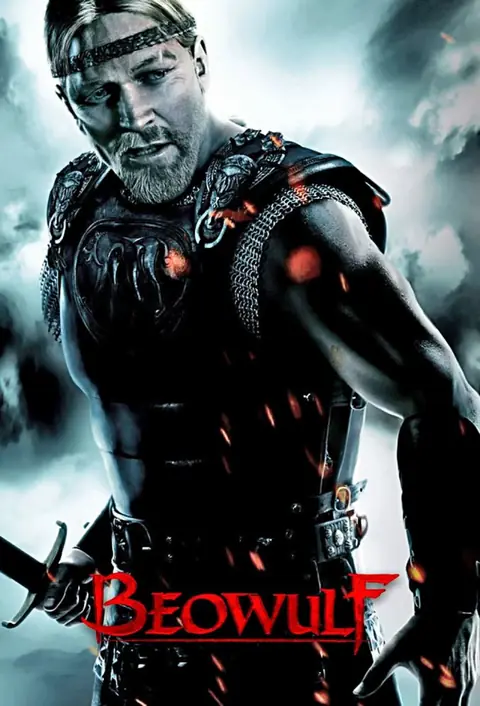
- Beowulf (2007), by Robert Zemeckis, in motion capture, scripted by Neil Gaiman and Roger Avary, with Ray Winstone, Anthony Hopkins, Crispin Glover and Angelina Jolie. A budget of 150 million, 196.4 million taken worldwide.
- Outlander (2008), with Jim Caviezel: the poem turned into science fiction of crashed spaceships.
- Beowulf: Return to the Shieldlands (ITV, 2016), with Kieran Bew.
Gaiman and Avary dared to do what the poem keeps quiet about: in their version Grendel is Hroðgar's son, and the dragon of the final act is Beowulf's, both by the same mother. The monster stops being the enemy and becomes the bill.
The indirect route, though, has moved more cinema than every adaptation put together. Wagner worked on Der Ring des Nibelungen (The Ring of the Nibelung) between 1848 and 1874 and staged it complete at Bayreuth in August 1876: some fifteen hours of it. And Tolkien, who in 1936 gave his British Academy lecture Beowulf: The Monsters and the Critics, carried away from it the theft of a cup that wakes a dragon sleeping on its gold — Smaug — and Rohan's hall of Meduseld, which is Heorot under another name. On the comparison with Wagner he was curt, in a letter of 23 February 1961 to his publishers:
Both rings were round, and there the resemblance ceases.
Two thousand letters that survive only in a handmade copy
On the night of 23 October 1731 Ashburnham House in London, where Robert Cotton's library was being kept, went up in flames. The Beowulf manuscript came out alive, but with the upper and outer edge of every leaf charred, and it has been crumbling away ever since.
In 1787 the Icelandic scholar Grímur Jónsson Thorkelin commissioned a complete transcript from James Matthews, a British Museum employee who knew no Old English, and made a second one in his own hand, before any more could be lost. In 1815 he published the first printed edition, and he did it in Latin, under a title that did not so much as mention Beowulf. Those two copies preserve roughly 2,000 letters that are no longer on the parchment. Which is to say: anyone reading Beowulf right through today is reading, in the margins, the handwriting of two eighteenth-century copyists. The poem that feeds half the fantasy industry hangs on a copy made in time.
What can be used and what cannot
Both poems are anonymous and medieval, eight or ten centuries clear of any deadline. In Spain, the consolidated text of the Spanish Intellectual Property Act gives 70 years from the author's death (art. 26) and 70 years from lawful disclosure for anonymous works (art. 27); its fourth transitional provision keeps the 80 years of the 1879 Act for authors who died before 7 December 1987, and article 30 counts every term from 1 January of the following year. There is nothing to argue about here.
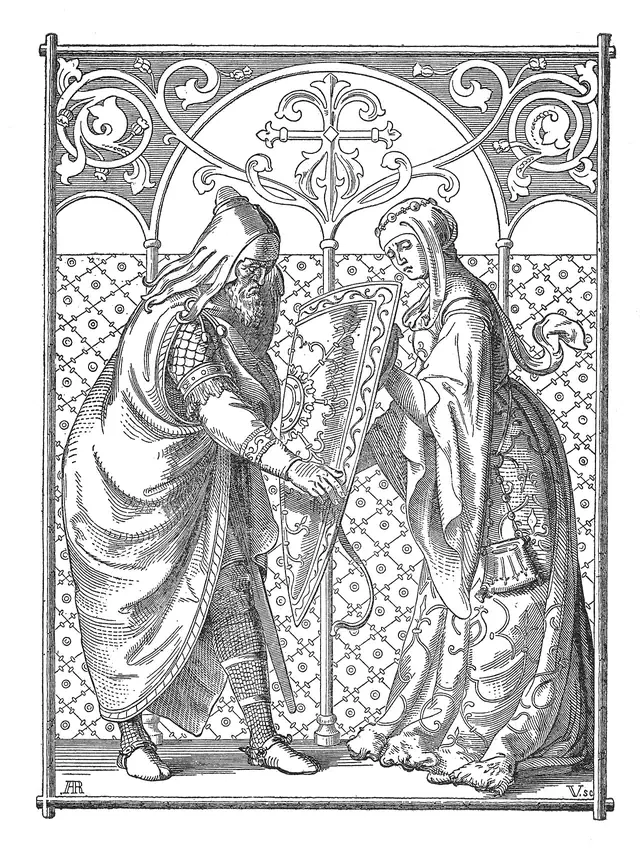
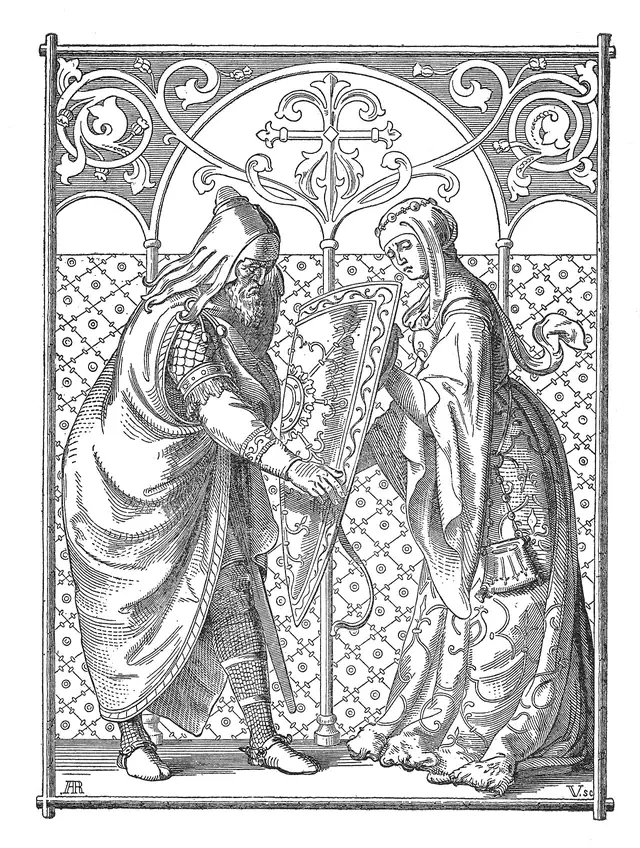
The same rule applies to the historical images, one by one. The Ramsund carving (c. 1030), the Hylestad portal (c. 1170) and the illustrated manuscripts of the Nibelungenlied — the Hundeshagen Codex, from the middle of the fifteenth century, among them — are free by age. Arthur Rackham, who illustrated Wagner's Ring for Heinemann in 1910 and 1911, died on 6 September 1939: the 80-year term is the one that applies to him, and his work has been in the public domain in Spain since 1 January 2020.
What stays off limits: the films. Fritz Lang died in 1976 and Thea von Harbou in 1954, so the 1924 Die Nibelungen is still protected in Europe, and modern translations of the poem — Seamus Heaney's of 1999, for instance — carry rights of their own, independent of the original. The designs in this collection come from the text and from the old iconography, not from film stills.
![Single Leaf from an Antiphonary: Initial H[odie nobis] with The Nativity](/img/museo/nibelungos_beowulf-f1109a0441.jpg?w=640)