A book with no signature, a ballad with no surname
The oldest surviving edition of Journey to the West (Xiyouji) dates from 1592, printed by the Shidetang house in Jinling, and it carries no author's name at all. Wu Cheng'en's arrived by a crooked route: a local gazetteer from Huai'an dated 1625 records that Wu wrote “something called Journey to the West”, and it was Hu Shi who turned that jotting into an attribution. In 1983 David Lattimore pointed out the obvious: the record nowhere says the thing was a novel. When Siruela brought out the first complete Spanish translation in 1992, by Enrique P. Gatón and Imelda Huang-Wang, the cover read “Anonymous Chinese author of the sixteenth century”. It remains the most honest formula going.
The Ballad of Mulan is more orphaned still. It was composed under the Northern Wei dynasty (386-535), and the oldest text to reach us sits inside the Yuefu shiji, the anthology Guo Maoqian compiled in the eleventh or twelfth century; the source he himself cites is lost. In the poem the ruler is called kehan, khan, alongside the Chinese title Son of Heaven: Mulan serves a court with steppe roots, not a textbook Han emperor. And she has no surname. The “Hua”, meaning flower, was handed to her by Xu Wei in a sixteenth-century play, and everyone inherited it from there, Disney included.
The Monkey King's inventory
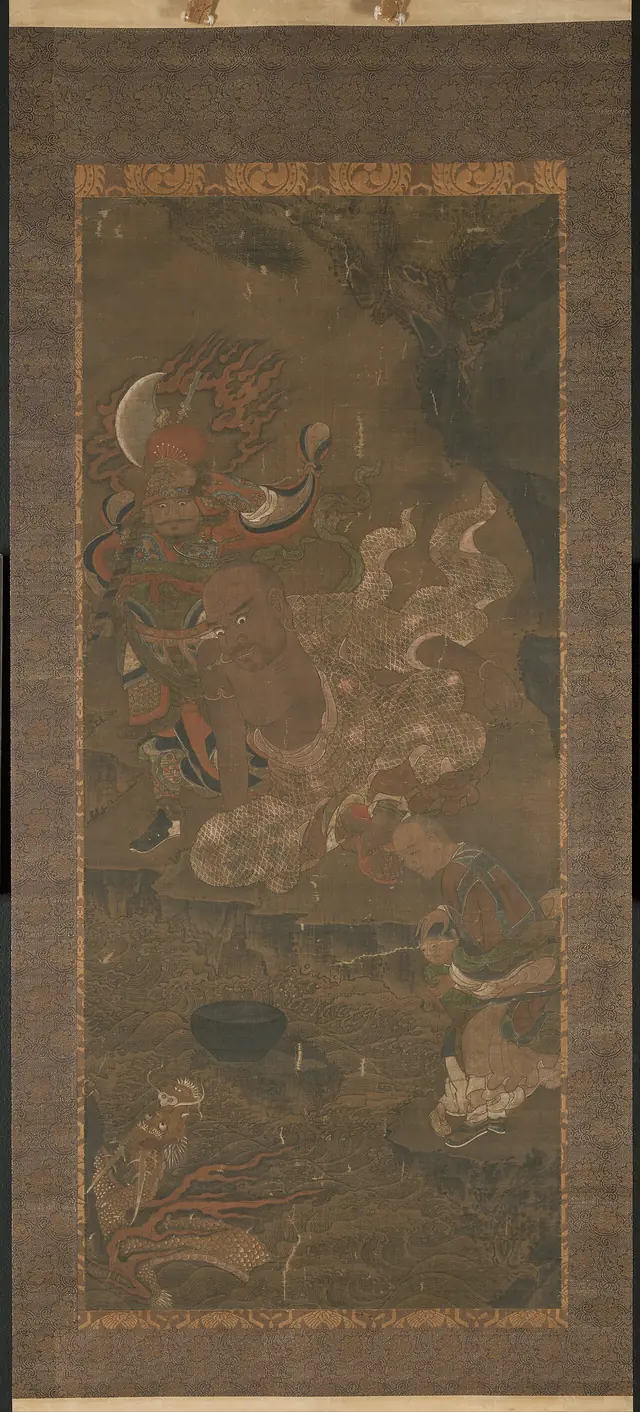
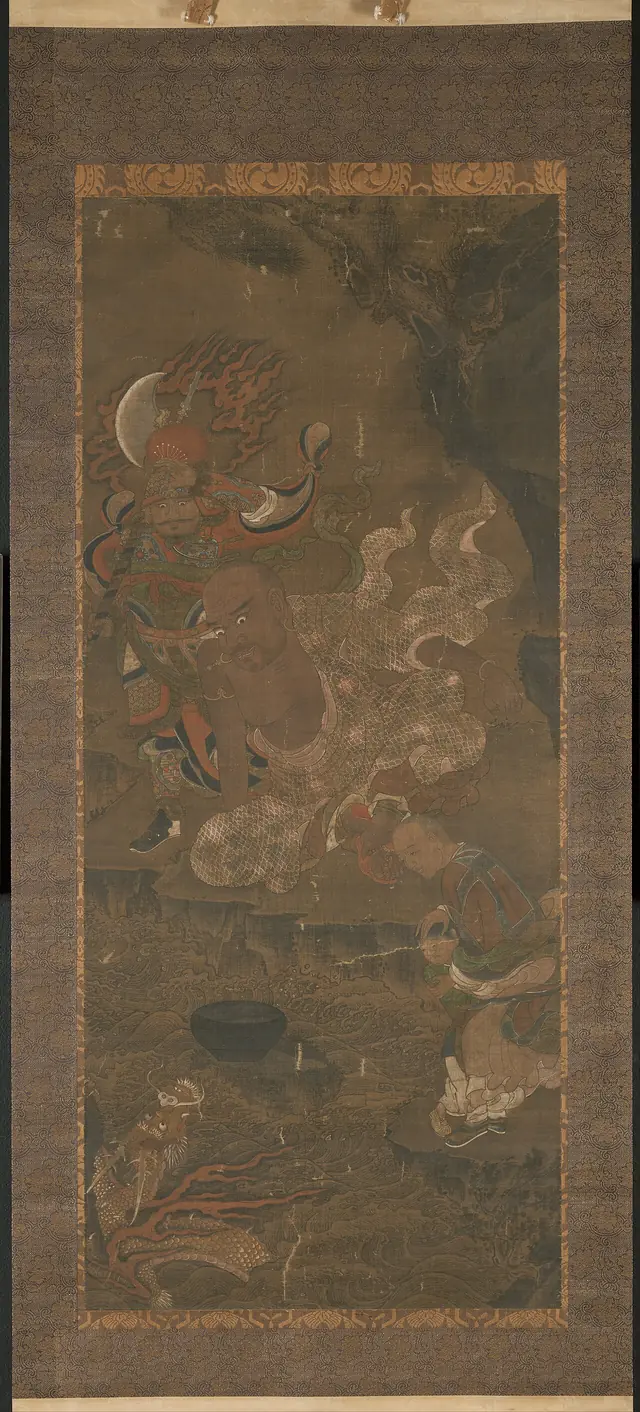
What makes Sun Wukong great is not his temperament but his kit, described with something close to catalogue precision. The staff turns up in chapter 3: an iron pillar gathering dust in the treasury of the Dragon King of the Eastern Sea which, the novel says, Yu the Great had used to gauge the depth of the waters during the flood. It has a gold ring at each end and its weight engraved on it, thirteen thousand five hundred jin, close to eight tonnes. It takes orders: it grows, it multiplies and, when it is not wanted, it shrinks to the size of a needle and tucks in behind his ear. That gesture is one of the finest visual ideas fantasy literature has ever produced.
The rest of the inventory: a helmet with phoenix feathers, golden chainmail, boots for walking on clouds, seventy-two transformations and a cloud somersault that covers 108,000 li in a single leap. On his head sits a golden circlet, a gift from Guanyin, that cannot be taken off. In chapter 7 he is shut inside Laozi's eight-trigram furnace for forty-nine days to be melted down; he comes out whole, his eyes stung for ever by the smoke, and those fiery eyes with golden pupils let him see through any disguise. The novel runs to a hundred chapters and the pilgrimage is told as a tally: eighty-one calamities, not one fewer.
The gourd, the talisman and a surprisingly modern swirl
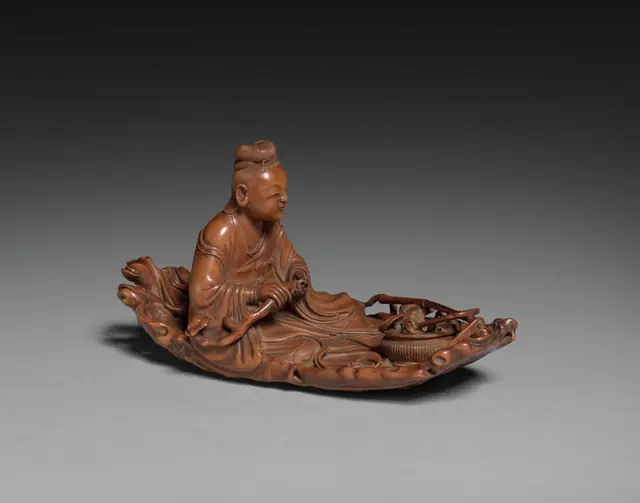
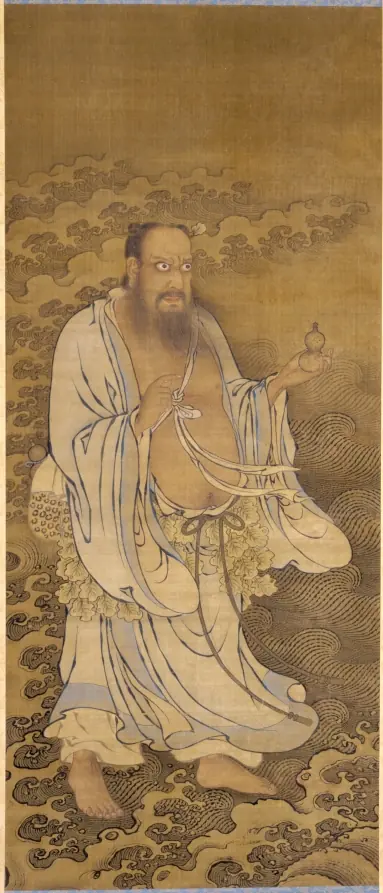
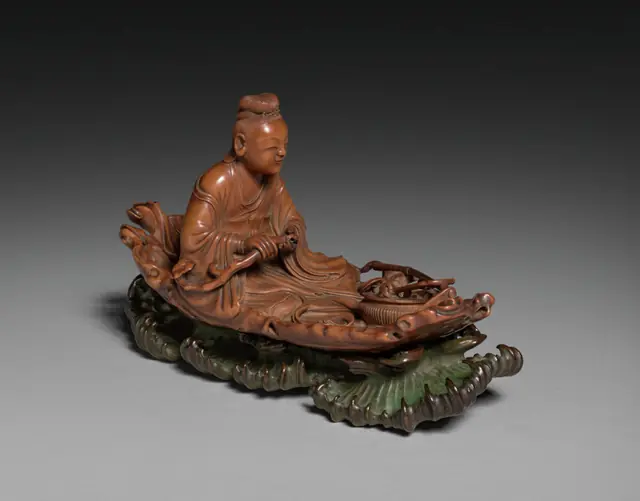
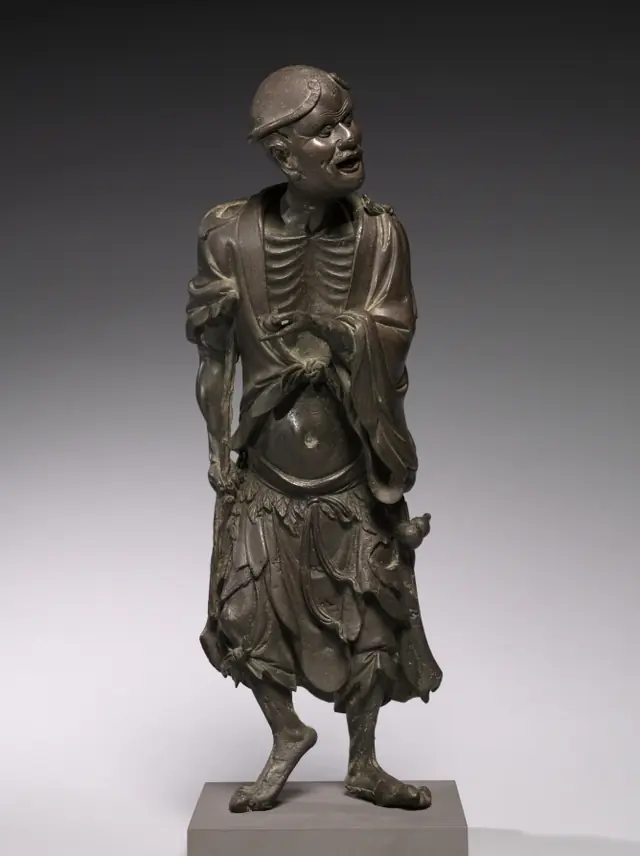
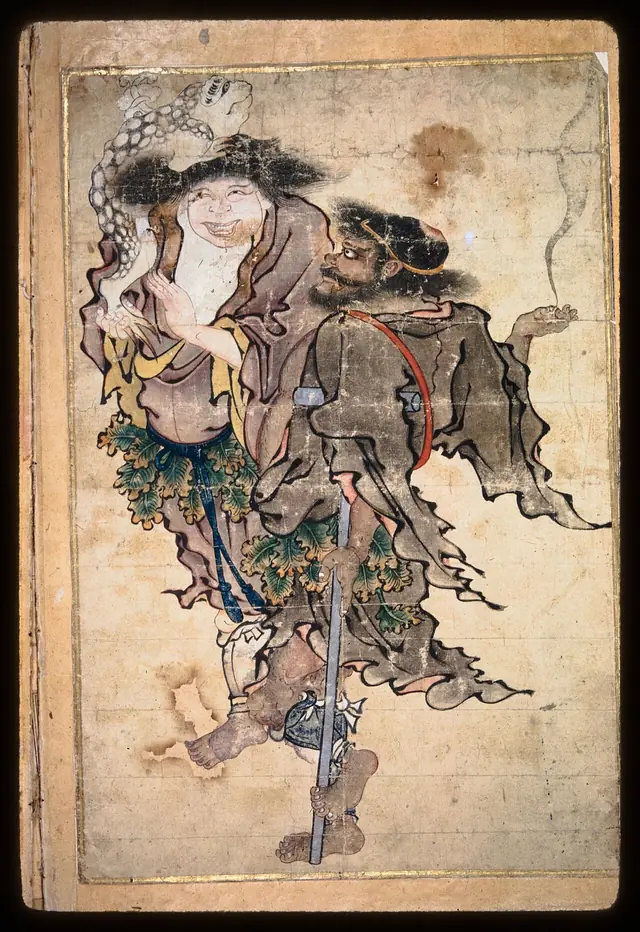
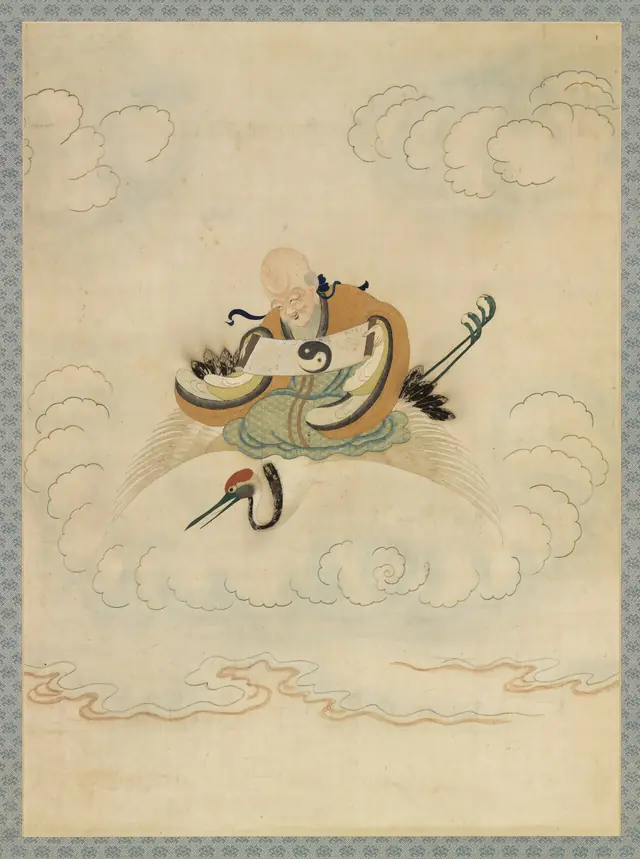
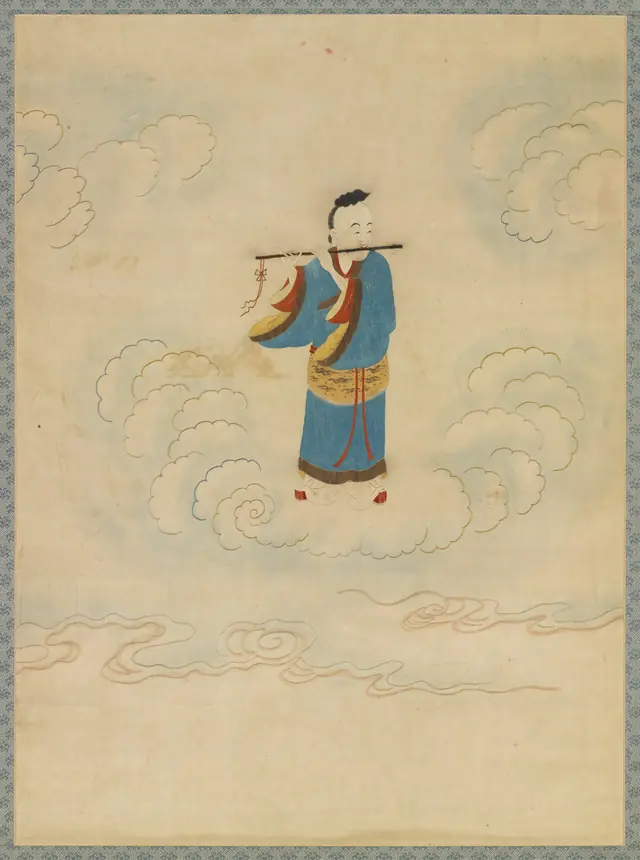
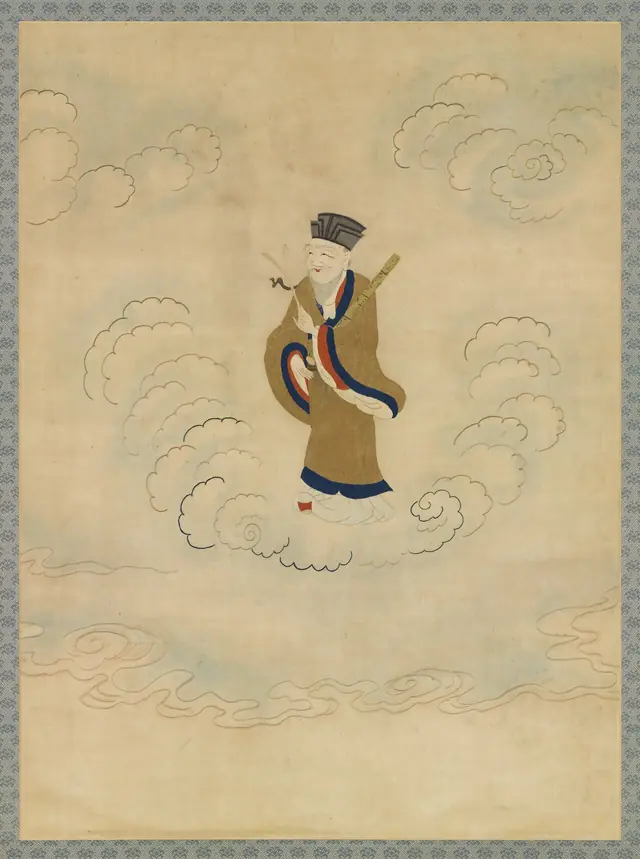
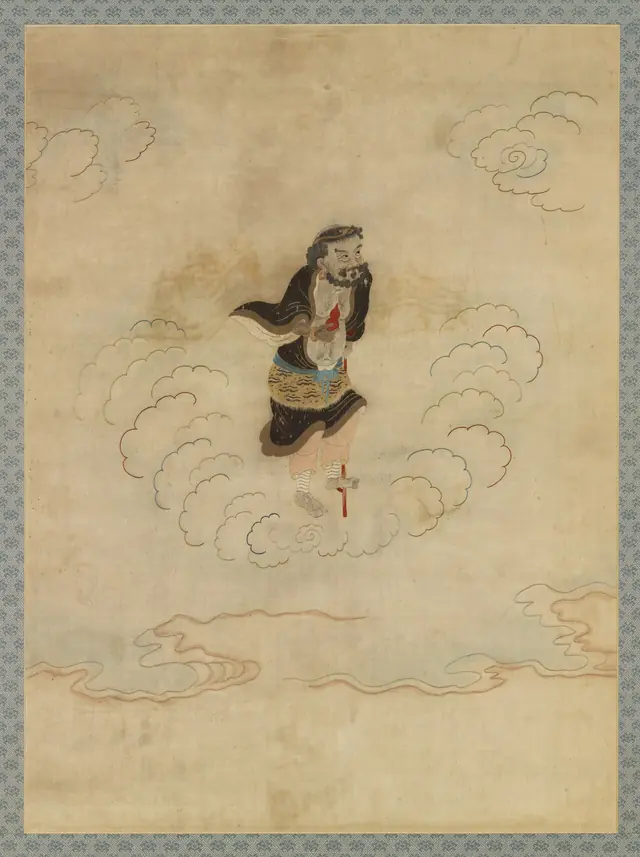
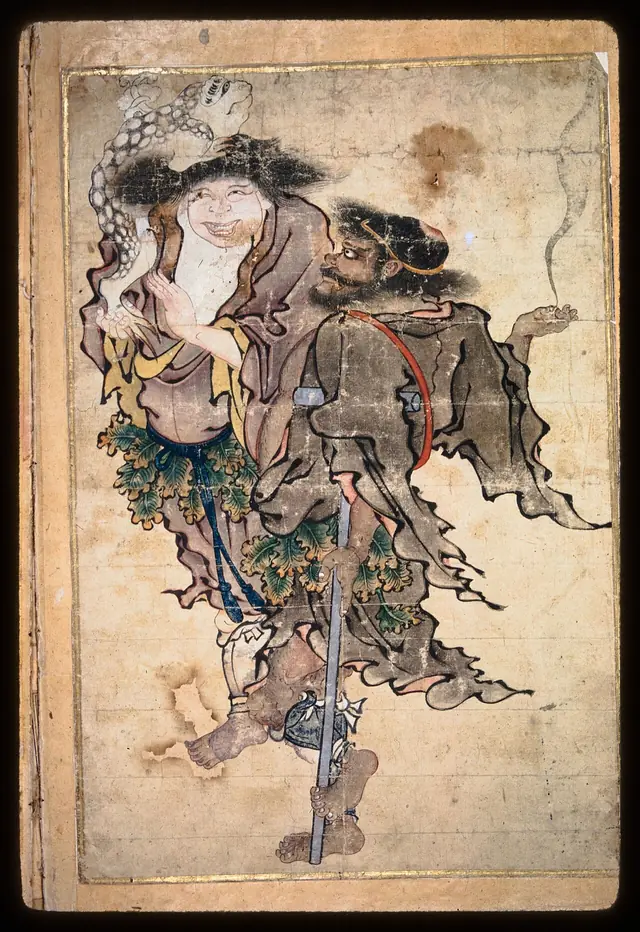
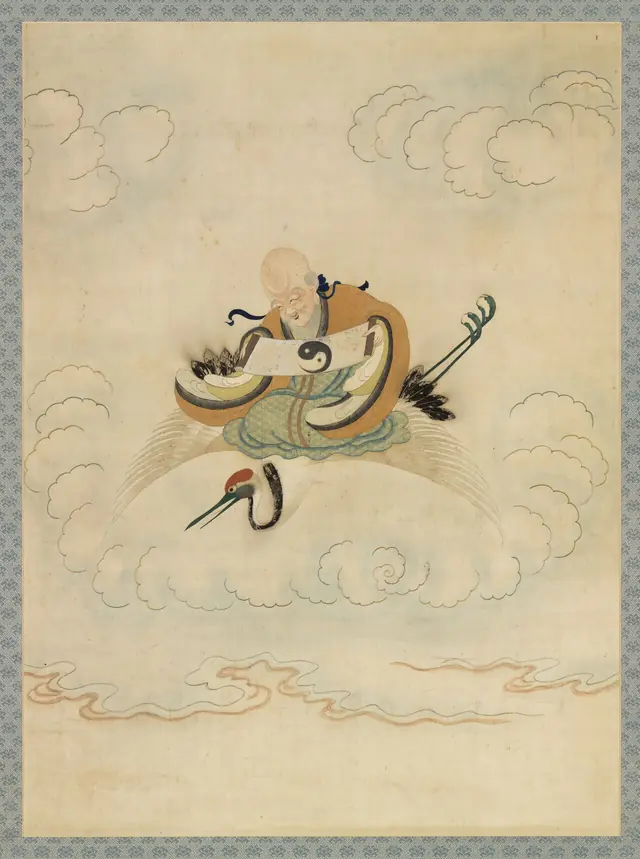
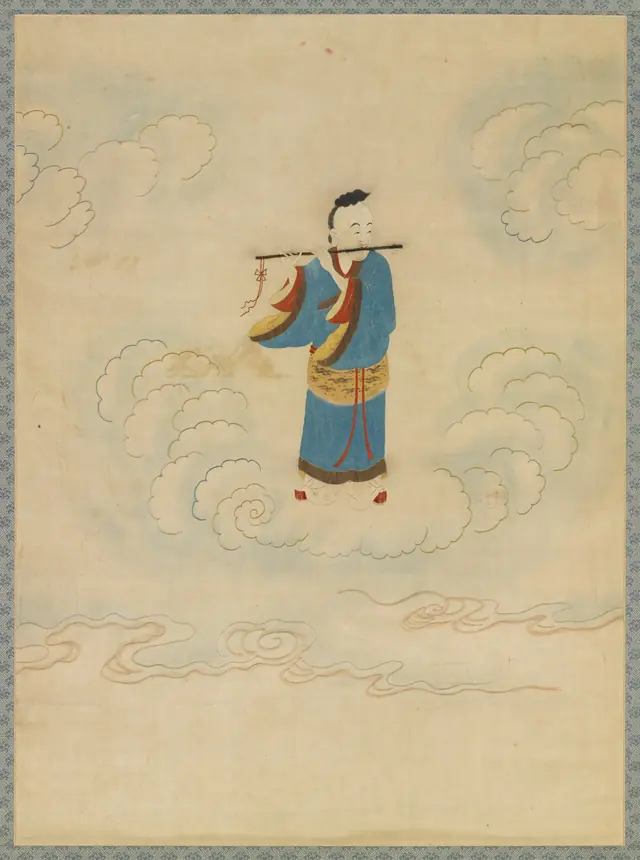
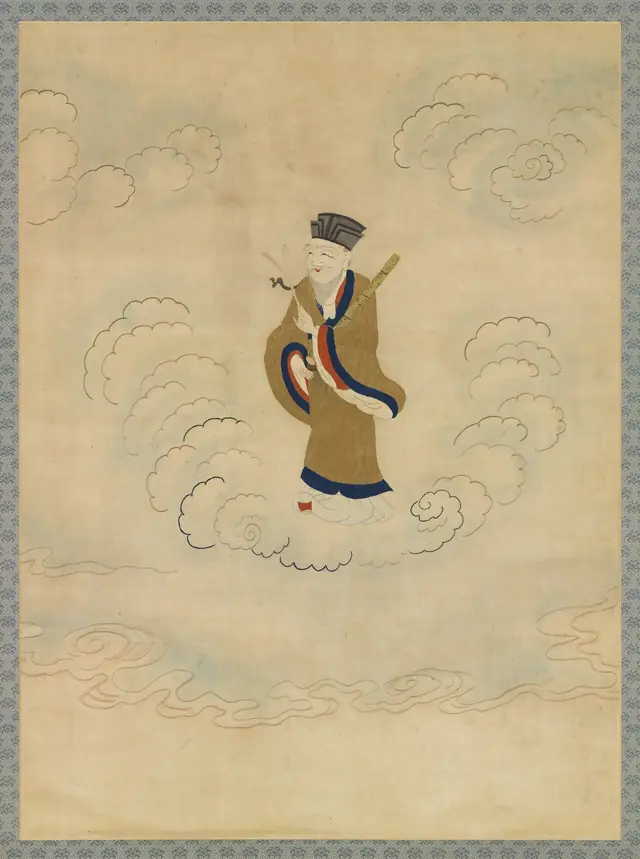
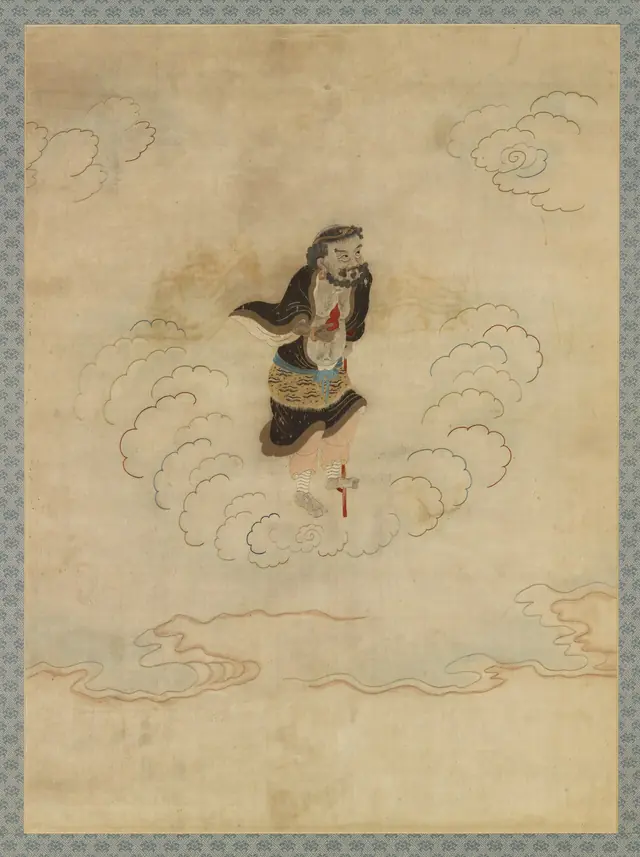
Popular Taoism hands this collection something very useful to a designer: objects that work as identity. The Eight Immortals are recognisable without faces, purely by what they hold. A feather fan for Zhongli Quan, a gourd and a crutch for Li Tieguai, a flute for Han Xiangzi, a lotus flower for He Xiangu, a sword for Lü Dongbin, a flower basket for Lan Caihe, a bamboo drum for Zhang Guolao and the jade audience tablet for Cao Guojiu. Eight objects, eight characters. An entire print set falls out of that.
The other great armoury comes from Fengshen yanyi (Investiture of the Gods), attributed to Xu Zhonglin, whose oldest surviving edition was printed by the Shu Zaiyang house in Suzhou during the Wanli era (1573-1620): Nezha with his red silk sash, his heaven-and-earth ring, his wind-and-fire wheels, and that brutal detail whereby, dead and dismembered, he has his body rebuilt out of lotus roots by his master Taiyi Zhenren.
And a surprise: the yin-yang symbol, that black-and-white swirl that looks a thousand years old, is a latecomer. Zhou Dunyi (1017-1073) popularised a Supreme Ultimate diagram made of concentric circles; the spiral variant does not appear until the 1370s with Zhao Huiqian, and the shape we now take to be eternal, two interlocking spirals each with a dot of the opposite colour inside, was fixed by Lai Zhide (1525-1604). It is younger than the Monkey King's staff.
How all of this reached the screen
The first great leap comes out of war. Mulan Joins the Army (Bu Wancang, released on 16 February 1939 at the Astor cinema in Shanghai) was shot in the occupied city and ran for eighty-three consecutive days: the story of a woman putting on armour worked as a call to resistance without ever saying so.
The second is drawn. Havoc in Heaven (Wan Laiming, Shanghai Animation Film Studio, first part in 1961, second in 1964) adapts the novel's opening chapters in some seventy thousand drawings, blending traditional Chinese ink with Peking opera make-up. It was the last thing the studio made before the Cultural Revolution closed it down, and its Sun Wukong, with his red heart-shaped face, is the image nearly everyone carries of the character.
After that it branches. In Japan, Nippon TV's Saiyūki (1978-1980) crossed to Britain as Monkey, with English dialogue by David Weir and the actress Masako Natsume playing the monk Tripitaka, a man in the original; only 39 of the 52 episodes were dubbed and the remaining thirteen waited until 2004. In 1984 Akira Toriyama opened Dragon Ball with a boy with a monkey's tail, a staff that extends and a flying cloud: all three come from Sun Wukong, starting with the name.
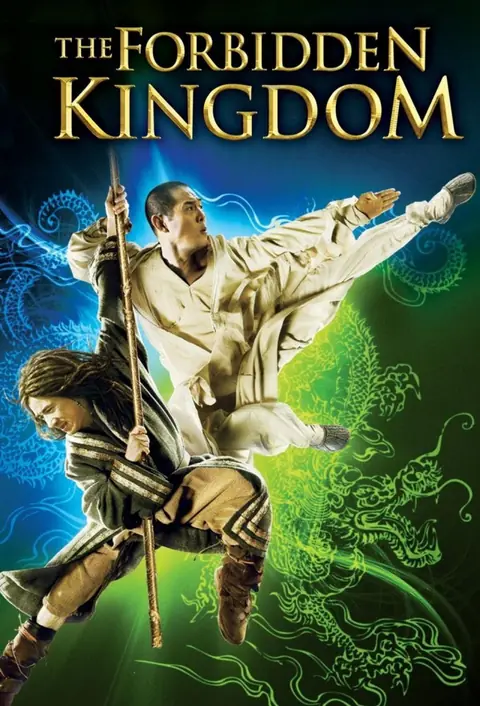
The Taoist branch goes its own way. Mr. Vampire (Ricky Lau, 1985), produced by Sammo Hung, turned the Taoist priest with his yellow paper talismans into a pop icon and founded a whole subgenre of hopping corpses; Big Trouble in Little China (John Carpenter, 1986) raids that same imagery for its sorcerer Lo Pan and his Three Storms; and A Chinese Ghost Story (Ching Siu-tung, with Tsui Hark producing, 1987) adapts “Nie Xiaoqian”, a tale by Pu Songling. Then come Disney's Mulan (Barry Cook and Tony Bancroft, 19 June 1998), its 2020 remake, Creation of the Gods I (Wuershan, 2023) and, above all, Ne Zha (2019) and Ne Zha 2 (Jiaozi, 2025), which at $2.27 billion is the highest-grossing animated film ever made and comes straight out of the Fengshen yanyi.
The day Mulan started a riot in Chongqing
That 1939 Mulan had an ending almost nobody tells. When the film reached Chongqing in 1940, part of the audience erupted at a line repeated throughout it, “when the sun rises, it lights the whole world”, reading it as a nod to imperial Japan and its flag. There were protests in the auditorium, the first time a Chinese film had provoked a disturbance of that kind, and the picture was banned for a while until the authorities reviewed it and allowed a re-release a few months later.
It is worth pausing here: the original ballad ends on an image that runs in precisely the opposite direction to any clean patriotic reading. Mulan comes home, changes her clothes, and the comrades of twelve years' campaigning fail to recognise her. The poem closes with two hares running side by side and a question: when they run together, who can tell which one is the female? That is the ending. No wedding, no medal, no moral.
What is free and what is not: mind Mushu
Two things get confused daily and are worth pulling apart. The texts are free: the ballad, the 1592 novel, the Fengshen yanyi, Pu Songling's tales. The modern films are not. Mushu, Li Shang and Shan Yu do not exist in the ballad, they were invented in Burbank and they belong to Disney; the Sun Wukong design in Havoc in Heaven is a 1961 creation with named authors; Jiaozi's Nezha is from 2019. Drawing “the Monkey King” is free. Drawing that Monkey King is not.
So the work here starts where the image was born rather than where we last happened to see it: the written description of the staff with its two rings and its inscription, the props of the Eight Immortals, the old prints and woodcuts. What comes out is stranger and looks less like a film still, which is exactly the point.