





January 1697, December 1812, May 1835
Charles Perrault (1628-1703) published Histoires ou contes du temps passé, avec des moralitez in January 1697, out of Claude Barbin's bookshop in Paris. Eight tales in prose: Sleeping Beauty, Little Red Riding Hood, Bluebeard, Puss in Boots, The Fairies, Cinderella, Riquet with the Tuft and Hop-o'-My-Thumb. The printing privilege, dated 28 October 1696, was granted in the name of Pierre Darmancour, his nineteen-year-old son. Nobody at court believed the signature.
Jacob (1785-1863) and Wilhelm Grimm (1786-1859) brought out the first volume of Kinder- und Hausmärchen on 20 December 1812 in Berlin, published by the Realschulbuchhandlung, with 86 tales; the second followed in 1815 with seventy more. The collection never sat still until the seventh edition, the one of 1857, which ran to 210 texts.
Hans Christian Andersen (1805-1875) began on 8 May 1835 with a slim booklet of four tales printed for him by C. A. Reitzel in Copenhagen: The Tinderbox, Little Claus and Big Claus, The Princess and the Pea and Little Ida's Flowers. The Little Mermaid appeared on 7 April 1837, in the third booklet, alongside The Emperor's New Clothes.
The Neapolitan who got there first
None of the three invented anything. The oldest written version of both Cinderella and Sleeping Beauty sits in Lo cunto de li cunti, fifty tales in Neapolitan by Giambattista Basile (1566-1632), published by his sister Adriana after his death, in two volumes in 1634 and 1636, under the pen name Gian Alesio Abbatutis.
There Cinderella is called Zezolla, and she gets rid of her first stepmother with the lid of a chest. The sleeping girl, Talia, is not woken by a kiss: she is woken by one of the two children she has given birth to while asleep. Perrault rewrote that material for the salon, the Grimms gathered it up a century and a half later convinced it was German, and Matteo Garrone put it back on screen exactly as it stands in Tale of Tales (Il racconto dei racconti, 2015).
What the Grimms rubbed out between one edition and the next
In the 1812 volume, the one who orders Snow White killed is her own mother. In the second edition, the one of 1819, she becomes a stepmother: the good mother dies in childbirth and the king remarries. In Hansel and Gretel the tidying-up took longer — the woodcutter's wife is still the mother in 1812 and in 1819, and the word stepmother does not turn up until the fourth edition, 1840.
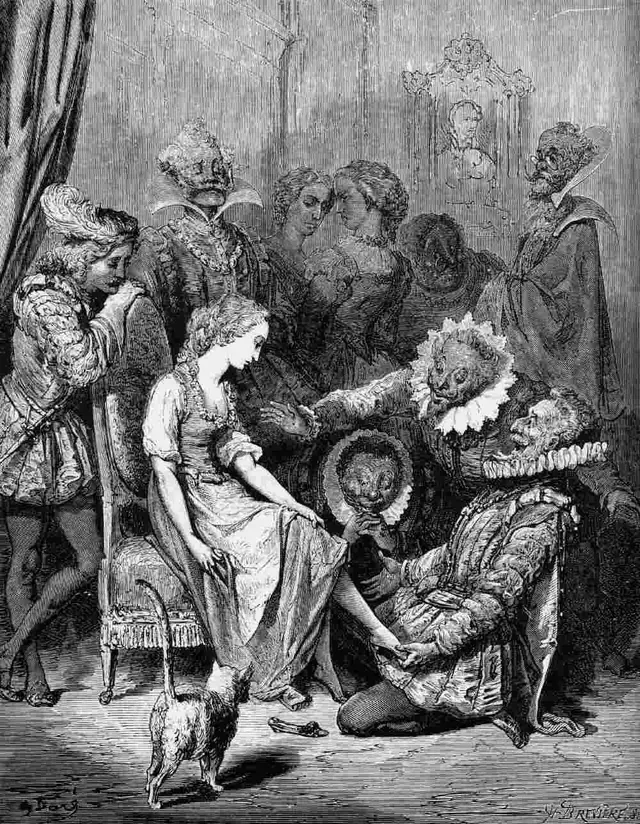
The punishments, on the other hand, they left alone. Snow White's queen ends up dancing in iron shoes lifted out of the coals with tongs, in the middle of the wedding, until she drops dead. And in Aschenputtel there is no fairy godmother and no pumpkin: there is a hazel tree planted on the mother's grave and a white bird that lets the dress fall from the branches. The slipper is gold. One stepsister cuts off her big toe and the other a slice of her heel to make it fit, and two doves sing that there is blood in the shoe before pecking the sisters' eyes out on the wedding day. The glass slipper is Perrault's doing.
The engravers were the ones who gave them a face
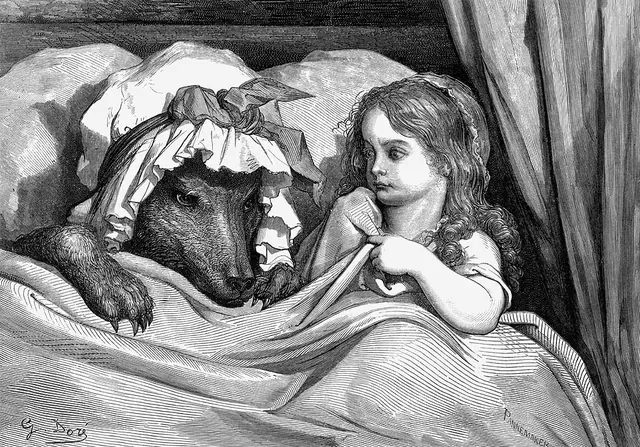
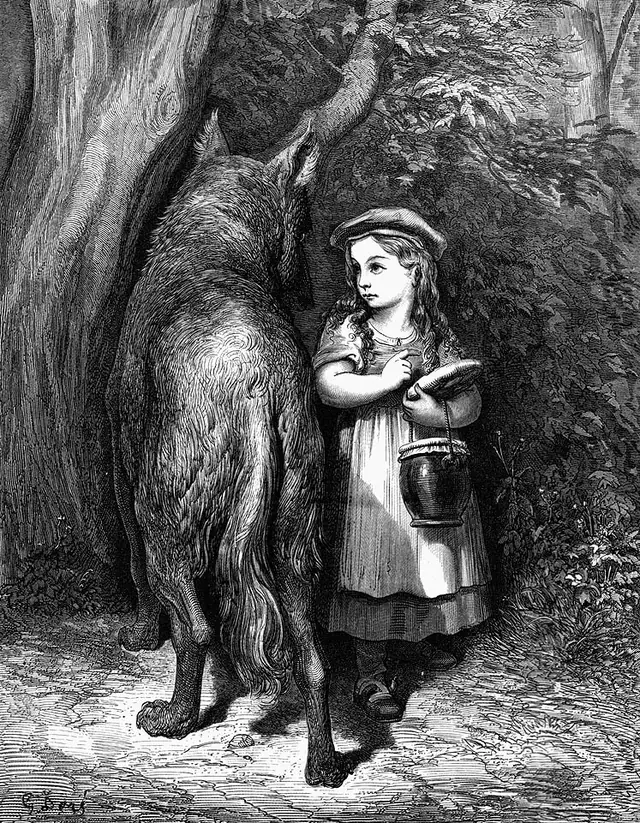
The text never says what a wolf looks like. Nineteenth-century engraving decided that, and that is where RELIC comes in.
Ludwig Emil Grimm (1790-1863), the third brother and an engraver by trade, signed the seven plates of the Kleine Ausgabe of 1825, the fifty-tale selection that was the one that really sold. The idea of illustrating them came from abroad: German Popular Stories (1823), Edgar Taylor's translation with plates by George Cruikshank, was the first illustrated edition of the Grimms in any language and swept London. The brothers went so far as to consider buying Cruikshank's engravings before they commissioned their own brother.
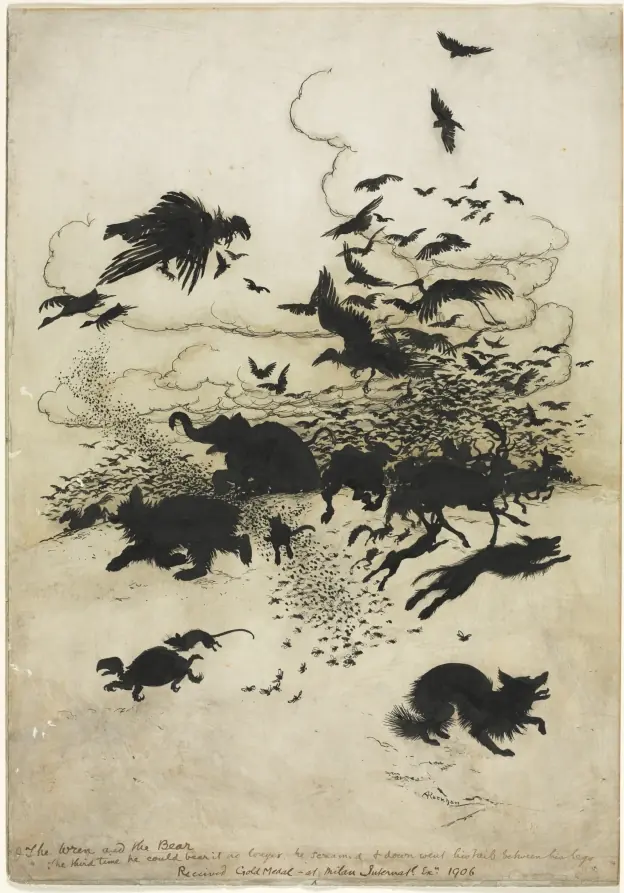
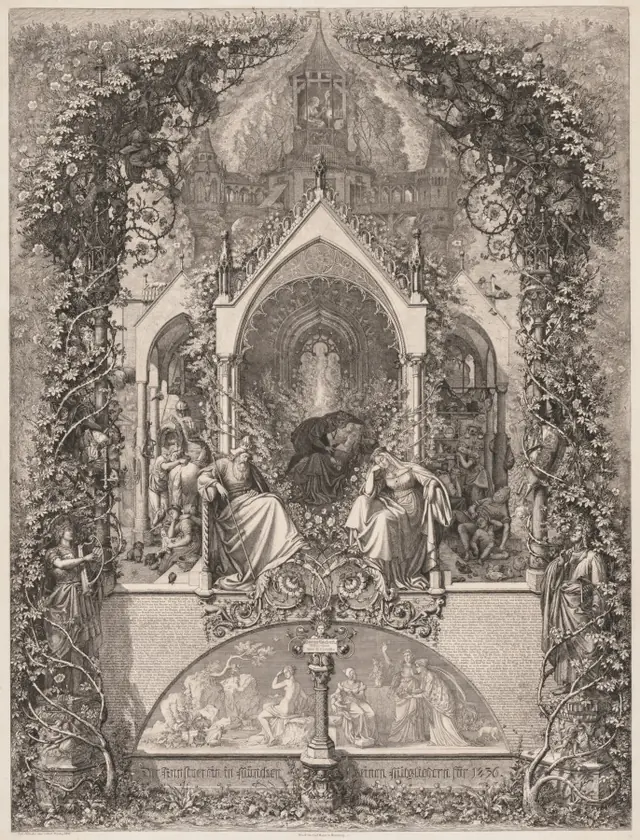
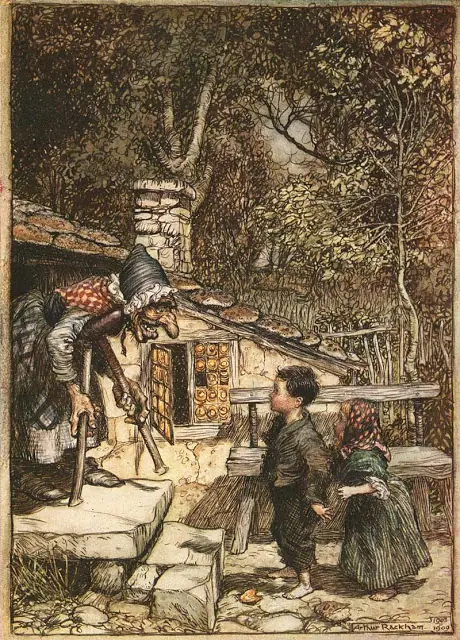
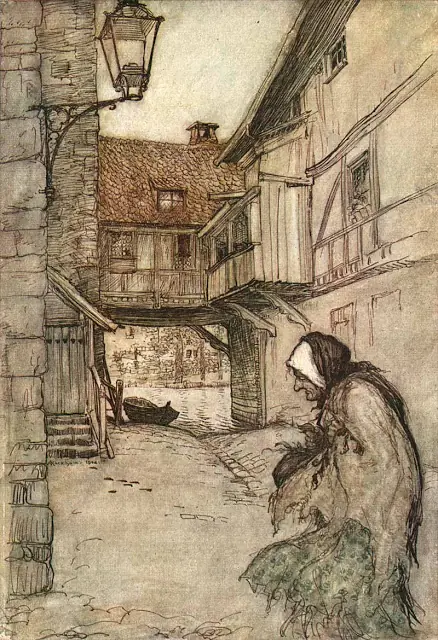
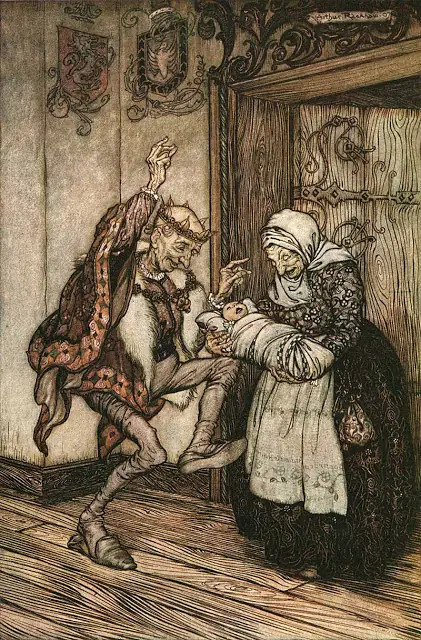
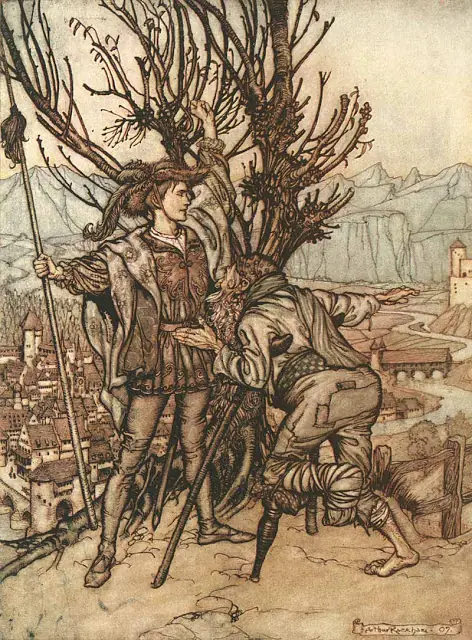
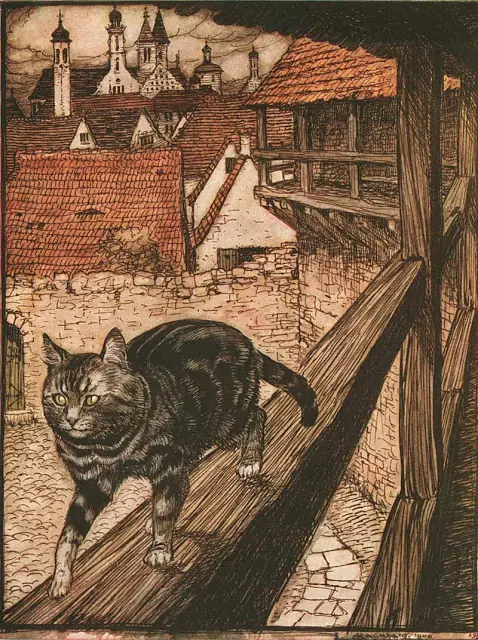
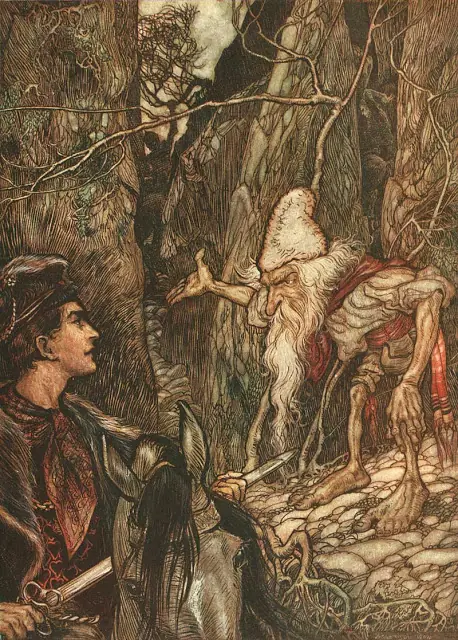
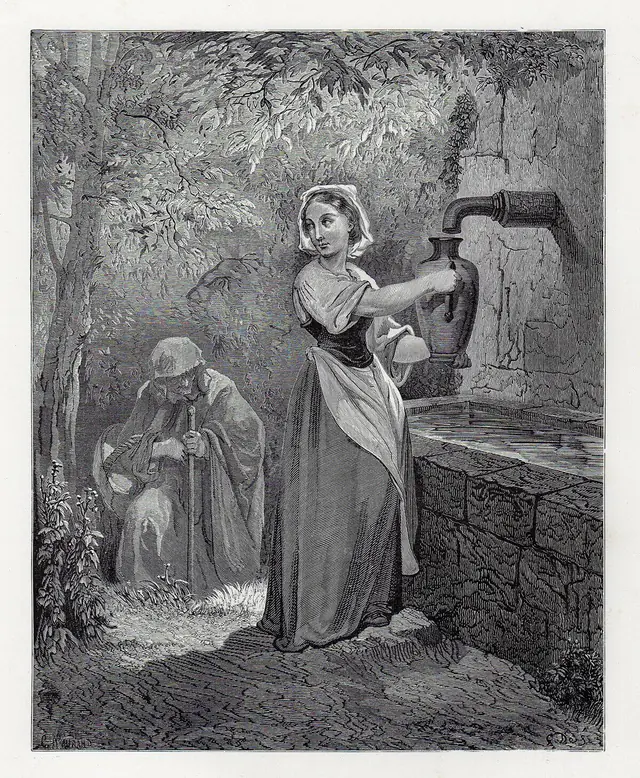
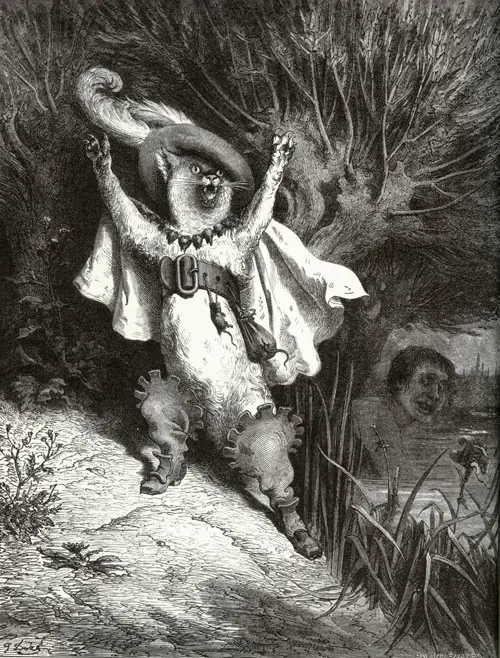
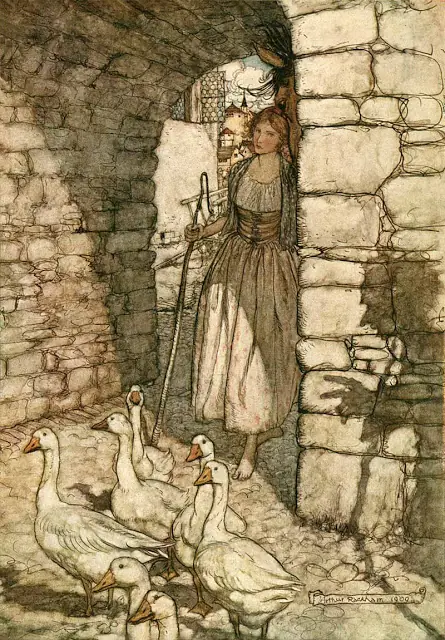
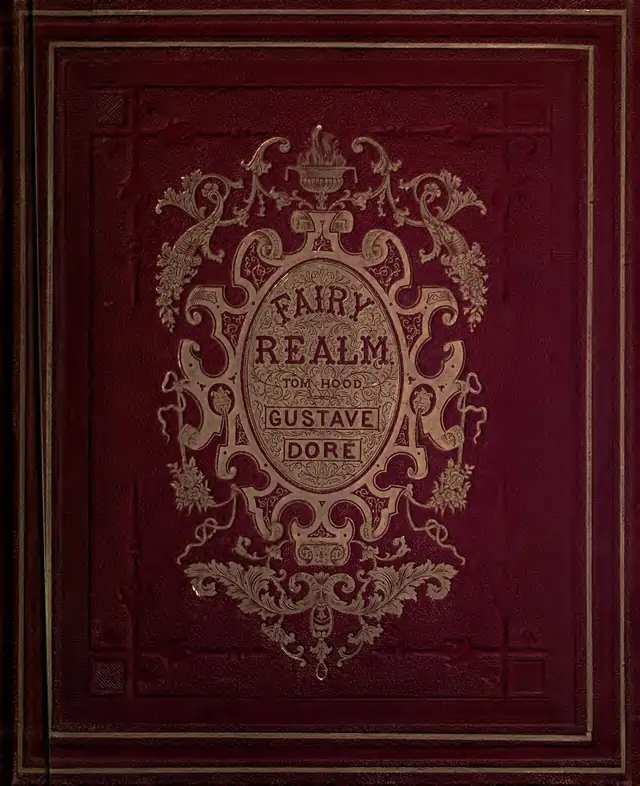
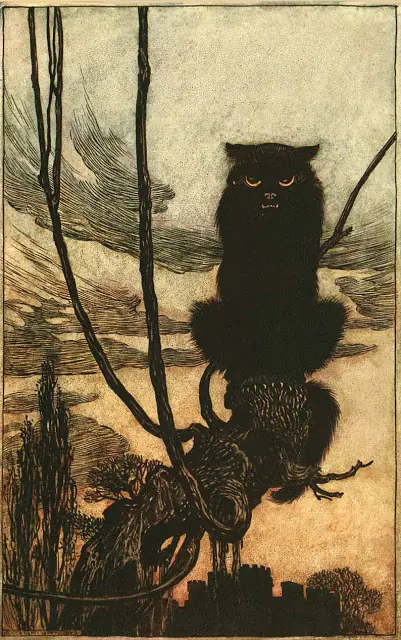
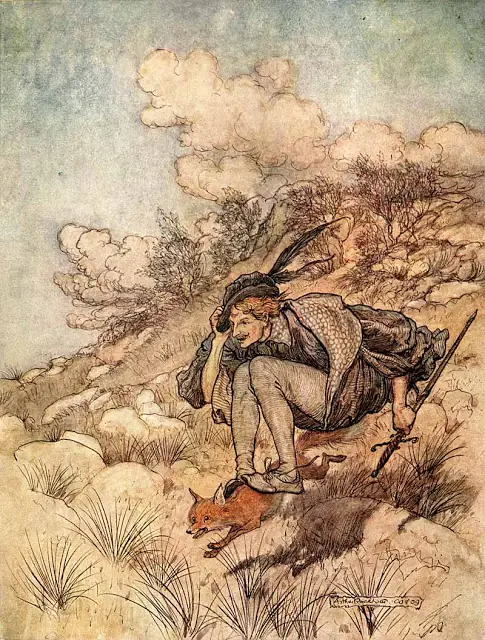
Eugen Napoleon Neureuther (1806-1862) etched his Sleeping Beauty on steel in 1836; the impression is at the Cleveland Museum of Art. Gustave Doré (1832-1883) published Les Contes de Perrault with Hetzel in 1862, forty end-grain wood engravings: that is, literally, where the wolf in a nightcap tucked up in bed comes from. And Arthur Rackham (1867-1939) closed the run with The Fairy Tales of the Brothers Grimm (Constable, London, 1909), translated by Mrs Edgar Lucas, forty colour plates and a deluxe printing of 750 hand-signed copies.
Where it shows in the films
Maleficent (2014) and Maleficent: Mistress of Evil (2019) build everything on a slight that in the Grimms is a crockery problem: in Dornröschen there are thirteen wise women in the kingdom and only twelve gold plates, so one of them is left off the guest list. That is the reason for the curse on the spindle.
2012 was the year of the three Snow Whites. Mirror Mirror, by Tarsem Singh, with costumes by Eiko Ishioka — an Oscar winner for Coppola's Bram Stoker's Dracula — who died on 21 January 2012, two months before the premiere, and was nominated posthumously. Snow White and the Huntsman, by Rupert Sanders, went for armour and a black forest. And Blancanieves, by Pablo Berger, was shot silent and in black and white, its heroine turned bullfighter: ten Goya Awards, best film among them.
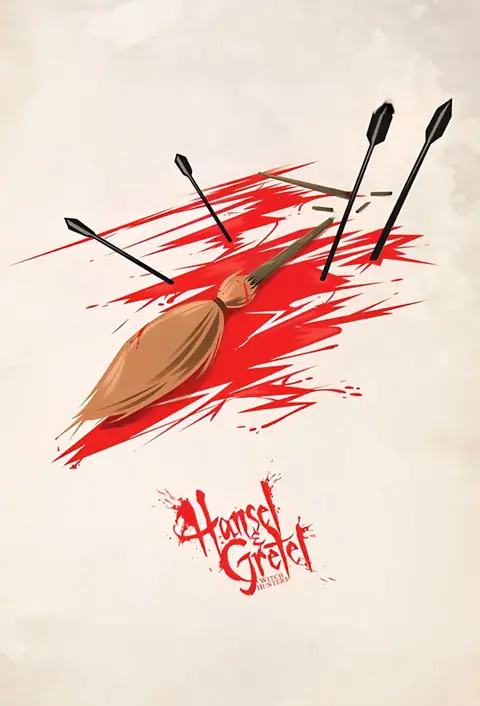
Hansel & Gretel: Witch Hunters (2013), by Tommy Wirkola, turns the gingerbread house into a crime scene and the siblings into gunslingers. Then comes the Disney live-action cycle: Cinderella (2015), Beauty and the Beast (2017) — which is neither Perrault nor Grimm, but Villeneuve (1740) and Beaumont (1756) — The Little Mermaid (2023) and Snow White (2025).
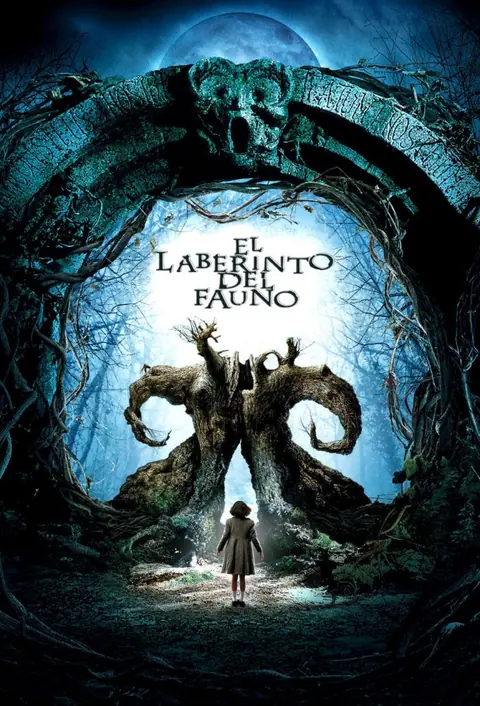
And two that do not adapt so much as loot. In the closing credits of Labyrinth (1986), Jim Henson acknowledges his debt to the work of Maurice Sendak: in Outside Over There (1981) goblins carry a baby off from its cradle and leave an ice copy behind, which is the changeling from the Grimms' The Elves. And Pan's Labyrinth (El laberinto del fauno, 2006) adapts no particular tale but runs on their rules — three trials, a forbidden meal, a key — planted in the hills of 1944, with the maquis and a Francoist captain.
A whole fairy tale cut out with scissors
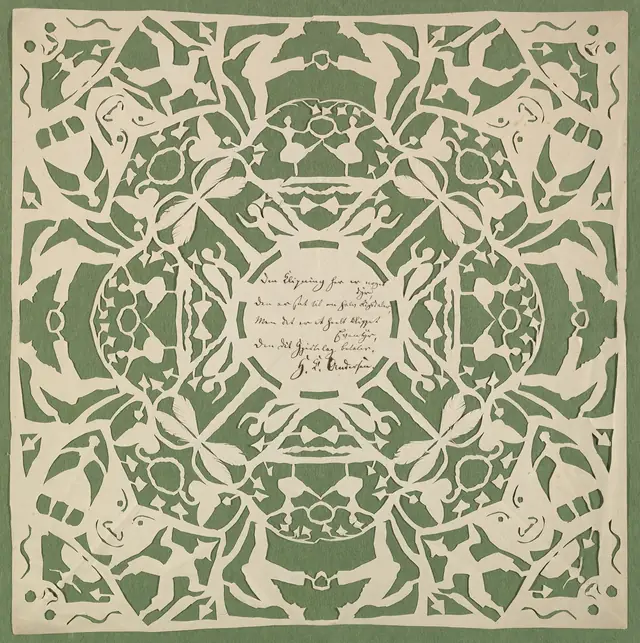
Andersen told and cut at the same time. As he talked he would snip away at a folded sheet, with nobody watching able to tell what was coming out, and unfolded the figure the moment the tale ended. Around a thousand of these papirklip survive, most of them in the museum in Odense.
The Metropolitan in New York holds one: A Fully Cut Fairy Tale, around 1864, a sheet measuring 34.4 by 33.7 centimetres that came in through the Elisha Whittelsey Collection in 2012. It is the only image in this collection made by the hand of one of the three authors.